Ankylosaurus: The Walking Tank

Most of the dinosaurs that lived millions of years ago were peaceful plant eaters. But, every now and then, into this peaceful life came meat eaters!

            If a plant eater didn’t want to become dinner, it had to be able to defend itself. Some plant eaters were very good at this. They had sharp claws or horns of their own. But one type of dinosaur didn’t need to fight back. All it had to do was squat down. This was the Ankylosaurus (an-KI-luh-sawr-us). The Ankylosaurus had thick, bony armor over almost all of its body.
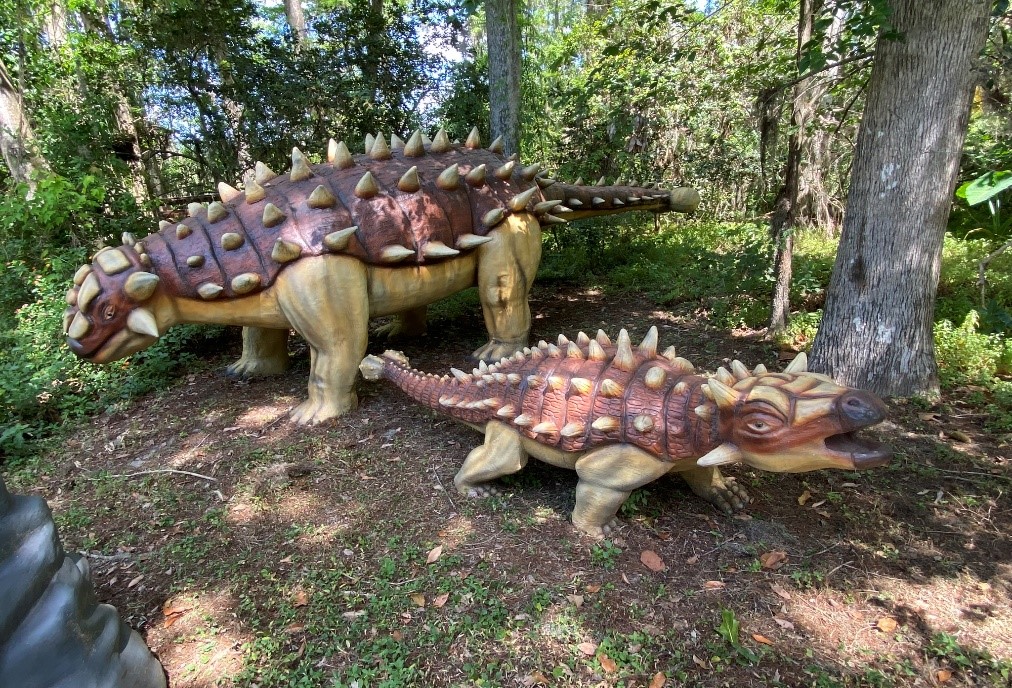
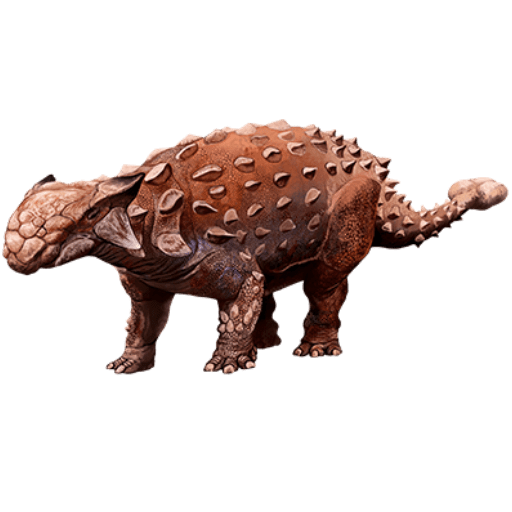
            The Ankylosaurus was a huge dinosaur. That alone would have been enough to discourage most meat eaters. It was just a little smaller than a bus – about 26 feet long and 7 feet tall, weighing as much as five tons. But it didn’t look like a bus – it looked like a tank.

            Tanks are covered with metal armor. The Ankylosaurus’ armor was made from thick bands or plates of bone. Spikes and knobs were scattered across the back and over the head. The armor covered its back, neck, and head – even its eyelids!

Ankylosaurus head cast
Tim Evanson, CC BY-SA 2.0, via Wikimedia Commons

            The armor was probably very frustrating to a hungry meat eater. Even if a meat eater could dodge the knobs and spikes, all it would get was a mouthful of bony armor – and maybe a few broken teeth.

            A meat eater had only one chance. The belly of the Ankylosaurus didn’t have any armor. If the meat eater could get to that soft spot, it could still have an Ankylosaurus snack. But all the Ankylosaurus had to do was crouch to the ground, folding its legs underneath. That way the only parts a meat eater could get to were covered with armor.

Illustration by Diana Magnuson

            Some meat eaters probably tried to flip it on it back. If it were flipped over, the weight of its armor would prevent it from flipping back, much like a turtle. It would be completely helpless. However, trying to flip an Ankylosaurus was like trying to flip a tank. Most ankylosaurs were much too heavy for even the strongest meat eater to budge. And, of course, it was hard to find a place to grab on, with all those spikes and knobs in the way.

            If a meat eater kept on bothering an Ankylosaurus, it ran the risk of provoking the creature into an attack. At the end of its tail, the Ankylosaurus had a huge, bony club. The club was about 16 inches wide and made of solid bone. The muscles in the tail were very strong. If an Ankylosaurus swung its club hard enough, it could probably have knocked down any other dinosaur, even a Tyrannosaurus. It might have been able to break a meat eater’s leg – or its skull – with that club. It certainly would have made that meat eater very sorry it ever wanted an Ankylosaurus for dinner!
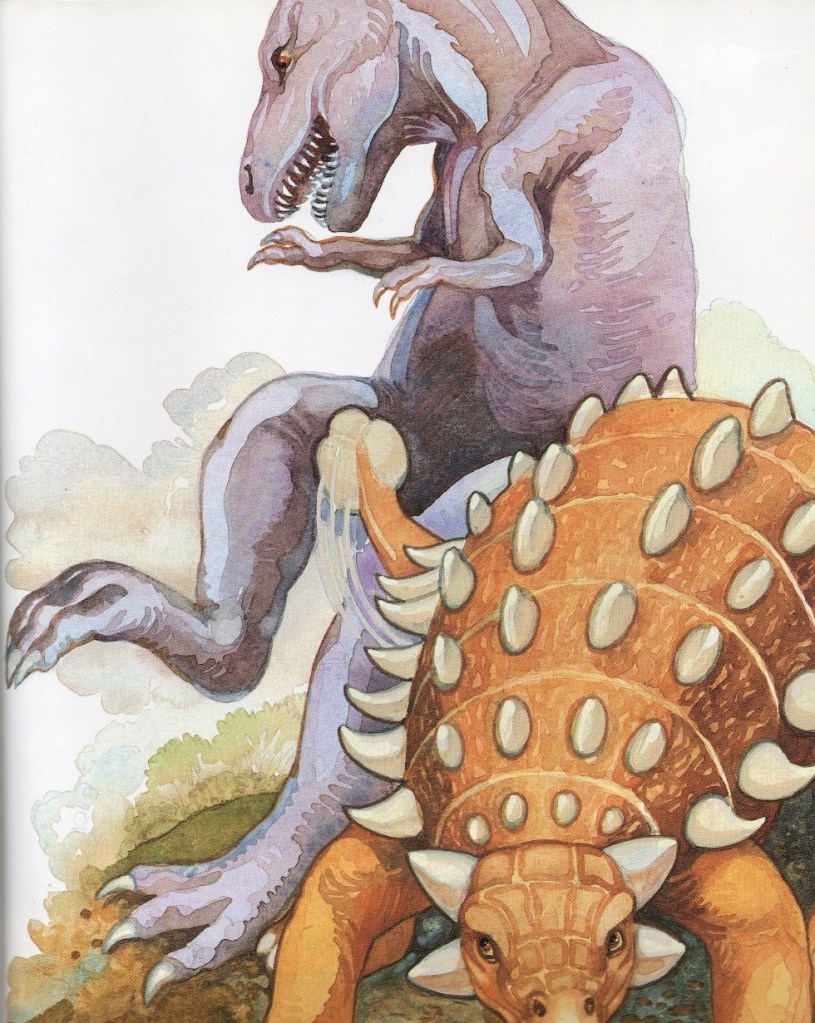
Illustration by Diana Magnuson

            Ankylosaurus had some trouble finding its own dinner. It was hard for it to move its head and neck because of all that armor. And it certainly couldn’t rear up on its back legs with all that heavy bone to lift. That meant that it could only feed on plants that grew close to the ground. Maybe that wasn’t all bad, though. Every now and then it might scoop up some ants or a few beetles for a tasty dessert.

            You might think that the Ankylosaurus with its heavy armor was a slow-moving dinosaur, but it was more like a rhinoceros than a turtle. A rhinoceros is very large and heavy, but it can run fast. Ankylosaurus wasn’t as fast as a rhino, but it could run as fast as 6 mph, which is about as fast as most people can run. The powerful leg muscles of Ankylosaurus helped it to move quickly if it needed to.

            Ankylosaurus was the biggest armored dinosaur that we know, but it was not the only one. It had many relatives. Some had more spikes. Some had few or none at all. Some had tail clubs. Some did not.
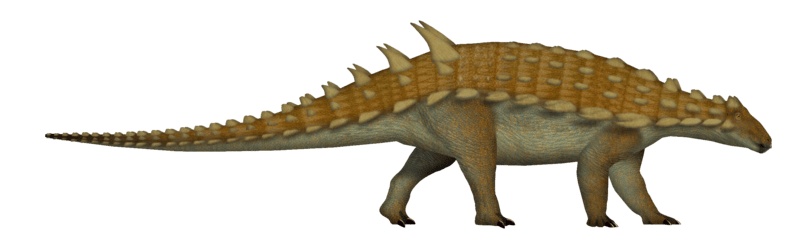
Hylaeosaurus
UnexpectedDinoLesson, CC BY-SA 4.0, via Wikimedia Commons
Yuxisaurus
Xi Yao, Paul M Barrett, Lei Yang, Xing Xu, Shundong Bi, CC BY 4.0, via Wikimedia Commons

            But most of them were good at surviving. Many of the armored dinosaurs lived until the very end of the age of dinosaurs. It wasn’t easy living in the same world as Tyrannosaurus, but it could be done – by a walking tank!

Sources (Click Me!)

“Ankylosaurus.” Natural History Museum of London. n.d. https://www.nhm.ac.uk/ discover/dino-directory/ankylosaurus.html

“Cretaceous Insects.” Western Australian Museum. n.d. https://museum.wa.gov.au/ explore/dinosaur-discovery/cretaceous-insects

Norman, David. The Illustrated Encyclopedia of Dinosaurs. Crescent Books, 1985.

Rasmussen, Patty and Talon Homer. “Ankylosaurus: A Tank-like Herbivore With a Killer Club Tail.” How Stuff Works. 10 July 2024. https://animals.howstuffworks.com/ dinosaurs/ankylosaurus.htm?utm_source=facebook&utm_medium=social&utm_campaign=hsw-owned&utm_content=animals&fbclid=IwY2xjawFYdItleHRuA2Flb QIxMQABHSJZrzMY8s_ckpGF7a0h_hX_66x-bgLwyX_Zqb-4gJSO4DdqauNWL6RUmA_aem_vUroiI23KZyLQ6TE2xysxw

Riehecky, Janet. Ankylosaurus. The Child’s World, 1991.
Uneasy Lies the Crown, Part 1

Tyrannosaurus rex, long considered the largest carnivorous dinosaur, faces competition from newer discoveries.

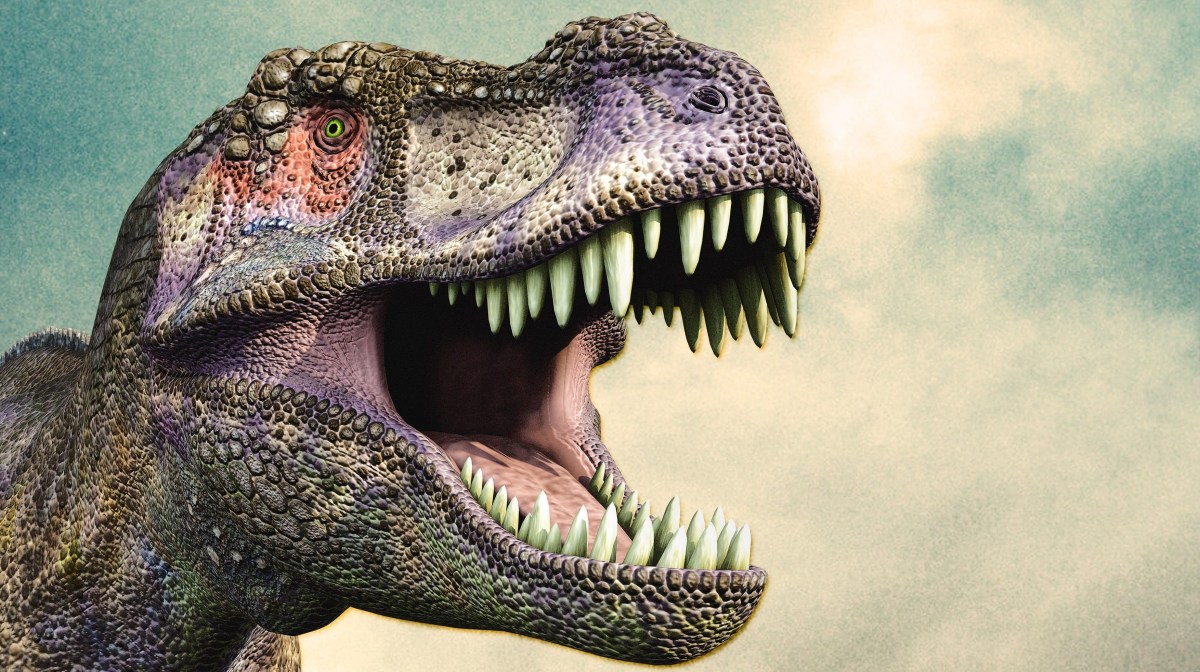
            The name Tyrannosaurus rex means “king of the tyrant lizards,” but a number of other giant carnivores would like to steal its crown. Recently some pretty big, fierce dinosaurs have been found.

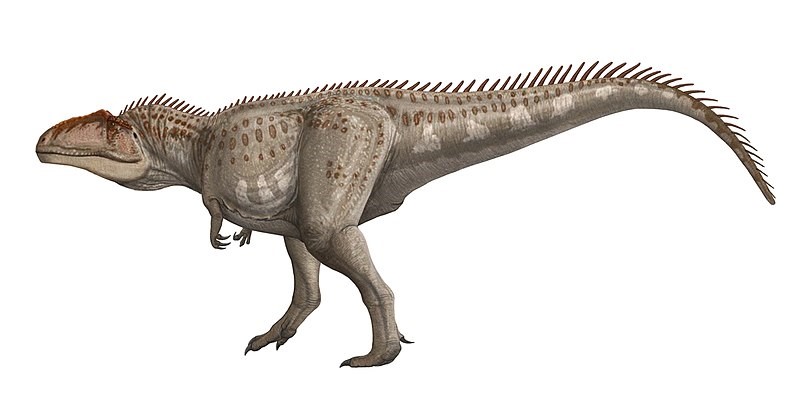
Tyrannosaurus
Nobu Tamura, CC BY-SA 4.0, via Wikimedia Commons

            From its discovery in 1902 until the 1990s, Tyrannosaurus rex was regarded as the biggest, most powerful carnivorous dinosaur of all. It was about 40-42 feet long, stood about 12-15 feet tall at the hip, and weighed about 9.7 tons. These days, however, there are at least four other contenders for that crown. Two are from Argentina and two are from Africa. Today, I’m going to write about the two from Argentina, and in two weeks, the two from Africa.

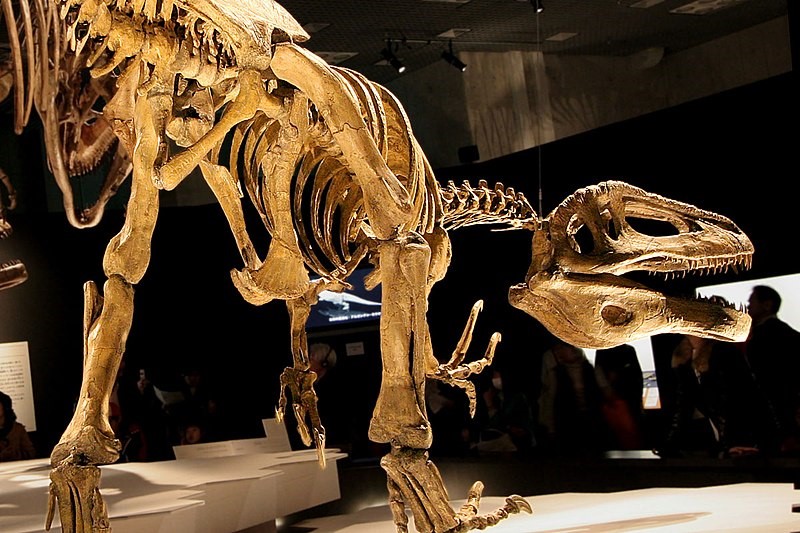
            Giganotosaurus (GIG-ah-noh-ta-SAWR-us). was found in Argentina in 1993. Its name comes from Greek words meaning “giant southern lizard.” There’s a lot of confusion about how to pronounce its name. It is definitely not said like gigantic. That leaves out the first “o” in its name. In Greek, the “g” is a hard sound, like get. So that’s what I go with. Lots of Internet sources use a “j” sound, making it JIG-ah-noh-ta-SAWR-us. But I have to go with the Greek sound: GIG-ah-noh-ta-SAWR-us.

             When it was first discovered, paleontologists thought Giganotosaurus was an impressive eight feet bigger than T-rex. Now most think they were similar in size, though Giganotosaurus was probably a little longer, about 40-423 feet long. Their heights and weights also seem to have been similar, with Giganotosaurus having just a slight edge.

            T-rex did have some advantages. Its teeth, which were likely used as weapons, could reach 12 inches long, but those of Giganotosaurus were only 8 inches (as if eight-inch teeth were small!). Even more importantly, T-rex had a bigger brain, with well-developed optical lobes, helping it see better. Giganotosaurus had smaller optical lobes, but bigger lobes devoted to smell. Which do you think is more important to a hunter: sight or smell?

            These two certainly would have had a huge battle if they ever met. But that never happened. Giganotosaurus lived about 99.5 to 95 million years ago in the area that is now Argentina in South America. Tyrannosaurus lived 72.7 to 66 million years ago in what is now the western United States.

Giganotosaurus
ДиБгд, Public domain, via Wikimedia Commons

            The other contender from Argentina is Megaraptor (MEG-uh-rap-tor). Its name means “large thief.” Megaraptor is known from just a few partial skeletons found in Argentina and Australia in 1997. It lived about 75 to 92 million years ago. Scientists think it might have been about the same height as T-rex. Megaraptor was about 13 feet tall at the hip, but it was not nearly as long, only about 25 to 33 feet, 7-9 feet shorter than Tyrannosaurus.          

Megaraptor skeleton
Kabacchi, CC BY 2.0, via Wikimedia Commons

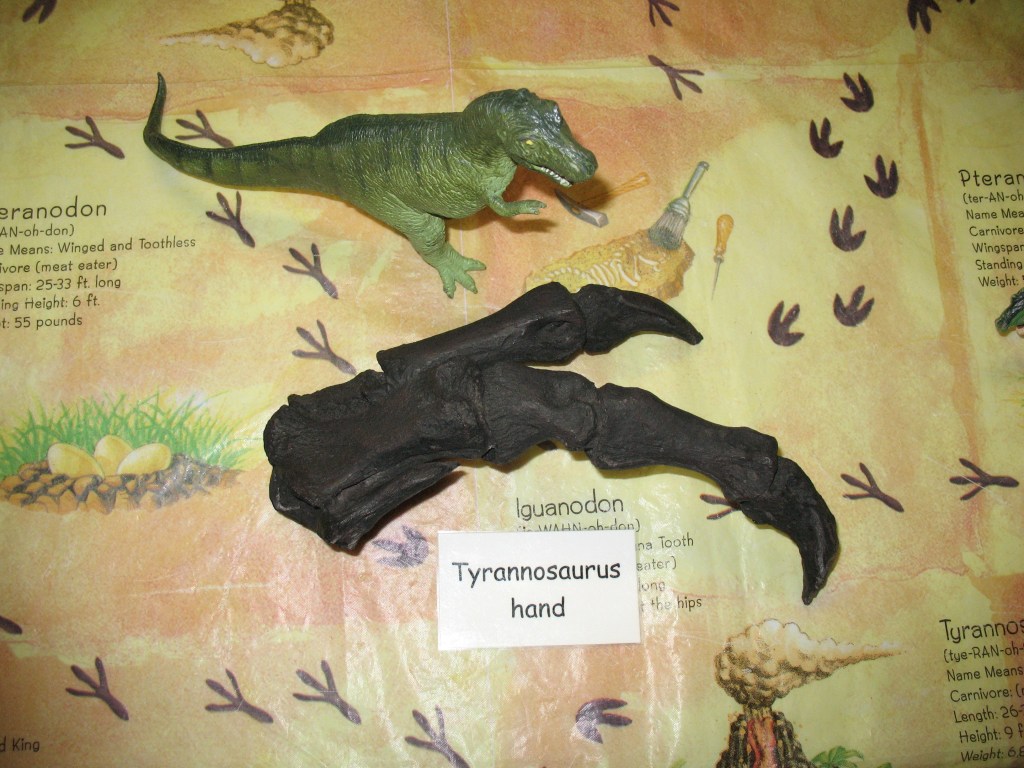
            It would seem that Tyrannosaurus’ larger size and probably greater strength would scare Megaraptor off before the fight even began, but that’s not the whole story. What Megaraptor did have was a 15-inch claw on the first finger of each of its hands – and its other claws were pretty big, too. That first claw, though, is almost twice the length of the longest T-rex claw. Tyrannosaurus’s tiny arms were pretty useless in a fight. Megaraptor could use its longer, muscular arms and huge hands to reach in and slash its prey. Also, Megaraptor’s lighter build probably made it faster than T-rex and more agile. It could dart in and out quickly to avoid Tyrannosaurus.

Tyrannosaurus Hand (Left)
(Provided by Myself)
Megaraptor Hand (Right)
raffaele sergi from Pinerolo, Italia, CC BY 2.0,
via Wikimedia Commons

            So, it would be an epic battle. Who do you think would win?
            Could either of these two take Tyrannosaurus’ crown? Or does that crown belong to a dinosaur from Africa? Come back in two weeks to find out.

Sources (Click Me!)

Calvo, Jorge Orlando and Rodolfo Coria. “New Specimen of Giganotosaurus Carolini (Coria & Salgado, 1995), Supports it as the Largest Theropod Ever Found.” GAIA, Lisbon, December 1998.

Currie, Philip J and Colleayn O. Mastin. The Newest and Coolest Dinosaurs. Grasshopper Books Publishing, 1998.

Frachtenberg, Fabio, and Jorge Calvo, Oscar A. Frachtenberg. Dinosaurios Argentinos: Giants of Patagonia. Aurora, IL: SciTech Hands-On Museum, 2006.

Gasparini, Zulma, Leonardo Salgado, and Rodolfo A. Coria (eds.). Patagonian Mesozoic Reptiles. Indiana University Press, 2007.

Hall, Timothy C. Megaraptor. University of Tennessee at Chattanooga. 27 April 1998. <http://pages.prodigy.net/fenrisulf/geology/geo1.htm&gt;.

Hecht, Jeff. “Contenders for the crown.” Earth. 1 Feb. 1998. 16. Academic Search Premier. EBSCO. Judson University Library, Elgin, IL.15 July 2009 <http://www.judsonu.edu: 2048/login?url=htto://<http://www.judsonu.edu:2048/login?url=http://search.ebscohost.com/login.aspx?direct=true&db=aph&AN=89601&site=ehost-live>.

Holden, Constance. “Largest dino claw unearthed.” Science. 19 Dec. 1997. Academic Search Premier. EBSCO.  Judson University Library, Elgin, IL. 15 July 2009 <http://www.judsonu.edu:2048/login?url=http://search.ebscohost.com/login.aspx?direct=true&db=aph&AN=8552&site=ehost-live&gt;.

Horner, John R. and Don Lessem. The Complete T-rex. New York: Simon and Schuster, 1993.

“Koine Greek Alphabet.” Biblical Greek Alphabet. Greek for All Institute. 2024. https://greekforall.com/learn-biblical-greek-grammar/biblical-greek-alphabet/.

Larson, Peter and Kenneth Carpenter. Tyrannosaurus Rex: The Tyrant King. Indianapolis: Indiana University Press, 2008.

Mazzetta, Gerardo V., Per Christiansen, and Richard Farina. “Giants and Bizarres: Body Size of Some Southern South American Cretaceous            Dinosaurs.” Historical Biology, June – December 2004, Vol. 16 (2-4) pp. 71-83.

“Megaraptor: Fossils of 10m-long dinosaur found in Argentina.” BBC. 19 May 2020. <https://www.bbc.com/news/world-latin-america-52723049&gt;.

Miller, Erin. “T-Rex’s older, tougher cousin – Giganotosaurus skeleton will go on national tour.”Daily Telegraph, The (Sydney) (n.d.). Newspaper Source_. EBSCO. Judson University Library, Elgin, IL 15 JJuly 2009. <http://www.judsonu.edu:2048/login? url=http://<http://www.judsonu.edu:2048/login?url=http://search.ebscohost.com/login.aspx?direct=true&db=nfh&AN=200312221022639124&site=ehost-live>.

Monastersky, R. “New Beast Usurps T. rex as King Carnivore.” Science News 148.13 (23 Sep. 1995): 199. Academic Search Premier. EBSCO. Judson University Library, Elgin, IL. 15 July 2009 <http://www.judsonu.edu:2048/login?url=http://search.ebscohost.com/login.aspx?direct=true&db=aph&AN=9510094855&site=ehost-live&gt;.

Novas, Fernando, E., Diego Pol Juan I. Canale; Juan D. Porfiri; Jorge O. Calvo. “A Bizarre Cretaceous Theropod Dinosaur from Patagonia and the Evolution of Gondwanan Deomaeosaurids. Proceedings: Biological Sciences, Mar2009, Vol. 276, Issue 1659, p1101-1107.

Porfiri, Juan D., Domenica Dos Santos, and Jorge O. Calvo. “New Information on Megaraptor namunhuaiquii (Theropoda: Tetanurae), Patagonia: Considerations on Paleoecological Aspects.” Arquivos do Museu Nacional, Rio de Janeiro, 2007, Vol. 65, n. 4, pp. 545-550.

Richardson, Hazel. Smithsonian Handbooks: Dinosaurs and Prehistoric Life. Dorling Kindersley, 2003.

Smith, Nathan D., Peter J. Makovicky1, Federico L. Agnolin, Martin D. Ezcurra, Diego F. Pais3 and Steven W. Salisbury. “A Megaraptor -like theropod (Dinosauria: Tetanurae) in Australia: Support for Faunal Exchange across Eastern and Western Gondwana in the Mid-Cretaceous.” Proceedings of the Royal Society. 20 May 2008.

Spotts, Peter N. “Giant Dinosaur Fossil Forces Scientists to Question Theories.” Christian Science Monitor 03 Dec. 1997: 3. Academic Search Premier. EBSCO. Judson University Library, Elgin, IL. 15 July 2009. <http://www.judsonu.edu:2048/login?url=http://search. ebscohost. com/login.aspx?direct=true&db=aph&AN=9712050418&site=ehost-live>.

“Sue at the Field Museum.” The Field Museum, Chicago, IL. 2007. 15 July 2009. <http://www.fieldmuseum.org/SUE/about.asp&gt;.

 University of Queensland. “Australian Dinosaur Found to Have South American Heritage.” ScienceDaily. 15 June 2008. <http://www.sciencedaily.com­/releases/ 2008/06/080613111410.htm>.

Tyrannosaurus Footprints

Lets discover the hidden history in the tracks!

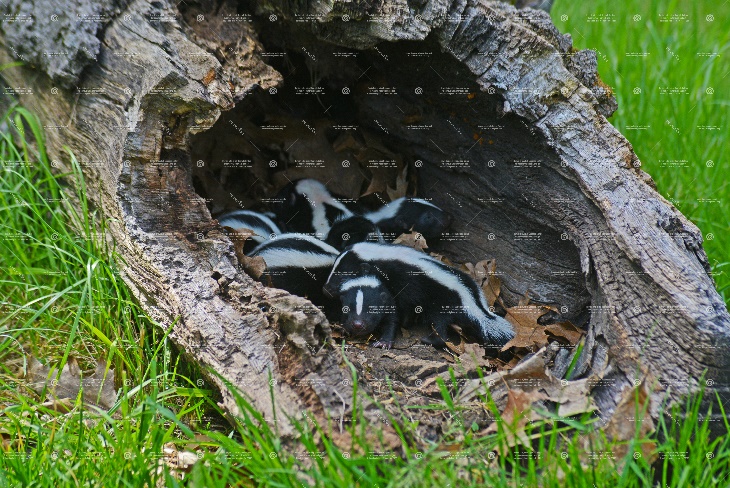
A herd of skunks

            I don’t know who makes up the names for groups of animals: a herd of cows, a pack of wolves, or a litter of kittens.  Some of the group names are funny: a business of ferrets, a kettle of hawks, a bloat of hippopotami, a shiver of sharks, a stench of skunks, and an ambush of tigers. But whoever makes up those names certainly got it right for Tyrannosaurus. A group of them is called a terror of tyrannosaurs. Several species of dinosaur fall into the category of tyrannosaur, such as Albertosaurus, Gorgosaurus, and Daspletosaurus. The most famous, of course, is Tyrannosaurus rex. All of them are among the largest meat-eating creatures that ever lived.

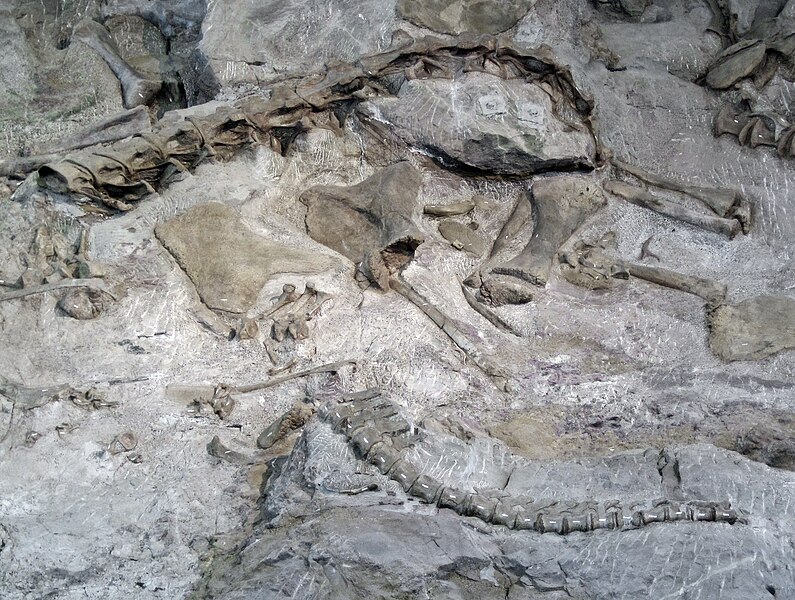
Centrosaurus Bone Bed
James St. John, CC BY 2.0, via Wikimedia Commons

            Scientists don’t know whether or not Tyrannosaurus lived or travelled in groups. There are only two clues that could help with this. Sometimes paleontologists find bonebeds that contain many dinosaurs of the same kind that all died at the same time. That might happen if a flash flood killed a large herd of animals. For example, in Alberta, Canada, thousands of bones of the dinosaur Centrosaurus were found in a bonebed measuring about 1 ½ square miles. This is strong evidence that centrosaurs travelled in large groups. Dinosaur bonebeds for Protoceratops, Avimimus, Pinacosaurus, Edmontosaurus, and others have been found. But no bonebeds of Tyrannosaurus or any other tyrannosaur have ever been discovered.

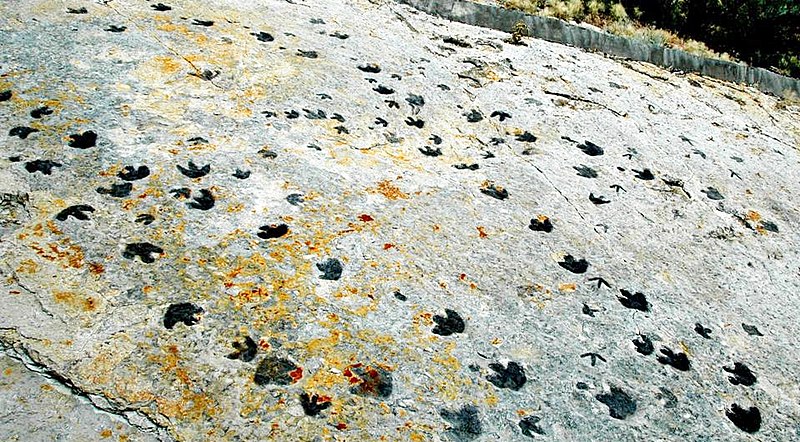
            The other evidence of animals living or travelling in groups is footprints. Often just one, single footprint is found. Other times a trackway is found, showing the progress of a single dinosaur.

A wide variety of T-Rex and other dino tracks
James St. John, CC BY 2.0, via Wikimedia Commons dinosaur

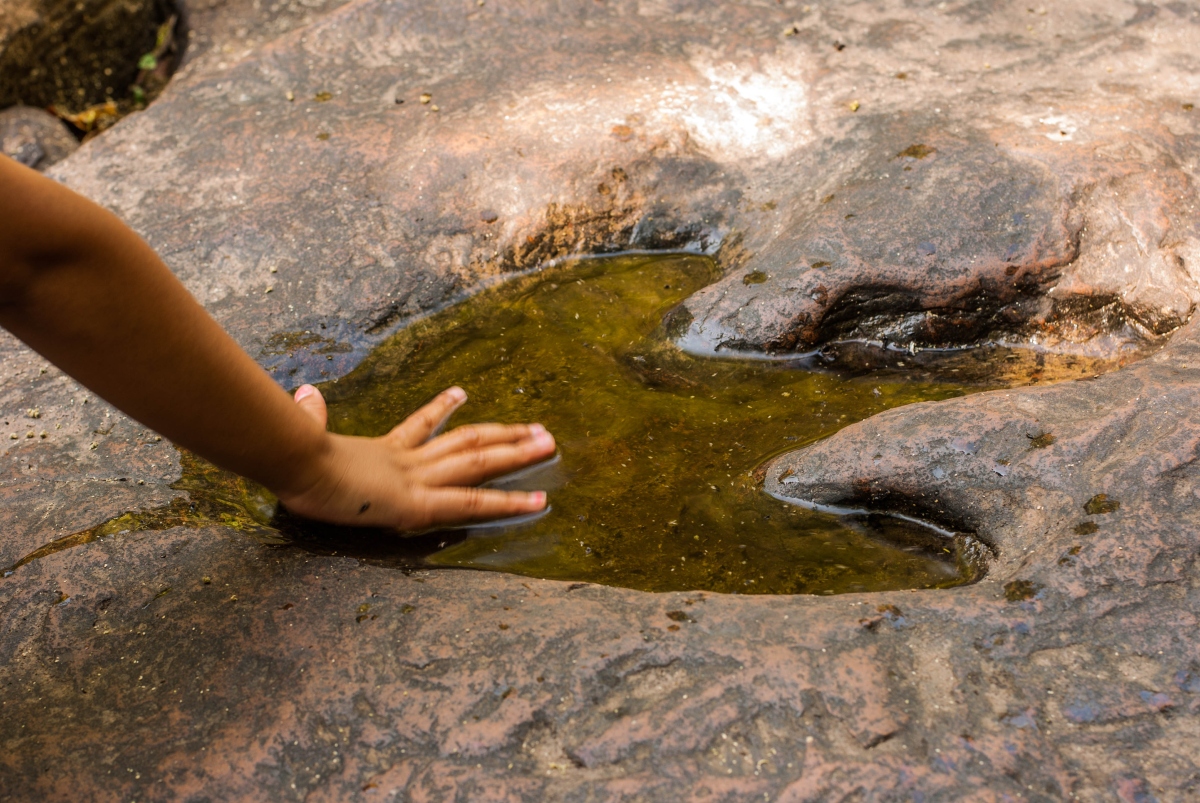
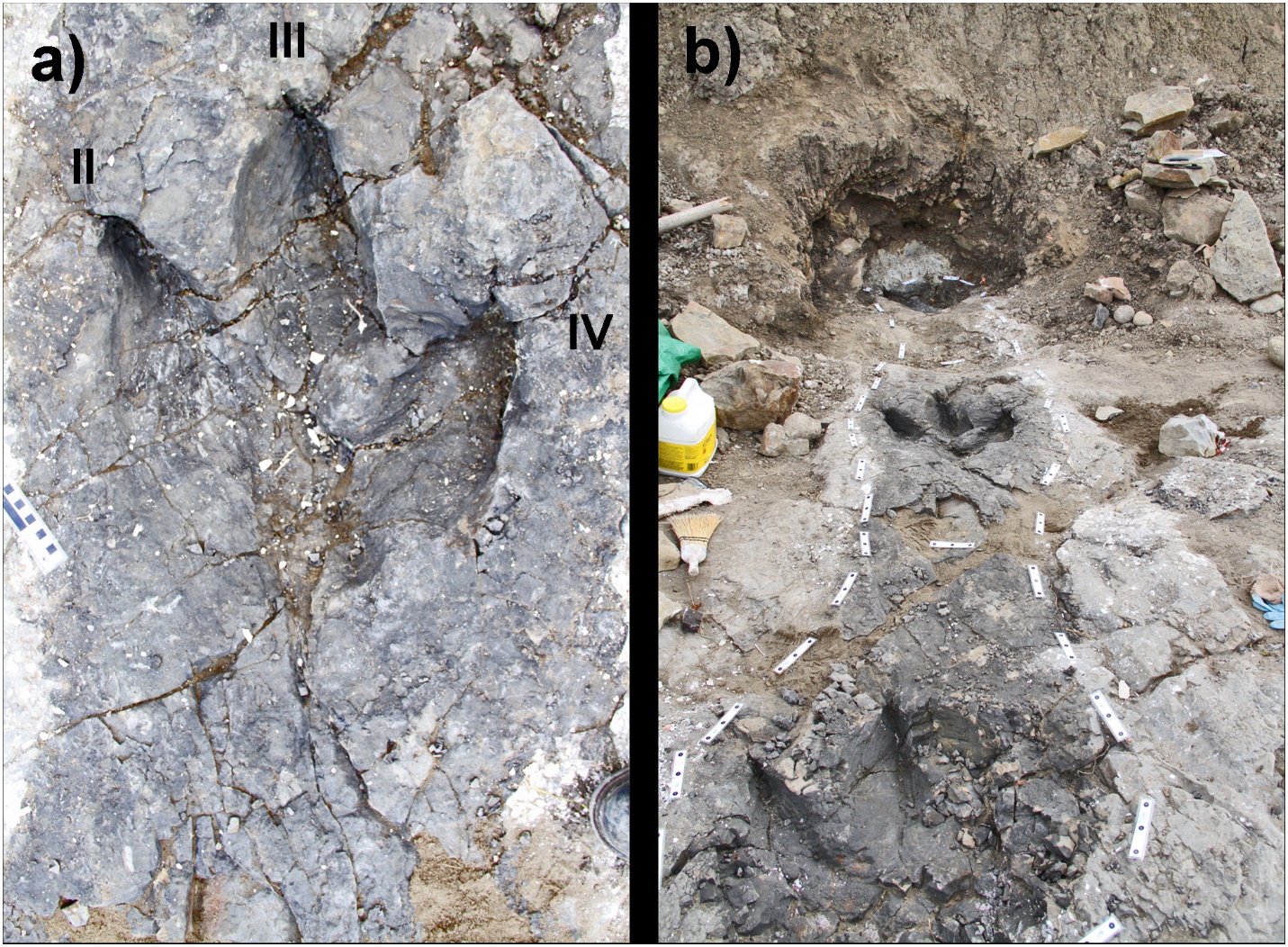
            Sometimes there are many footprints, showing the travels of a whole herd. Prior to 2011, only single footprints of tyrannosaurs had been found. Though it’s hard to say for sure which made a footprint, scientists can make educated guesses. The one most confidently attributed to Tyrannosaurus rex was found in Montana in 2007. The Montana footprint was 2 ½ feet long with slender toes, and it was found in the right age of rock for Tyrannosaurus. Also, its toes were correctly positioned for T-rex, so paleontologists are fairly certain they have correctly identified it. But that print doesn’t tell us much about how Tyrannosaurus lived and moved.

            Some scientists thought that because they had never found a tyrannosaur bonebed or more than one footprint of a tyrannosaur that Tyrannosaurus was a solitary creature, perhaps only associating with others of its kind for mating. Many of today’s predatory birds, such as eagles and hawks, are largely solitary. That way they don’t have to compete for food. But in 2011 a trackway showing three tyrannosaurs walking together made scientists reconsider the idea of tyrannosaurs as loners.

            In the forests of northeastern British Columbia, paleontologists uncovered a series of tracks showing three large dinosaurs walking side by side. A total of seven footprints were found: three from one dinosaur and two from each of the other two, but all the footprints were made at the same time, and they are clearly walking together. The prints are so well preserved that scientists can even see scales on the dinosaurs’ feet. The size of the tracks and the size and positioning of the toes clearly make these tyrannosaur tracks. However, it’s not possible to know which species of tyrannosaur they are from.

            The size of the footprints does indicate that the creatures were of a similar age, different scientists estimating perhaps 25, 26, and 29 years old. The size also indicates their approximate height: 7.5 to 9.4 feet tall, measured at the hip. Dinosaur height is usually measured at the hip because most of them didn’t hold their heads at a consistent height. By knowing the height of the animal and measuring how far apart the footprints are, scientists can determine how fast the dinosaurs were going. When scientists did the math for these footprints, they concluded that these three dinosaurs were going 3.9 to 5.2 m.p.h. However, in 2021 researchers from the Netherlands made a computer reconstruction of a Tyrannosaurus walking, and they concluded that its top speed was only about 3 m.p.h. More evidence is needed to figure out how fast a tyrannosaur could walk.

            Still the trackways give a tantalizing look at the life of a tyrannosaur, no longer a loner, but a friendly guy who liked to hang out with his terror of friends.

            Make up a name for a group of you and your friends. Please put it in the comments below!

Sources (Click Me!)

Bryner, Jeanna. “Tyrannosaur Footprint Found in Montana.” Live Science.” 11 Oct. 2007. https://www.livescience.com/1939-tyrannosaur-footprint-montana.html

Burns, M. E., T. A. Tumanova and Philip J. Currie. “Postcrania of Juvenile Pinacosaurus grangeri (Ornithischia: Ankylosauria) from the Upper Cretaceous Alagteeg Formation, Alag Teeg, Mongolia: Implications for Ontogenetic Allometry in Ankylosaurs.” Journal of Paleontology. 2015. Vol. 89, pp. 168-182. https://pubs.geoscienceworld.org/jpaleontol/ article-abstract/89/1/168/139797/Postcrania-of-juvenile-Pinacosaurus-grangeri.

Choi, Charles Q. “Tyrannosaurus Trackways Reveal a Dinosaur’s Walk.” Popular Mechanics. 23 July 2014. https://www.popularmechanics.com/science/animals/a10933/ tyrannosaurus-trackways-reveal-a-dinosaurs-walk-17016027/

Evans, D. C., D. A. Eberth, and M. J. Ryan. “Hadrosaurid (Edmontosaurus) Bonebeds from the Horseshoe Canyon Formation (Horsethief Member) at Drumheller, Alberta, Canada: Geology, Preliminary Taphonomy, and Significance.” Canadian Journal of Earth Science. 2015. Vol. 52, pp. 642–654. https://cdnsciencepub.com/doi/pdf/10.1139/cjes-2014-0184?download=true.

Gamillo, Elizabeth. “New Study Finds T-rex Walked at a Slow Pace of Three Miles Per Hour.” Smithsonian Magazine. 23 April 2021. https://www.smithsonianmag.com/smart-news/new-study-finds-that-t-rex-walked-at-slow-pace-of-3-miles-per-hour-180977572/

“Largest Dinosaur Graveyard Found in Alberta.” The Canadian Press. 17 June 2010. https://www.cbc.ca/news/canada/largest-dinosaur-graveyard-found-in-alberta-1.874716

McCrea R.T., L.G. Buckley, J.O. Farlow, M.G. Lockley, P.J. Currie, et al. “A ‘Terror of Tyrannosaurs’: The First Trackways of Tyrannosaurids and Evidence of Gregariousness and Pathology in Tyrannosauridae.” 30 July 2014. PLoS ONE Vol. 9, p. 7: e103613. doi:10.1371/ journal.pone.01036

Title Image: Stock photo shows a dinosaur footprint in the ground. Footprints in Texas have been revealed as drought persists.
NEENAWAT/GETTY

Battling Dinosaurs

            On a summer day in 2006, a fossil hunter named Clayton Phipps made a discovery that ranks among the most spectacular dinosaur finds ever. While exploring the rocky terrain of the Montana hills, he spotted a bit of bone weathering out of the rock. It turned out to be part of the pelvis of a Triceratops. After digging on and off for months, he discovered that it might be a complete skeleton of a 28-foot-long Triceratops.

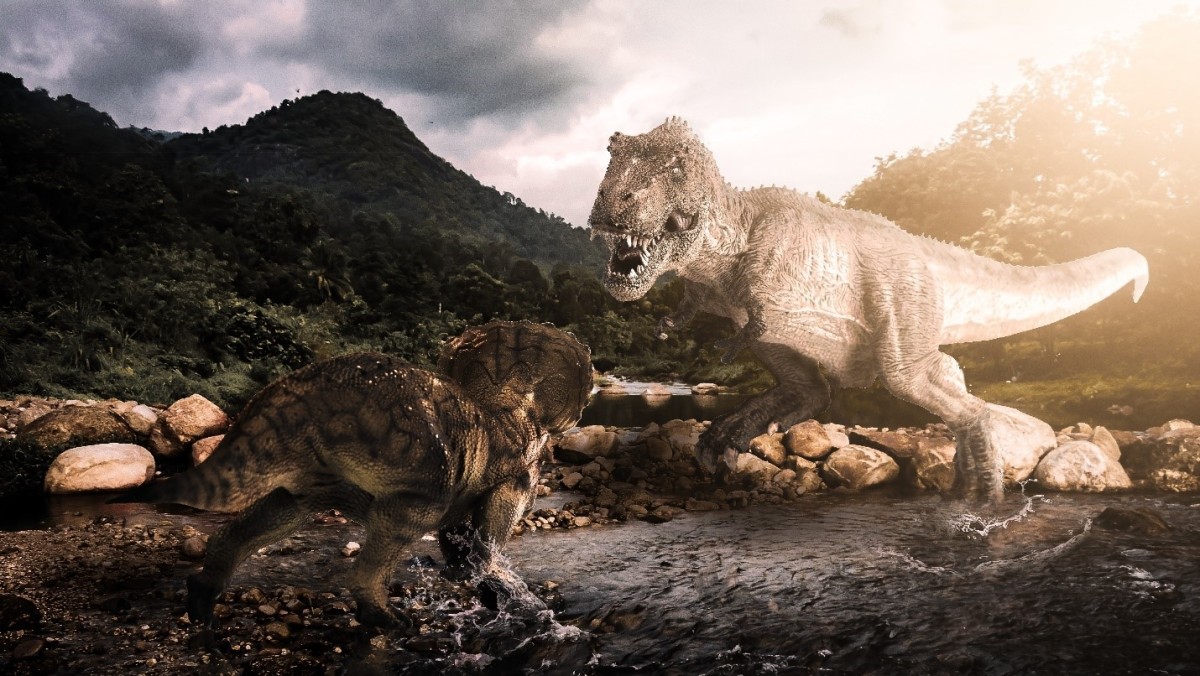
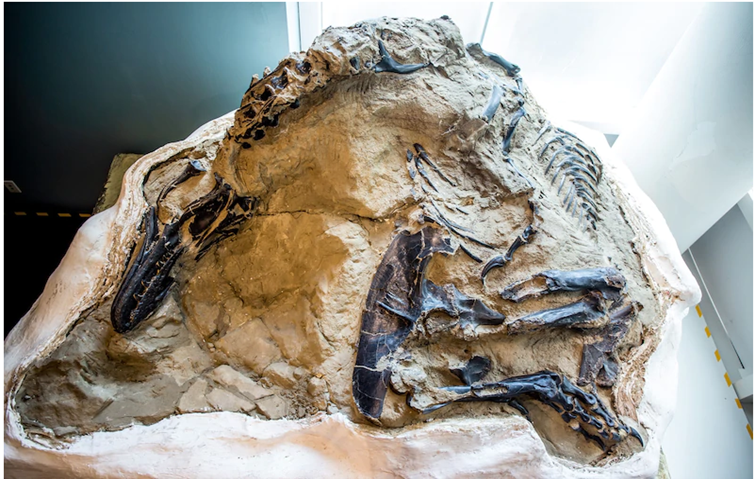
            That’s rare, but that’s not all he found. With it, he unearthed the only 100% complete skeleton of a juvenile Tyrannosaurus Rex that has ever been found. It is 22 feet long, with all the bones are articulated – in their natural positions next to each other – which is very rare. And on top of that, they look like they were locked in battle when they died! This is a spectacular discovery! Only one other pair of apparently fighting dinosaurs – a Velociraptor and Protoceratops – has ever been found.

https://prehistoric-wiki.fandom.com/wiki/Tyrannosaurus

            Did the two dinosaurs die fighting each other? Scientists need more time before they can say for sure. Because there was a long court battle over who owned these bones, they are only just now getting to study them. They know that some of the Tyrannosaurus’ teeth are broken, and that some tyrannosaur teeth are in the Triceratops’ bones and body cavity, but they don’t know yet if those teeth belonged to this Tyrannosaurus. If they do, they could have gotten there in a fight, or it could be that the Tyrannosaurus found a dead Triceratops and took a bite. The Tyrannosaurus’ skull is cracked, and one finger is broken. But if the two creatures were killed by a mudslide, the impact of the mud and the debris it carried might have caused those injuries.

            However, it is also reasonable to think that those injuries happened in a fight. Scientists have never found skin impressions from a Triceratops frill – until now. There are also skin impressions on the Tyrannosaurus’ feet And they think some of the soft tissue inside the dinosaurs has been preserved, such as the stomachs. It might be possible to find out the last meal of each of these dinosaurs – before they ran into each other!

            Scientists are excited about the chance to study these unique dinosaurs. And very soon, the public will get to see them, too. These “Dueling Dinosaurs,” as they have been nicknamed, will be on show for the public at the North Carolina Museum of Natural Sciences in Raleigh, NC, beginning in 2024. I can’t wait to go!

            Do you think they died fighting each other? Let me know in the comment section.

Sources (Click Me)

Geggel, Laura. “Cretaceous cold case of ‘dueling’ T. rex and Triceratops may finally be solved.” Live Science. 17 Nov. 2020. https://www.livescience.com/dueling-dinosaurs-fossils-to-museum.html

Greshko, Michael. “’Dueling Dinosaurs’ fossil, hidden from science for 14 years, could finally reveal its secrets.” National Geographic. 17 Nov. 2020. https://www.nationalgeographic.com/science/article/dueling-dinosaurs-fossil-finally-set-to-reveal-secrets Accessed 24 Feb. 2021.

Sager, Mike. “Will the Public Ever Get to See the ‘Dueling Dinosaurs’?” Smithsonian Magazine.
July, 2017. https://www.smithsonianmag.com/science-nature/public-ever-see-dueling-dinosaurs-180963676/

Strickland, Ashley. “’Dueling dinosaurs’ fossils show Triceratops, T. rex, may have died after a battle.” CNN. 18 Nov. 2020. https://www.cnn.com/2020/11/17/world/dueling-dinosaurs-triceratops-t-rex-scn-trnd/index.html Accessed 24 Feb. 2021.