Uneasy Lies the Crown, Part 2

            As I wrote a few weeks ago, there are some serious contenders for Tyrannosaurus’ crown as the biggest, fiercest land carnivore of all time. Giganotosaurus and Megaraptor could certainly give Tyrannosaurus a battle, but this week’s contenders, from Africa, are even more powerful.

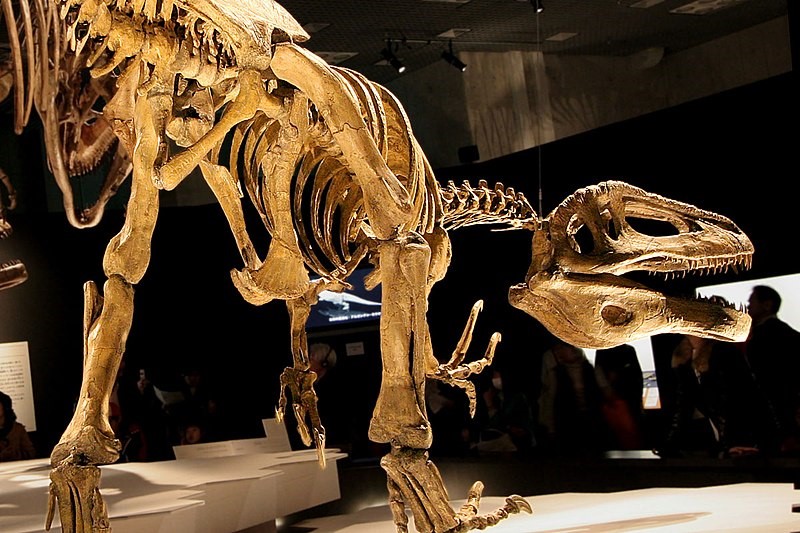
            Carcharodontosaurus (Kar-KAR-oh-don-toe-SAWR-us) lived in Northern Africa during the late Cretaceous Period 99 to 94 million years ago. Its name means “shark-toothed lizard,” and its long jagged-edged teeth are much like those of a shark.

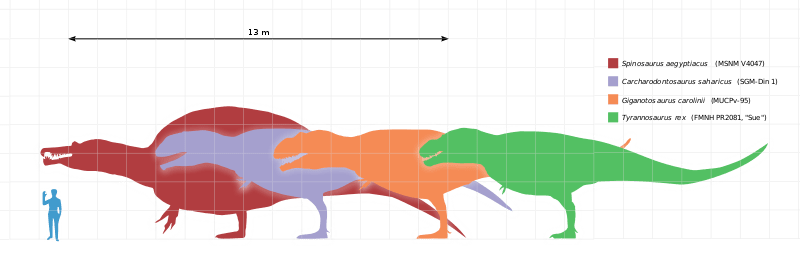
https://upload.wikimedia.org/wikipedia/commons/f/f5/Carcharodontosaurus_Scale.svg

            Most estimates rank Carcharodontosaurus as about three or four feet longer than Tyrannosaurus. It’s hard to tell because scientists have found only some tens of bones and a number of teeth from it.

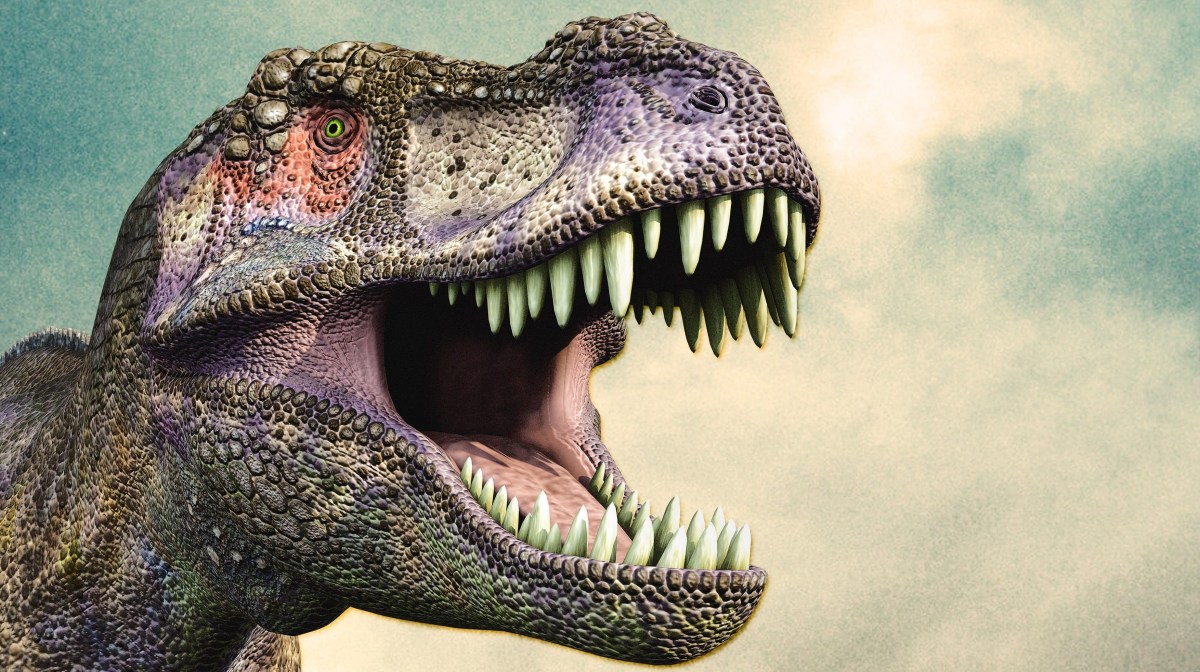
            Even if Carcharodontosaurus is slightly larger, Tyrannosaurus still has a number of advantages. Smithsonian Magazine reported that Tyrannosaurus’ bite force was almost 12,800 pounds, stronger than any other animal that ever walked on land. (Megalodon, an enormous extinct shark, does have it beat at 41,000 pounds. There was also an extinct crocodile named Purussaurus which had a bite of 15,500 pounds of force.) Tyrannosaurus’ bite was stronger than the force of an average-sized African elephant dropping on you. (I don’t want to even think what that means about Megalodon’s bite.) Tyrannosaurus’ teeth are shaped like bananas. The rounded shape is very effective at breaking bones. Carcharodontosaurus’ teeth were shaped differently. They were thinner, more like the blade of a knife. They were meant for shearing meat from bones. They might have broken if Carcharodontosaurus bit directly into thick bones.

            Tyrannosaurus also had an advantage in eyesight. Its eyes were more forward looking than Carcharodontosaurus’. This gave Tyrannosaurus a wider range of sight, enabling it to see more of what was in front of it. Because of the shape of Carcharodontosaurus’ skull, it would have had to drop its head toward its chest to see any distance ahead. This likely meant it hunted its prey by ambushing them, rather than chasing after them. Regardless, if the two had ever met, it would have been a titanic battle.
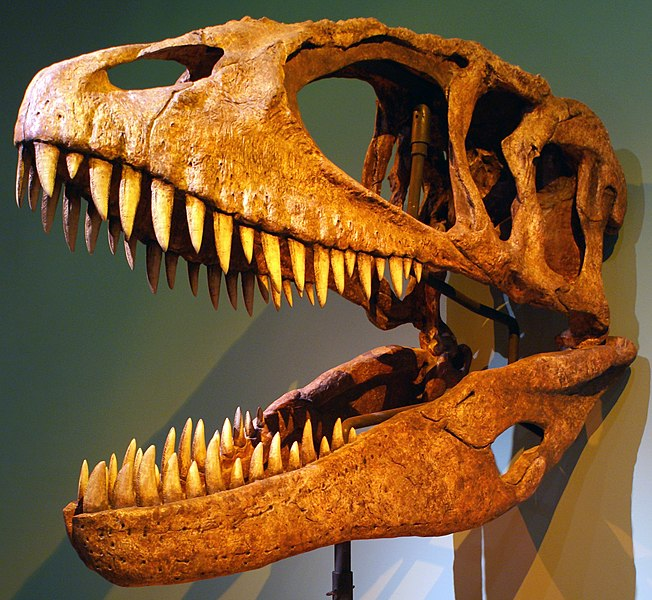
Franko Fonseca from Redondo Beach, USA, CC BY-SA 2.0,via Wikimedia Commons

            And then there’s the biggest of the top five, Spinosaurus. It also lived during the late Cretaceous Period and was found in North Africa. This creature was about 49 feet long and weighed just over eight tons. However, its back legs were much shorter than Tyrannosaurus’, making it about 9 feet tall at the hip compared to Tyrannosaurus’ 12-15 feet in height. However, if the sail on Spinosaurus’ back is included, then it was 15-16 feet tall.
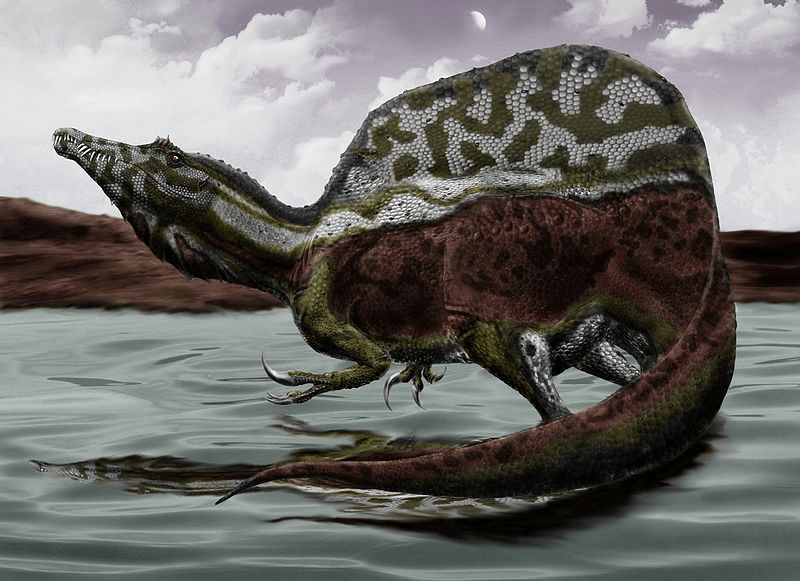
Durbed, CC BY-SA 3.0, via Wikimedia Commons

            It’s difficult to compare its power to the other three because it was shaped differently and lived a different kind of life. It was a little thinner, with a large sail on its back, a paddle-shaped tail and its jaws were long and narrow like a crocodiles’. Its teeth were like overturned ice cream cones instead of curved with jagged edges. Scientists think that it hunted at least part of the time in the water and that on land it stayed near the coast and ambushed its prey, rather than running it down. Its likely that, despite its huge size, its shorter legs would have made it less agile than Tyrannosaurus. Its tail would have been a formidable weapon for knocking other dinosaurs around, but that might not be enough.

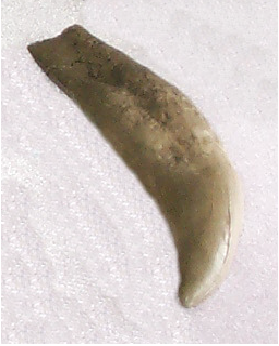
Figure 1 (left) Spinosaurus tooth – 1 Jiří X. Doležal (about me), CC BY-SA 3.0, via via Wikimedia Commons. Figure 2 (right) Tyrannosaurus tooth

            Scientists don’t know which of these dinosaurs was most powerful. Even though it’s been many years since Giganotosaurus, Megaraptor, Carcharodonotosaurus, and Spinosaurus were discovered, scientists still know very little about them. It takes a long time for fossil bones to be excavated and studied. For me, however, Tyrannosaurus still holds its crown by virtue of its long teeth, large brain, and powerful bite. But never forget that there is another alternative: any day a paleontologist might dig up a new dinosaur that could take on all of them.

What do you think?
Sources (Click Me!)

Aureliano Tito, Aline M. Ghilardi, Edson Guilherme, Jonas P. Souza-Filho, Mauro Cavalcanti, and Douglas Riff . “Morphometry, Bite-Force, and Paleobiology of the Late Miocene Caiman Purussaurus brasiliensis.” PLOS ONE. 17 Feb. 2015. https://journals.plos.org/plosone/article?id=10.1371/journal.pone.0117944.

Black, Riley. “The Tyrannosaurus Rex’s Dangerous and Deadly Bite.” Smithsonian Magazine. Oct., 2012. https://www.smithsonianmag.com/science-nature/the-tyrannosaurus-rexs-dangerous-and-deadly-bite-37252918/

Currie, Philip J and Colleayn O. Mastin. The Newest and Coolest Dinosaurs. Grasshopper Books Publishing, 1998.

Gasparini, Zulma, Leonardo Salgado, and Rodolfo A. Coria (eds.). Patagonian Mesozoic Reptiles. Indianapolis: Indiana University Press, 2007.

Hecht, Jeff. “Contenders for the crown.” Earth 7.1 (Feb. 1998): 16. _Academic Search Premier_. EBSCO. Judson University Library, Elgin, IL.15 July 2009 <http://www.judsonu.edu:2048/login?url=htto://<http://www.judsonu.edu:2048/login?url=http://search.ebscohost.com/login.aspx?direct=true&db=aph&AN=89601&site=ehost-live&gt;.

Horner, John R. and Don Lessem. The Complete T-rex. New York: Simon and Schuster, 1993.

Larson, Peter and Kenneth Carpenter. Tyrannosaurus Rex: The Tyrant King. Indianapolis: Indiana University Press, 2008.

Monastersky, R. “New beast usurps T. rex as king carnivore.” Science News 148.13 (23 Sep. 1995): 199. Academic Search Premier. EBSCO. Judson University Library, Elgin, IL. 15 July 2009 <http://www.judsonu.edu:2048/login?url=http://search.ebscohost.com/login.aspx?direct=true&db=aph&AN=9510094855&site=ehost-live&gt;.

Novas, Fernando, E., Diego Pol Juan I. Canale; Juan D. Porfiri; Jorge O. Calvo. “A bizarre Cretaceous theropod dinosaur from patagonia and theevolution of Gondwanan deomaeosaurids. Proceedings: Biological Sciences, Mar2009, Vol. 276 Issue 1659, p1101-1107, 7p.

Rafferty, John P. “Megalodon.” Britannica. <https://www.britannica.com/animal/megalodon&gt;.

Richardson, Hazel. Smithsonian Handbooks: Dinosaurs and Prehistoric Life. New York: Dorling Kindersley, 2003.

Sereno PC, Myhrvold N, Henderson DM, Fish FE, Vidal D, Baumgart SL, Keillor TM, Formoso KK, Conroy LL. “Spinosaurus is Not an Aquatic Dinosaur.” Elife. 2022 Nov 30;11:e80092. doi: 10.7554/eLife.80092. PMID: 36448670; PMCID: PMC9711522.

Smith, Nathan D., Peter J. Makovicky1, Federico L. Agnolin, Martin D. Ezcurra, Diego F. Pais3 and Steven W. Salisbury. “A Megaraptor -like theropod (Dinosauria: Tetanurae) in Australia: support for faunal exchange across eastern and western Gondwana in the Mid-Cretaceous.” Proceedings of the Royal Society. 20 May 2008.

“Spinosaurus.” Natural History Museum of London. nd. https://www.nhm.ac.uk/discover/dino-directory/spinosaurus.html

“Spinosaurus aegyptiacus.” The Sauropodomorph’s Lair. 23 Aug. 2020. <https://thesauropodomorphlair.wordpress.com/skeletal-reconstructions/dinosaurs/theropoda/spinosaurus-aegyptiacus/&gt;

Spotts, Peter N. “Giant dinosaur fossil forces scientists to question theories.” Christian Science Monitor 03 Dec. 1997: 3. Academic Search Premier. EBSCO. Judson University Library, Elgin, IL. 15 July 2009. <http://www.judsonu.edu:2048/login? url=http://search.ebscohost.com/login.aspx?direct=true&db=aph&AN=9712050418&site=ehost-live>.

Stevens, Kent A. “Binocular vision in theropod dinosaurs.” Journal of Vertebrate Paleontology. 12 June 2006. 26 (2): 321–330. doi:10.1671/0272-4634. https://www.tandfonline.com/doi/abs/10.1671/0272-4634%282006%2926%5B321%3ABVITD%5D2.0.CO%3B2.

Straight, Will. “Carcharodontosaurus vs. Tyrannosaurus.” 2015. https://www.dinosaurhome.com/carcharodontosaurus-vs-tyrannosaurus-685.html

“Sue at the Field Museum.” The Field Museum, Chicago, IL. 2007. 15 July 2009.

University of Queensland. “Australian Dinosaur Found To Have South American Heritage.” ScienceDaily 15 June 2008. 10 September 2009 <http://www.sciencedaily.com /releases/2008/06/080613111410.htm>.
Uneasy Lies the Crown, Part 1

Tyrannosaurus rex, long considered the largest carnivorous dinosaur, faces competition from newer discoveries.

            The name Tyrannosaurus rex means “king of the tyrant lizards,” but a number of other giant carnivores would like to steal its crown. Recently some pretty big, fierce dinosaurs have been found.

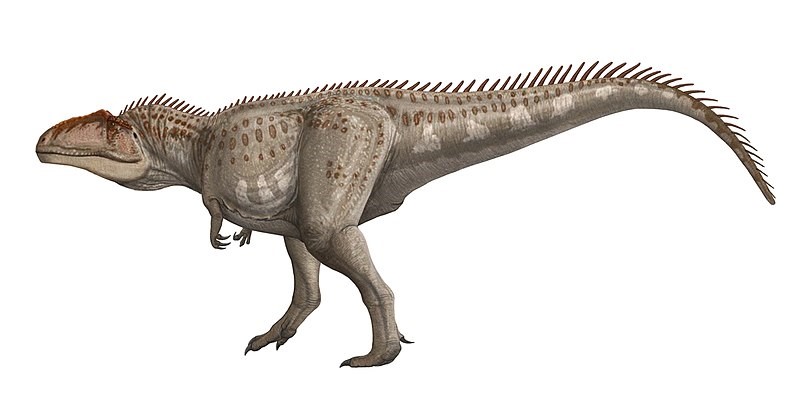
Tyrannosaurus
Nobu Tamura, CC BY-SA 4.0, via Wikimedia Commons

            From its discovery in 1902 until the 1990s, Tyrannosaurus rex was regarded as the biggest, most powerful carnivorous dinosaur of all. It was about 40-42 feet long, stood about 12-15 feet tall at the hip, and weighed about 9.7 tons. These days, however, there are at least four other contenders for that crown. Two are from Argentina and two are from Africa. Today, I’m going to write about the two from Argentina, and in two weeks, the two from Africa.

            Giganotosaurus (GIG-ah-noh-ta-SAWR-us). was found in Argentina in 1993. Its name comes from Greek words meaning “giant southern lizard.” There’s a lot of confusion about how to pronounce its name. It is definitely not said like gigantic. That leaves out the first “o” in its name. In Greek, the “g” is a hard sound, like get. So that’s what I go with. Lots of Internet sources use a “j” sound, making it JIG-ah-noh-ta-SAWR-us. But I have to go with the Greek sound: GIG-ah-noh-ta-SAWR-us.

             When it was first discovered, paleontologists thought Giganotosaurus was an impressive eight feet bigger than T-rex. Now most think they were similar in size, though Giganotosaurus was probably a little longer, about 40-423 feet long. Their heights and weights also seem to have been similar, with Giganotosaurus having just a slight edge.

            T-rex did have some advantages. Its teeth, which were likely used as weapons, could reach 12 inches long, but those of Giganotosaurus were only 8 inches (as if eight-inch teeth were small!). Even more importantly, T-rex had a bigger brain, with well-developed optical lobes, helping it see better. Giganotosaurus had smaller optical lobes, but bigger lobes devoted to smell. Which do you think is more important to a hunter: sight or smell?

            These two certainly would have had a huge battle if they ever met. But that never happened. Giganotosaurus lived about 99.5 to 95 million years ago in the area that is now Argentina in South America. Tyrannosaurus lived 72.7 to 66 million years ago in what is now the western United States.

Giganotosaurus
ДиБгд, Public domain, via Wikimedia Commons

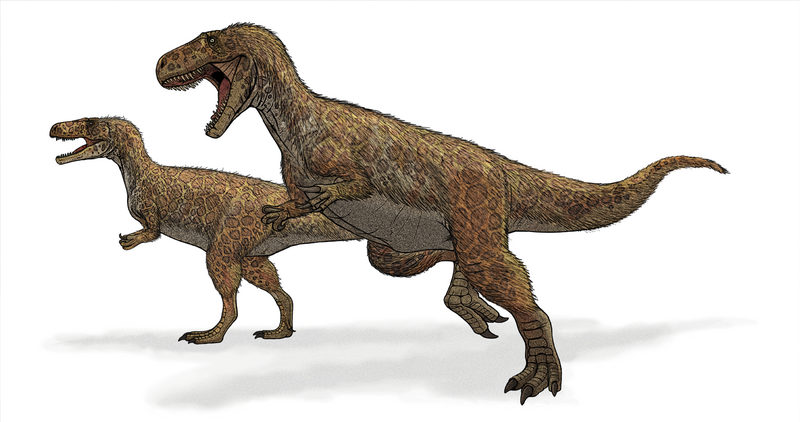
            The other contender from Argentina is Megaraptor (MEG-uh-rap-tor). Its name means “large thief.” Megaraptor is known from just a few partial skeletons found in Argentina and Australia in 1997. It lived about 75 to 92 million years ago. Scientists think it might have been about the same height as T-rex. Megaraptor was about 13 feet tall at the hip, but it was not nearly as long, only about 25 to 33 feet, 7-9 feet shorter than Tyrannosaurus.          

Megaraptor skeleton
Kabacchi, CC BY 2.0, via Wikimedia Commons

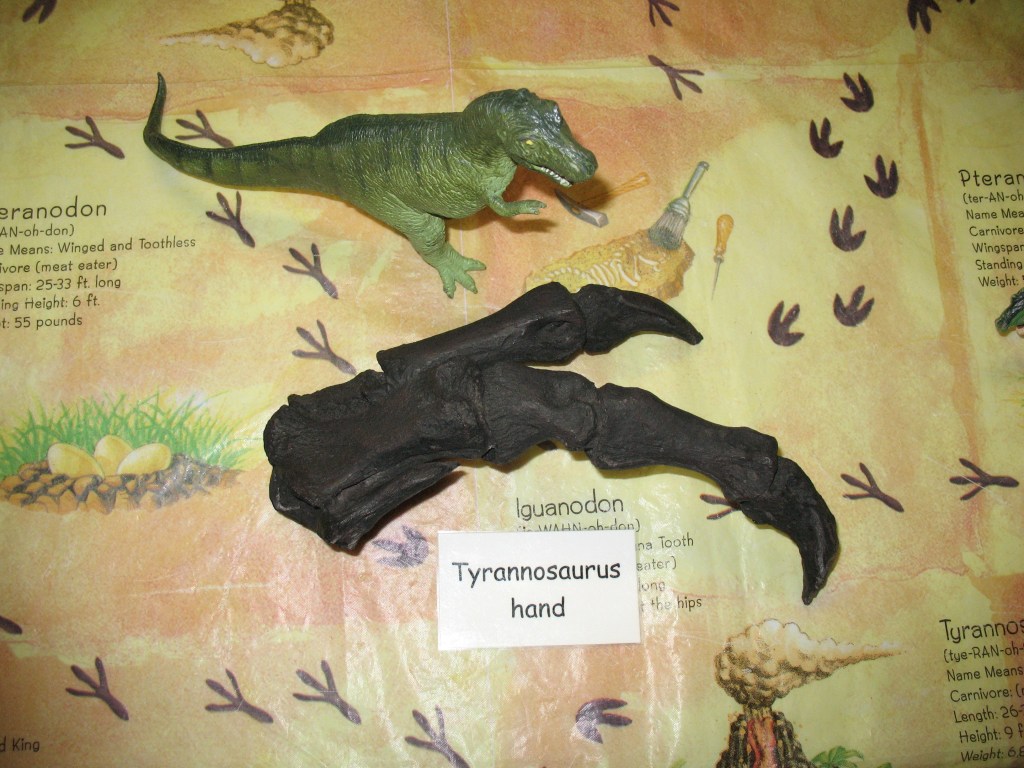
            It would seem that Tyrannosaurus’ larger size and probably greater strength would scare Megaraptor off before the fight even began, but that’s not the whole story. What Megaraptor did have was a 15-inch claw on the first finger of each of its hands – and its other claws were pretty big, too. That first claw, though, is almost twice the length of the longest T-rex claw. Tyrannosaurus’s tiny arms were pretty useless in a fight. Megaraptor could use its longer, muscular arms and huge hands to reach in and slash its prey. Also, Megaraptor’s lighter build probably made it faster than T-rex and more agile. It could dart in and out quickly to avoid Tyrannosaurus.

Tyrannosaurus Hand (Left)
(Provided by Myself)
Megaraptor Hand (Right)
raffaele sergi from Pinerolo, Italia, CC BY 2.0,
via Wikimedia Commons

            So, it would be an epic battle. Who do you think would win?
            Could either of these two take Tyrannosaurus’ crown? Or does that crown belong to a dinosaur from Africa? Come back in two weeks to find out.

Sources (Click Me!)

Calvo, Jorge Orlando and Rodolfo Coria. “New Specimen of Giganotosaurus Carolini (Coria & Salgado, 1995), Supports it as the Largest Theropod Ever Found.” GAIA, Lisbon, December 1998.

Currie, Philip J and Colleayn O. Mastin. The Newest and Coolest Dinosaurs. Grasshopper Books Publishing, 1998.

Frachtenberg, Fabio, and Jorge Calvo, Oscar A. Frachtenberg. Dinosaurios Argentinos: Giants of Patagonia. Aurora, IL: SciTech Hands-On Museum, 2006.

Gasparini, Zulma, Leonardo Salgado, and Rodolfo A. Coria (eds.). Patagonian Mesozoic Reptiles. Indiana University Press, 2007.

Hall, Timothy C. Megaraptor. University of Tennessee at Chattanooga. 27 April 1998. <http://pages.prodigy.net/fenrisulf/geology/geo1.htm&gt;.

Hecht, Jeff. “Contenders for the crown.” Earth. 1 Feb. 1998. 16. Academic Search Premier. EBSCO. Judson University Library, Elgin, IL.15 July 2009 <http://www.judsonu.edu: 2048/login?url=htto://<http://www.judsonu.edu:2048/login?url=http://search.ebscohost.com/login.aspx?direct=true&db=aph&AN=89601&site=ehost-live>.

Holden, Constance. “Largest dino claw unearthed.” Science. 19 Dec. 1997. Academic Search Premier. EBSCO.  Judson University Library, Elgin, IL. 15 July 2009 <http://www.judsonu.edu:2048/login?url=http://search.ebscohost.com/login.aspx?direct=true&db=aph&AN=8552&site=ehost-live&gt;.

Horner, John R. and Don Lessem. The Complete T-rex. New York: Simon and Schuster, 1993.

“Koine Greek Alphabet.” Biblical Greek Alphabet. Greek for All Institute. 2024. https://greekforall.com/learn-biblical-greek-grammar/biblical-greek-alphabet/.

Larson, Peter and Kenneth Carpenter. Tyrannosaurus Rex: The Tyrant King. Indianapolis: Indiana University Press, 2008.

Mazzetta, Gerardo V., Per Christiansen, and Richard Farina. “Giants and Bizarres: Body Size of Some Southern South American Cretaceous            Dinosaurs.” Historical Biology, June – December 2004, Vol. 16 (2-4) pp. 71-83.

“Megaraptor: Fossils of 10m-long dinosaur found in Argentina.” BBC. 19 May 2020. <https://www.bbc.com/news/world-latin-america-52723049&gt;.

Miller, Erin. “T-Rex’s older, tougher cousin – Giganotosaurus skeleton will go on national tour.”Daily Telegraph, The (Sydney) (n.d.). Newspaper Source_. EBSCO. Judson University Library, Elgin, IL 15 JJuly 2009. <http://www.judsonu.edu:2048/login? url=http://<http://www.judsonu.edu:2048/login?url=http://search.ebscohost.com/login.aspx?direct=true&db=nfh&AN=200312221022639124&site=ehost-live>.

Monastersky, R. “New Beast Usurps T. rex as King Carnivore.” Science News 148.13 (23 Sep. 1995): 199. Academic Search Premier. EBSCO. Judson University Library, Elgin, IL. 15 July 2009 <http://www.judsonu.edu:2048/login?url=http://search.ebscohost.com/login.aspx?direct=true&db=aph&AN=9510094855&site=ehost-live&gt;.

Novas, Fernando, E., Diego Pol Juan I. Canale; Juan D. Porfiri; Jorge O. Calvo. “A Bizarre Cretaceous Theropod Dinosaur from Patagonia and the Evolution of Gondwanan Deomaeosaurids. Proceedings: Biological Sciences, Mar2009, Vol. 276, Issue 1659, p1101-1107.

Porfiri, Juan D., Domenica Dos Santos, and Jorge O. Calvo. “New Information on Megaraptor namunhuaiquii (Theropoda: Tetanurae), Patagonia: Considerations on Paleoecological Aspects.” Arquivos do Museu Nacional, Rio de Janeiro, 2007, Vol. 65, n. 4, pp. 545-550.

Richardson, Hazel. Smithsonian Handbooks: Dinosaurs and Prehistoric Life. Dorling Kindersley, 2003.

Smith, Nathan D., Peter J. Makovicky1, Federico L. Agnolin, Martin D. Ezcurra, Diego F. Pais3 and Steven W. Salisbury. “A Megaraptor -like theropod (Dinosauria: Tetanurae) in Australia: Support for Faunal Exchange across Eastern and Western Gondwana in the Mid-Cretaceous.” Proceedings of the Royal Society. 20 May 2008.

Spotts, Peter N. “Giant Dinosaur Fossil Forces Scientists to Question Theories.” Christian Science Monitor 03 Dec. 1997: 3. Academic Search Premier. EBSCO. Judson University Library, Elgin, IL. 15 July 2009. <http://www.judsonu.edu:2048/login?url=http://search. ebscohost. com/login.aspx?direct=true&db=aph&AN=9712050418&site=ehost-live>.

“Sue at the Field Museum.” The Field Museum, Chicago, IL. 2007. 15 July 2009. <http://www.fieldmuseum.org/SUE/about.asp&gt;.

 University of Queensland. “Australian Dinosaur Found to Have South American Heritage.” ScienceDaily. 15 June 2008. <http://www.sciencedaily.com­/releases/ 2008/06/080613111410.htm>.

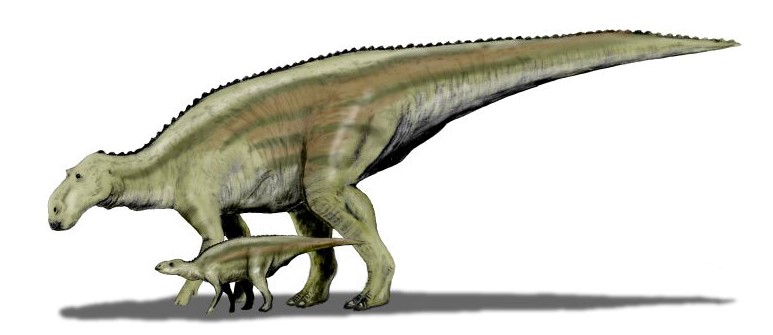
Maiasaura: The Good Mother Lizard

Have you heard of Maiasaura? This dinosaur discovery was integral to our understanding of how dinosaurs behaved.
Title Image by JBStuka          

            For decades after dinosaurs were discovered, people thought they were just big, dumb, plodding animals. One of the discoveries that helped convince scientists that there was much more to dinosaurs than that was the discovery of Maiasaura.

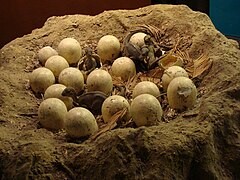
Maiasaura Nest Model
Fernando Losada Rodríguez, CC BY-SA 4.0, via Wikimedia Commons

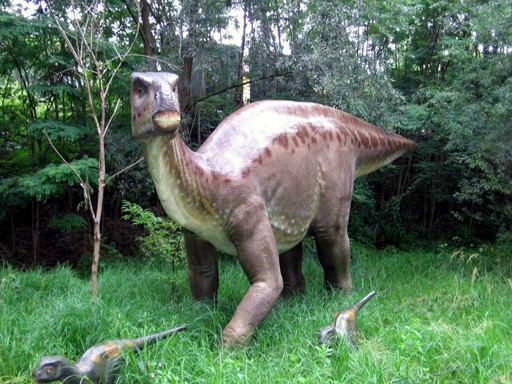
            In 1978, paleontologist, Jack Horner, discovered a field of dinosaur nests in Montana. The nests not only had unhatched dinosaur eggs but also skeletons of baby dinosaurs. The babies were not newborns. They were too big to have just hatched. That meant they were living in the nest — which meant the mother dinosaurs were taking care of the babies! If the babies had to feed themselves, they would have wandered away from the nest. This was an amazing idea at the time. No one thought dinosaurs were smart enough to take care of their babies. Horner named the dinosaur Maiasaura, which means “good mother lizard.”

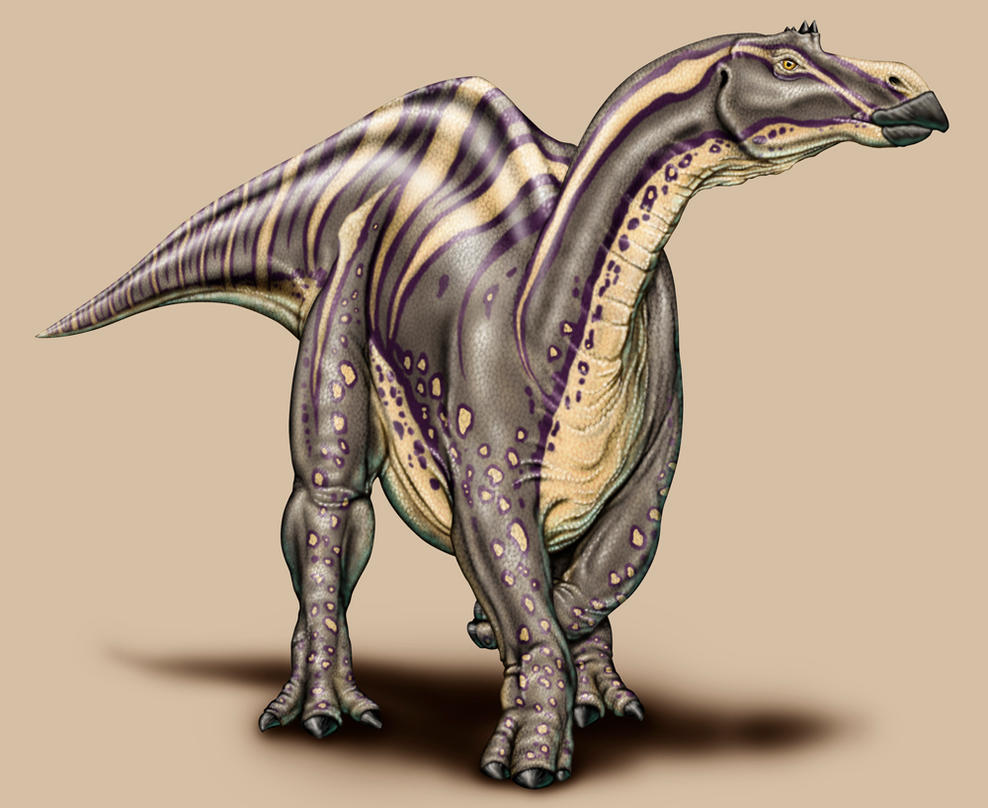
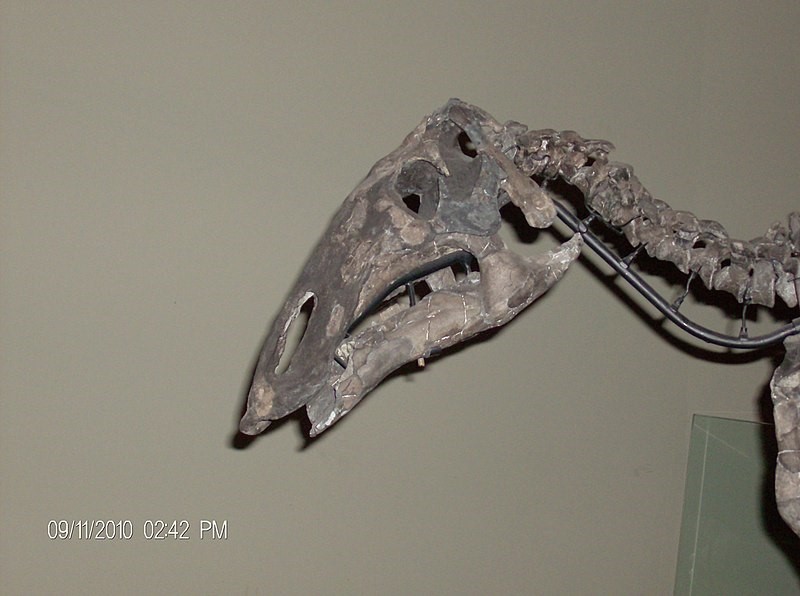
            In many ways, Maiasaura was just an average dinosaur, which makes their caretaking even more interesting. It is one of the duckbilled dinosaurs. Duckbilled is a nickname given to several different types of dinosaurs that had mouths shaped like a duck’s bill. The Maiasaura didn’t have any teeth in the front of its long, flat mouth, but in its cheeks, it had hundreds of them.

T-Rex Taylor, Public domain, via Wikimedia Commons

            Many duckbilled dinosaurs had fancy crests on their heads, but the Maiasaura’s head was flat, with just a very short, bony spike above its eyes. Some scientists think the Maiasaura might have had a flap of skin, like the comb of a rooster, attached to the spike. Male Maiasauras could have used that to attract the attention of female Maiasauras.

            A Maiasaura was about the size of a camping trailer. That may sound big, but it was only average for a dinosaur. Most adult Maiasauras grew about 20 feet long. They stood about 15 feet high and weighed about two-and-a-half tons.

            Maiasauras walked on all four legs much of the time, but they could walk on just their two back legs if they needed to. Their front legs were smaller and thinner than their back legs and had four fingers.

Pavel.Riha.CB, CC BY-SA 3.0, via Wikimedia Commons

            The Maiasaura was a plant-eating dinosaur. It ate tree needles, twigs, seeds and berries. As you might expect, chewing these tough, woody foods wore its teeth down. But the Maiasaura had an easy way to avoid the dentist. It had teeth stacked inside its jaws, one on top of the other. Whenever a tooth wore out, it just fell out and was replaced by the one underneath.

            All dinosaurs hatched from eggs. The Maiasaura laid her eggs in bowl-shaped nests. As you might guess, these big creatures needed BIG nests – about six-feet wide! Scientists think the mothers used their powerful back legs to make a huge mound of dirt on a flat area and used their arms to hollow out the center. Many Maiasauras made their nests in the same area, keeping them about 23 feet apart. That allowed the mothers space to walk between the nests without stepping on anyone else’s nest. The mothers probably brought plants to the nest to cover the eggs to keep them warm. If they had sat on them, they would have squashed them!

            The babies were about 14 inches long when they were born – about the size of one of their mother’s feet. Each weighed only three or four pounds. The mother brought food to the nest, just as a mother bird will do today. We know the babies stayed at least part of the time in the nest because the shells in the nest were broken into tiny pieces as if walked over many times. Some of the baby skeletons Horner found in the nests were about three feet long. It probably took them several months to grow that big, so an adult must have not only brought them food all that time, but also guarded them from meat-eating dinosaurs looking for a snack.

Debivort, CC BY-SA 3.0, via Wikimedia Commons

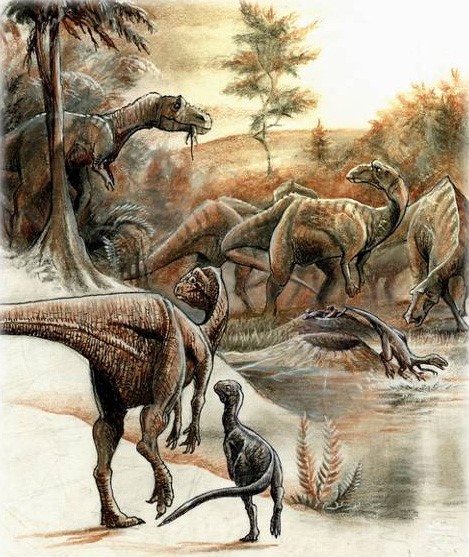
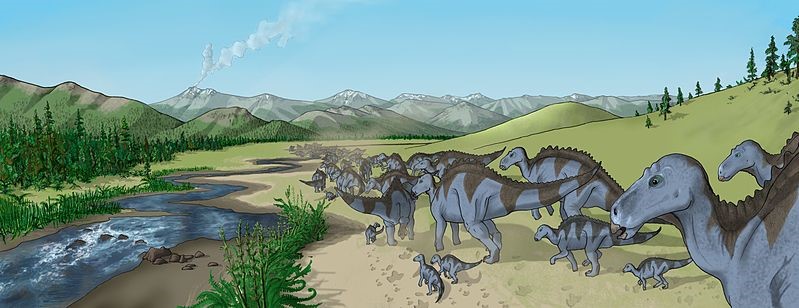
            When the babies were big enough, they joined a herd. Huge herds of Maiasauras roamed the upper coastal plains – as many as 10,000 in a single herd! This was their best defense against predators. Meat eaters would have to look for a single dinosaur that became separated from the herd. Maiasauras had good hearing and good eyesight, so they could be aware of danger. They would eat all the plants in one place and then move on to another. Scientists think they may have traveled a regular route, always returning to the same nesting ground when it was time to lay their eggs.

            Over the years many paleontologists have returned to what they call “Egg Mountain” in Montana to study the bones, eggs, and nests fossilized there. The more they learn, the more amazing this “good mother” dinosaur seems.

Nobu Tamura (http://spinops.blogspot.com), CC BY 3.0, via Wikimedia Commons
Sources (Click me!)

Gaur, Aakanksha. “Maiasaura.” Britannica. 6 December 2019.             https://www.britannica.com/ animal/Maiasaura

Horner, John R. and James Gorman. Maia: A Dinosaur Grows Up. Running Press, 1987. “Largest dinosaur population growth study ever shows how Maiasaura lived and died.” Montana State University News Service. 1 October 2015. https://www.montana.edu/news/15769/largest-dinosaur-population-growth-study-ever-shows-how-maiasaura-lived-and-died

Okoyomon, Adesuwa. “Meet Maiasaura, the Good Mother Lizard.” Science World. 12 July 2022. https://www.scienceworld.ca/stories/maiasaura-good-mother-lizard/

Riehecky, Janet. Maiasara. The Child’s World, 1989.

How the Brontosaurus Lost its Name

Ever wonder how the Brontosaurus lost its name? Commonly known as the icon of Sinclair Oil, this sauropod’s history is complex and newsworthy.

           The Brontosaurus is one of the most famous dinosaurs in the world. Millions of people know its name. Most can recognize its huge shape. It’s been on lunch boxes, made into countless toys, and was featured on a U.S. postage stamp. It even served as the official icon of Sinclair Oil company. However, there is one problem: there is no dinosaur named Brontosaurus.

           How did this happen? When dinosaurs were first discovered in the 1820s, the idea of those huge reptiles stalking the earth caught people’s imagination. Every museum in the world wanted to display a huge skeleton of a dinosaur. But it takes many years to find dinosaur bones, dig them up and put together a dinosaur skeleton. Over the next sixty years the competition to discover dinosaur bones grew, and then it became especially fierce during the 1880s. In fact, that time is now known as the “Bone War.”

           From 1877 to 1892, two paleontologists in particular, Edward Cope of the Academy of Natural Sciences in Philadelphia and Othniel C. Marsh of the Peabody Museum in Connecticut, were the fiercest competitors. They used their own money to finance expeditions and to buy dinosaur bones from other fossil hunters.

           In the beginning Cope and Marsh just paid collectors to send them fossils. But this was only the start. As the rivalry intensified, each side spied on the other, stole bones when they could, bribed workers, and even blew up fossils with dynamite so that the other side couldn’t get them. As soon as either dinosaur hunter got new bones, he rushed to get a description into print. Whoever publishes a description of a new dinosaur first gets to name it, and each man wanted to be the one to name the most. In the end Cope lost. He named 56 new dinosaur species, while Marsh named 80. And by the end of the Bone Wars in 1892, both men had gone nearly bankrupt trying to be the best (or most famous) paleontologist. And the hurry of both men led to mistakes.

Tadek Kurpaski from London, Poland, CC BY 2.0, via Wikimedia Commons

           In 1877 Marsh published a papernaming a new dinosaur, Apatosaurus ajax. Its name means “deceptive lizard,” which turned out to be the truth. The description was based on only a few bones. Two years later Marsh published another article describing what he thought was a different dinosaur, Brontosaurus excelsius.  This description was based on one of the most complete skeletons of a long-necked dinosaur ever found. Brontosaurus means “thunder lizard,” and the catchy name became popular. The mount of that Brontosaurus skeleton in the Yale Peabody Museum of Natural History increased its popularity. Unfortunately, one of the missing pieces of the skeleton was its skull. Not to worry. Marsh just put a Camarasaurus skull on it.

           But, in 1903, Chicago paleontologist Elmer Riggs took a look at both dinosaurs. He determined that the two dinosaurs were actually the same dinosaur. It was given the name Apatosaurus first, and the International Code of Zoological Nomenclature states that the oldest name has priority, so that is the name used by scientists. Brontosaurus became Apatosaurus. And in 1979 scientists finally put the right skull on the skeleton. Still, the general public didn’t let go of the name Brontosaurus until about the 1990s. It was just too cool a name to let go.

           However, all is not lost. There is a movement to resurrect the name Brontosaurus. In 2015 paleontologists studied hundreds of bones from Apatosaurus and the dinosaur called Brontosaurus and found differences in the neck, back, and shoulder bones. Originally scientists thought those difference were because one of the dinosaurs was a juvenile. Now some feel these differences are enough to say Brontosaurus and Apatosaurus are different dinosaurs. But this has not gained wide acceptance. More research may resolve the problem. But a lot of people who are just dinosaur lovers would welcome the return of the “thunder lizard.”

Cover Image Source: An Errant Knight, CC BY-SA 4.0, via Wikimedia Commons

My Favorite Dino Memes Vol #2

Happy Holidays everyone! Hope you all are enjoying the season!

The Discovery of Dinosaurs

Two hundred years ago, the word “dinosaur” didn’t exist. It didn’t need to. No one knew that giant reptiles had once walked the earth.

            Occasionally people found large bones, but they usually thought they belonged to some animal, like an elephant or a giraffe. One piece of bone was thought to have been from a race of giant people. Dinosaur bones may even be responsible for the belief in dragons in ancient China. Then, in England, two gentlemen working separately discovered dinosaurs at about the same time.       

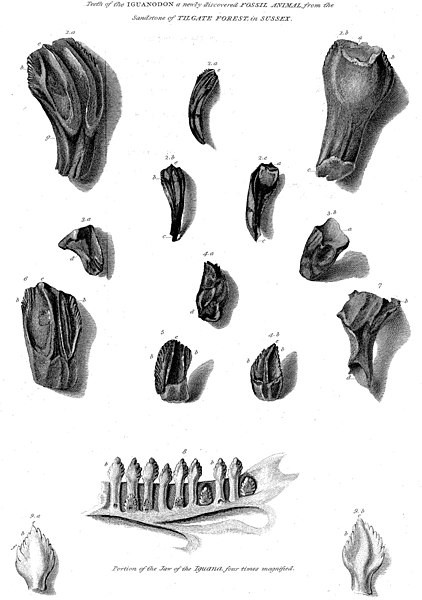
            The first was Dr. Gideon Mantell, a physician and amateur geologist. In 1822 his wife, Mary Ann Mantell, found some very large, unusual teeth in a pile of gravel. Mantell sent the teeth to other experts, but they dismissed them as belonging to a known animal. One paleontologist said they were from a rhinoceros. Mantell didn’t give up. He was sure the teeth were something special. He learned that the pile of gravel his wife had found the fossils in came from a nearby stone quarry. There he found more teeth and some bones. After much study, he determined that the bones and teeth came from a giant reptile. The teeth resembled those of the iguana lizard, but they were twenty times bigger!

Illustration of the original Iguanodon teeth found by Mantell
Gideon Mantell, Public domain, via Wikimedia Commons

            In 1825, Mantell published a description of the creature, describing it as being at least 40 feet long. He named it Iguanodon (eh-GWA-nuh-don), Iguana from the iguana lizard and don, meaning tooth.

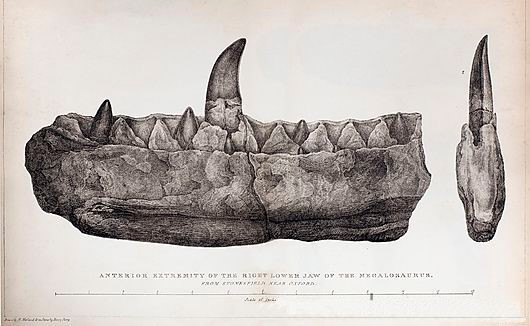
            Meanwhile, in 1824, the Rev. William Buckland of Oxford came into the possession of some bones, including part of a jaw with teeth.

Mary Buckland, née Morland (1797-1857), Public domain, via Wikimedia Commons

            These teeth were clearly those of a giant reptile. Buckland named it Megalosaurus (MEH·guh·luh·sore·us), which means “great lizard.” He published a description of it that same year, which means it was the first dinosaur described scientifically. Mantell was still struggling with skeptics, and, as I said above, he didn’t publish until 1825. But, in 1833, Mantell discovered another giant reptile, Hylaeosaurus (hy-LEE-oh-sore-us). Hylaeosaurus was an armored, plant-eating dinosaur that grew about 16 feet long. So he discovered two of the first three dinosaurs.

            A scientist named Sir Richard Owen was the one who put it all together. He studied the bones and teeth of all three creatures. He found them to share some characteristics, such as fused vertebrae at the base of the spine. But he found them quite unlike modern reptiles. He determined that these three animals deserved their own category. In 1842, he invented the name dinosaurs, which means “terrible lizards,” to describe them.

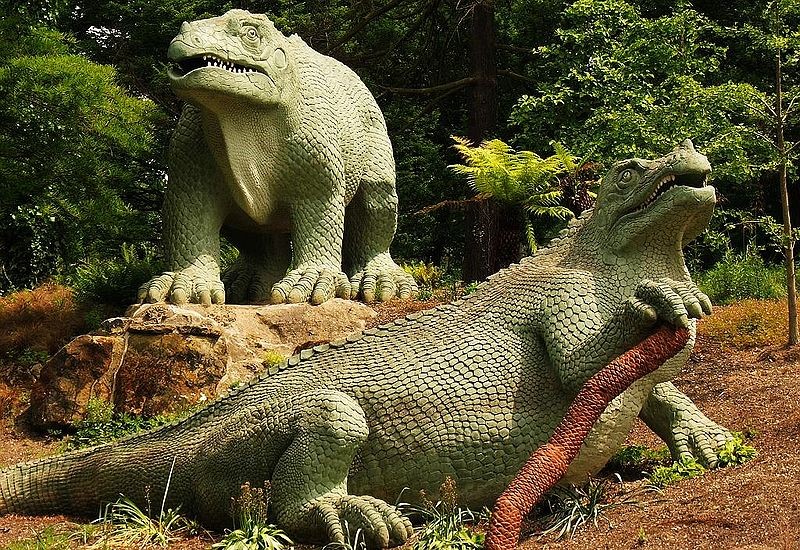
            People were excited about these huge creatures and wanted to know what they looked like. Scientists tried to figure out how to put together the bones that had been found. But it was like trying to put together a jigsaw puzzle with only half the pieces. They thought Iguanodon looked something like a fat rhinoceros. In 1852, a sculptor named Waterhouse Hawkins made life-sized models of what scientists thought Iguanodon and Megalosaurus looked like.

Statues of Iguanadon and Megalodon Jes from Melbourne, Australia, CC BY-SA 2.0, via Wikimedia Commons

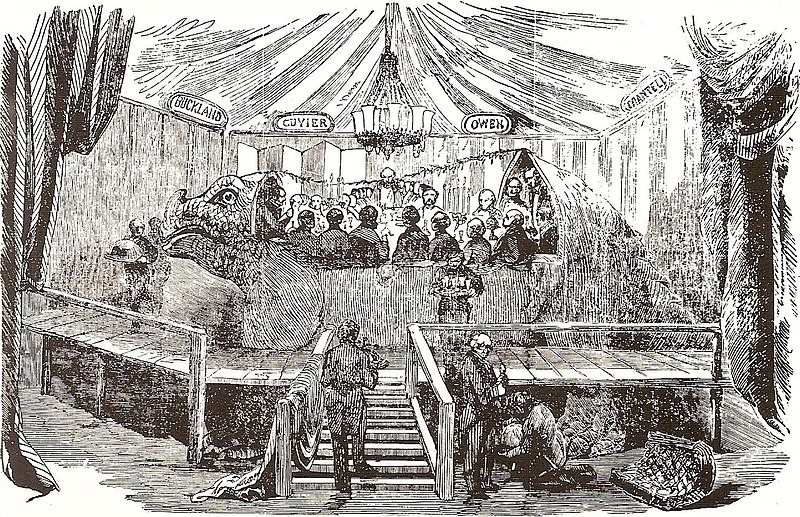
            He and the scientists made a lot of mistakes. For example, when they found a spike from the Iguanodon, they put it on its nose. It was really the creature’s thumb. But they didn’t know they’d made so many mistakes. In fact, they were anxious to show the world their dinosaurs. When the model was half done, they decided to have a dinner party – in the dinosaur!

Public domain, via Wikimedia Commons

            Many important scientists were invited. The seating area was a bit crowded, but everyone had a wonderful time. This was probably the only time in history that a dinner was inside a dinosaur without being the dinosaur’s dinner!

            Since that time, we’ve learned so much more about dinosaurs, including more about how Iguanodon and Megalosaurus looked. They stood with all four legs directly under their bodies and didn’t drag their tails. They were active, not slow, sluggish creatures. But the excitement people felt then is the same excitement people still feel today.

Sources (Click Me!)

Andrei, Mihai. “The Fearsome Megalosaurus: A Glimpse into the Jurassic World.” ZME Science.  9 August, 2023. https://www.zmescience.com/feature-post/natural-sciences/geology-and-paleontology/dinosaurs/megalosaurus/

Norman, David. The Illustrated Encyclopedia of Dinosaurs. Crescent Books, 1985.

Osterloff, Emily. “Dinosauria: How the ‘terrible lizards’ got their name.” London Natural History Museum. https://www.nhm.ac.uk/discover/how-dinosaurs-got-their-name.html

Walker, Bob. “Gideon Mantell: The Forgotten Man Who Discovered Dinosaurs.” The Guardian. 2020. https://www.theguardian.com/science/2019/feb/03/gideon-mantell-play-fight-over-first-dinosaur

Why You Should Visit a Fossil Lab

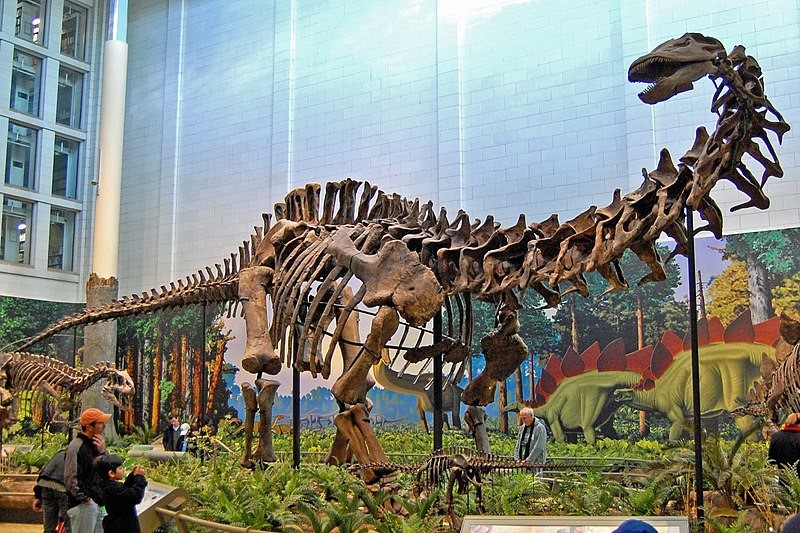
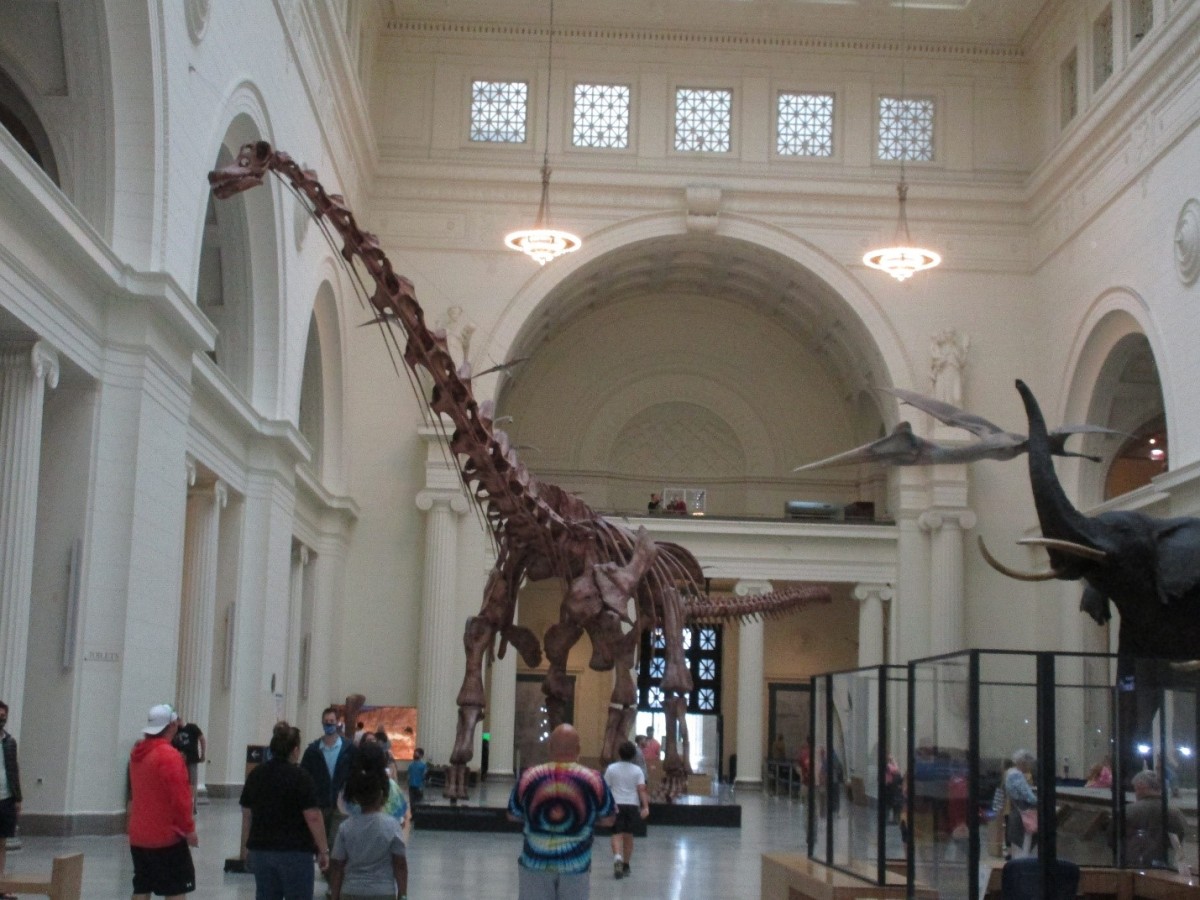
            The best part of any museum is the dinosaurs– especially the huge skeletons! But they didn’t just walk into the museum on their own. And those bones weren’t always clean and perfectly shaped.

            In fact, the bones fossil hunters dig up are usually damaged in some way. They might have been chewed on by predators or scattered about by wind or water. They can be cracked, split, or smashed. So how do they go from broken to beautiful? This happens in a fossil lab.

            It starts with getting the bones safely back to the fossil lab. When a bone is dug out of the ground, sometimes it comes free easily. But more often the bone is attached to the rock, so fossil hunters need to carve out both. They use jackhammers and rock saws, pickaxes, hammers, and chisels.

            Scientists call the rock next to the bone the matrix. Fossil hunters leave the matrix around the bone, so it can protect the bone. They cover the bone and its matrix with plaster to provide more protection. The whole thing can weigh several hundred pounds.

            Small bones are packaged in crates while big bones may be lifted out by helicopter. They are all sent to a fossil lab. Unloading the bones must be done carefully. The big bones don’t always fit through the door. They need to come in through a loading dock.

            Some bones are stored away. There are always more bones needing preparation than time and people to prepare them. Bones not being worked on are put on shelves or in specimen cabinets.

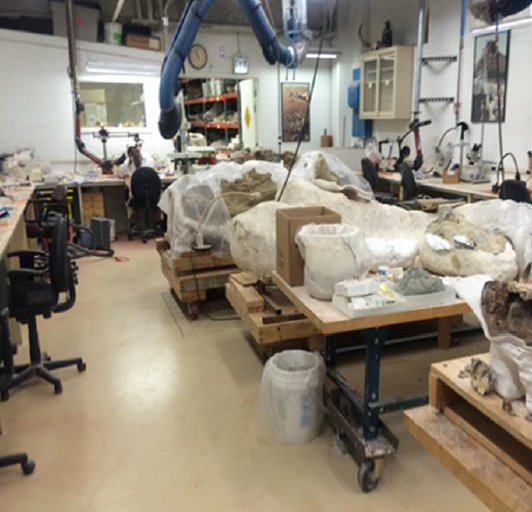
            Other bones are brought into the prep lab to have the matrix removed from the bone. The workroom needs to have bright lights, so preparers can see what is rock and what is bone. It also needs good air flow because removing the matrix produces a lot of dust. Stations are set up around the room.

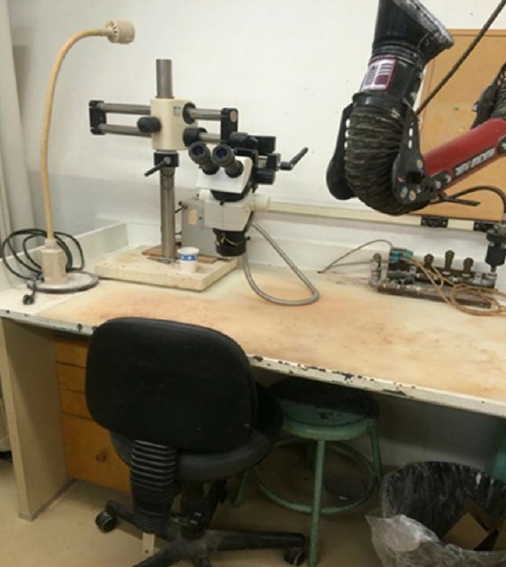
            A work station needs to have a large, flat surface to place the fossil on. There should be storage space for the tools the preparer will need and its own light source. It may also have a microscope to study small fossils and an air tube to vacuum up the dust and tiny bits of rock. The preparer should wear protective goggles, a dust mask, and gloves. Preparers using noisy tools, such as a jackhammer, also need ear plugs.

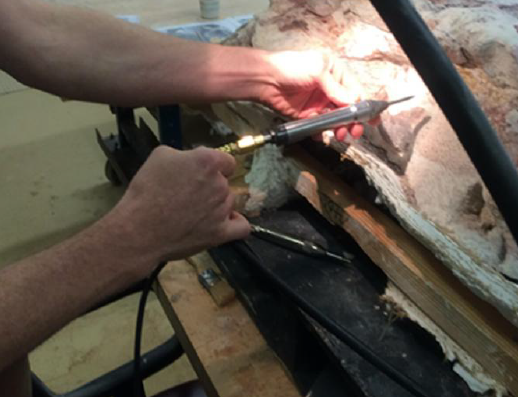
            When a bone is selected for preparation, first the preparers need to remove the plaster jacket. They use a cast-cutting saw, like the ones doctors use to remove a cast from a broken limb. A preparer might then use a small jackhammer called an air scribe to remove the matrix that is not too close to the bone.

            When preparers get close to the bone, they need to be very careful. The bones break very easily. Using a small metal pick called a pin vise (pictured to the side), preparers scrape away the rock, just like when a dentist scrapes plaque from your teeth. They scrape in a direction away from the bone so that if they slip, they don’t hurt the bone. The key is to go slowly. Sometimes they use a magnifying glass to make sure they are scraping away only the matrix.

            Bits of matrix are blown away with an air tube as they come off. Brushes can also be used to keep the surface clean, and a very sharp needle might be used to remove matrix in small cracks. Exposed bone is covered with glue to keep it from breaking apart.

            Sometimes preparers use chemicals, such as acid, to dissolve the matrix, but they must be careful to make sure the chemicals don’t hurt the bone. It can take anywhere from a few minutes to hundreds of hours to remove all the matrix. Sometimes part of the matrix is left to hold delicate bones together.

            Once the matrix is removed, there is still work to be done. Often the bone is broken, so the pieces must be put together. That can be like putting a jigsaw puzzle together. Very small bones can be kept together with wax. Others need glue, and others need wire or steel bands.

            Putting together all the bones of a skeleton takes lots of patience. Preparers make sketches and 3-D models. Bones need to be placed next to each other in the same way they were when the dinosaur was alive. A natural-looking pose must be chosen.

            It is rare that fossil hunters find all the bones for one dinosaur. Preparers need to figure out which bones are missing. To complete the skeleton, preparers may use bones from several dinosaurs of the same species. Sometimes they can figure out what a bone should look like by the bones around it. Then preparers can sculpt a bone from plaster or plastics.

            Many of the prepared bones are stored in cabinets or lockers. They each have a number that tells when and where the fossil was found. Scientists can find the fossil they need and study it.

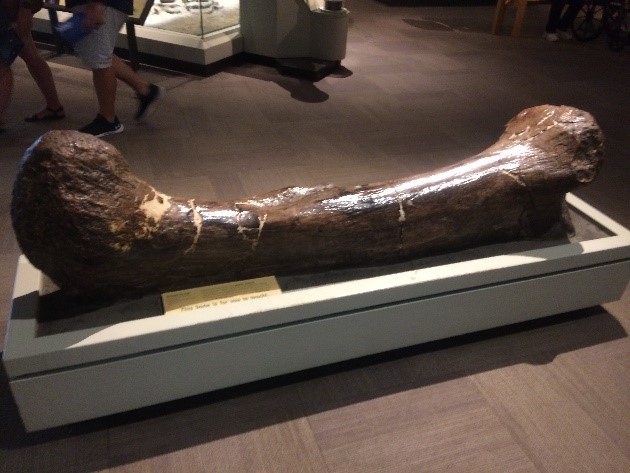
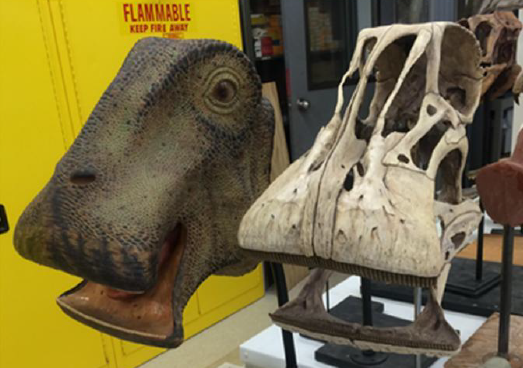
            Sometimes the scientists make a cast of a bone. First, they make a rubber mold from the real bone. Then they put plaster or resin into the mold. When it dries, it’s a perfect copy. Museums often display casts rather than the real bones. This prevents damage to the real bones and makes it easier for scientists to study the real bones. Casts are also used to make model dinosaurs. Artists create realistic-looking dinosaurs for the movies or special exhibits. However, technology is already making this process easier and faster by using 3-D printing. In the future plaster casts will be a thing of the past.

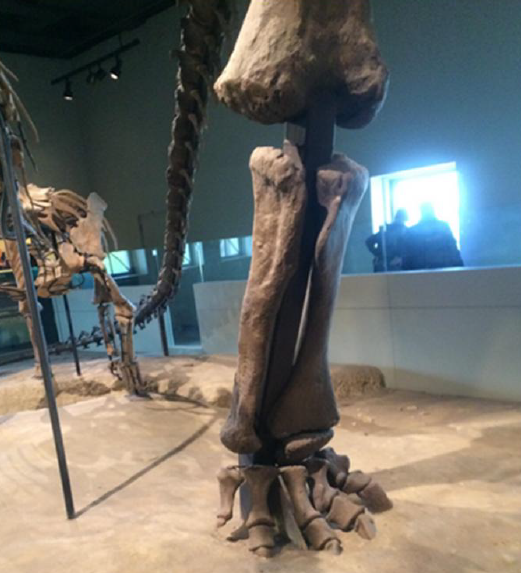
            To prepare a skeleton for an exhibit, it’s important for preparers to make sure every bone is stable. Fossils are very heavy, so the framework holding them up needs to be able to hold the weight without hurting the fragile fossils.

            The bones are held together with such things as glue, metal pegs, bolts, wire, and thick cables. The preparers try to keep these out of sight because they want the dinosaur to look as natural as possible.

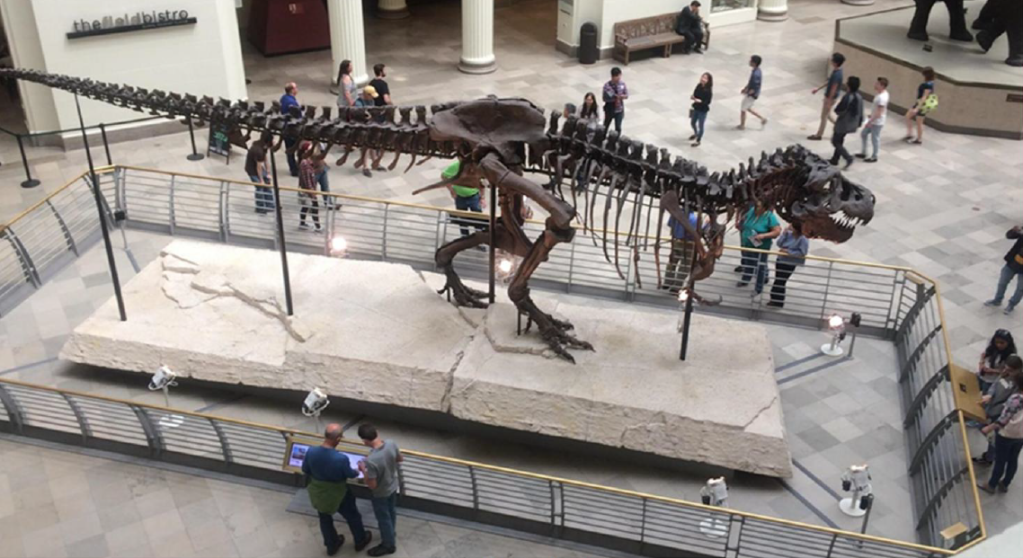
            It can take several years to mount a big dinosaur. But when it’s all done, thousands and thousands of people will gaze up at the dinosaur skeleton and catch their breath with awe.

            Would you like to work in a fossil lab? Please tell me why or why not in the comments section.

I took all the photos