Dinosaur Trivia
I thought it would be fun to spice things up with some with a quiz!
Let me know your thoughts in the comments below.
I thought it would be fun to spice things up with some with a quiz!
Let me know your thoughts in the comments below.
Ever wonder how the Brontosaurus lost its name? Commonly known as the icon of Sinclair Oil, this sauropod’s history is complex and newsworthy.
The Brontosaurus is one of the most famous dinosaurs in the world. Millions of people know its name. Most can recognize its huge shape. It’s been on lunch boxes, made into countless toys, and was featured on a U.S. postage stamp. It even served as the official icon of Sinclair Oil company. However, there is one problem: there is no dinosaur named Brontosaurus.
How did this happen? When dinosaurs were first discovered in the 1820s, the idea of those huge reptiles stalking the earth caught people’s imagination. Every museum in the world wanted to display a huge skeleton of a dinosaur. But it takes many years to find dinosaur bones, dig them up and put together a dinosaur skeleton. Over the next sixty years the competition to discover dinosaur bones grew, and then it became especially fierce during the 1880s. In fact, that time is now known as the “Bone War.”
From 1877 to 1892, two paleontologists in particular, Edward Cope of the Academy of Natural Sciences in Philadelphia and Othniel C. Marsh of the Peabody Museum in Connecticut, were the fiercest competitors. They used their own money to finance expeditions and to buy dinosaur bones from other fossil hunters.
In the beginning Cope and Marsh just paid collectors to send them fossils. But this was only the start. As the rivalry intensified, each side spied on the other, stole bones when they could, bribed workers, and even blew up fossils with dynamite so that the other side couldn’t get them. As soon as either dinosaur hunter got new bones, he rushed to get a description into print. Whoever publishes a description of a new dinosaur first gets to name it, and each man wanted to be the one to name the most. In the end Cope lost. He named 56 new dinosaur species, while Marsh named 80. And by the end of the Bone Wars in 1892, both men had gone nearly bankrupt trying to be the best (or most famous) paleontologist. And the hurry of both men led to mistakes.
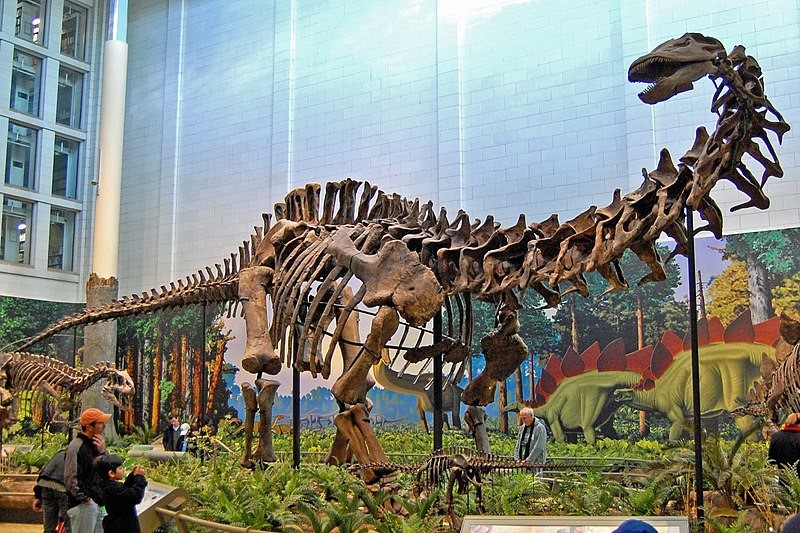
In 1877 Marsh published a papernaming a new dinosaur, Apatosaurus ajax. Its name means “deceptive lizard,” which turned out to be the truth. The description was based on only a few bones. Two years later Marsh published another article describing what he thought was a different dinosaur, Brontosaurus excelsius. This description was based on one of the most complete skeletons of a long-necked dinosaur ever found. Brontosaurus means “thunder lizard,” and the catchy name became popular. The mount of that Brontosaurus skeleton in the Yale Peabody Museum of Natural History increased its popularity. Unfortunately, one of the missing pieces of the skeleton was its skull. Not to worry. Marsh just put a Camarasaurus skull on it.
But, in 1903, Chicago paleontologist Elmer Riggs took a look at both dinosaurs. He determined that the two dinosaurs were actually the same dinosaur. It was given the name Apatosaurus first, and the International Code of Zoological Nomenclature states that the oldest name has priority, so that is the name used by scientists. Brontosaurus became Apatosaurus. And in 1979 scientists finally put the right skull on the skeleton. Still, the general public didn’t let go of the name Brontosaurus until about the 1990s. It was just too cool a name to let go.
However, all is not lost. There is a movement to resurrect the name Brontosaurus. In 2015 paleontologists studied hundreds of bones from Apatosaurus and the dinosaur called Brontosaurus and found differences in the neck, back, and shoulder bones. Originally scientists thought those difference were because one of the dinosaurs was a juvenile. Now some feel these differences are enough to say Brontosaurus and Apatosaurus are different dinosaurs. But this has not gained wide acceptance. More research may resolve the problem. But a lot of people who are just dinosaur lovers would welcome the return of the “thunder lizard.”
Cover Image Source: An Errant Knight, CC BY-SA 4.0, via Wikimedia Commons
Happy Holidays everyone! Hope you all are enjoying the season!
Two hundred years ago, the word “dinosaur” didn’t exist. It didn’t need to. No one knew that giant reptiles had once walked the earth.
Occasionally people found large bones, but they usually thought they belonged to some animal, like an elephant or a giraffe. One piece of bone was thought to have been from a race of giant people. Dinosaur bones may even be responsible for the belief in dragons in ancient China. Then, in England, two gentlemen working separately discovered dinosaurs at about the same time.
The first was Dr. Gideon Mantell, a physician and amateur geologist. In 1822 his wife, Mary Ann Mantell, found some very large, unusual teeth in a pile of gravel. Mantell sent the teeth to other experts, but they dismissed them as belonging to a known animal. One paleontologist said they were from a rhinoceros. Mantell didn’t give up. He was sure the teeth were something special. He learned that the pile of gravel his wife had found the fossils in came from a nearby stone quarry. There he found more teeth and some bones. After much study, he determined that the bones and teeth came from a giant reptile. The teeth resembled those of the iguana lizard, but they were twenty times bigger!
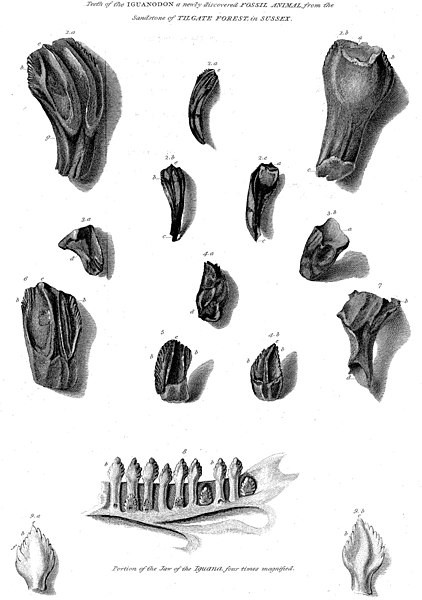
In 1825, Mantell published a description of the creature, describing it as being at least 40 feet long. He named it Iguanodon (eh-GWA-nuh-don), Iguana from the iguana lizard and don, meaning tooth.
Meanwhile, in 1824, the Rev. William Buckland of Oxford came into the possession of some bones, including part of a jaw with teeth.
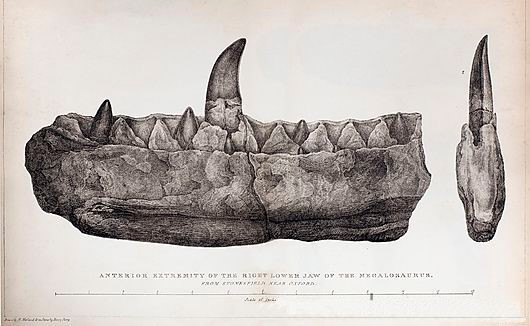
These teeth were clearly those of a giant reptile. Buckland named it Megalosaurus (MEH·guh·luh·sore·us), which means “great lizard.” He published a description of it that same year, which means it was the first dinosaur described scientifically. Mantell was still struggling with skeptics, and, as I said above, he didn’t publish until 1825. But, in 1833, Mantell discovered another giant reptile, Hylaeosaurus (hy-LEE-oh-sore-us). Hylaeosaurus was an armored, plant-eating dinosaur that grew about 16 feet long. So he discovered two of the first three dinosaurs.
A scientist named Sir Richard Owen was the one who put it all together. He studied the bones and teeth of all three creatures. He found them to share some characteristics, such as fused vertebrae at the base of the spine. But he found them quite unlike modern reptiles. He determined that these three animals deserved their own category. In 1842, he invented the name dinosaurs, which means “terrible lizards,” to describe them.
People were excited about these huge creatures and wanted to know what they looked like. Scientists tried to figure out how to put together the bones that had been found. But it was like trying to put together a jigsaw puzzle with only half the pieces. They thought Iguanodon looked something like a fat rhinoceros. In 1852, a sculptor named Waterhouse Hawkins made life-sized models of what scientists thought Iguanodon and Megalosaurus looked like.
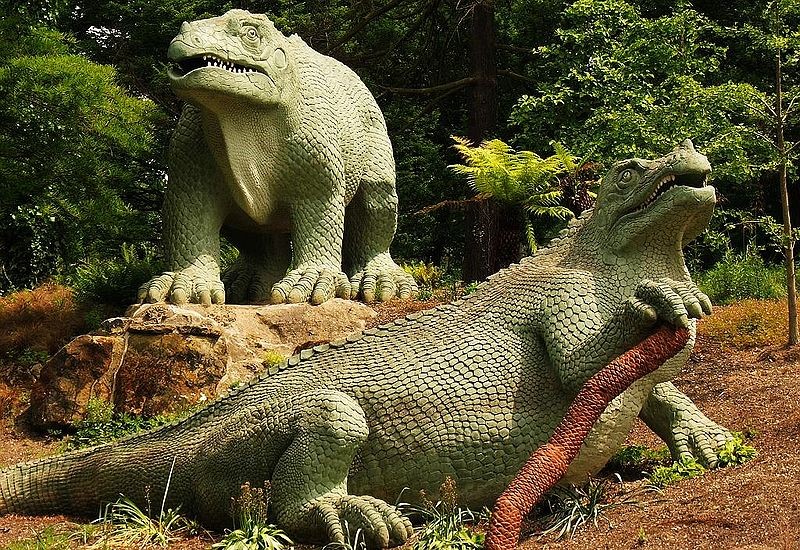
He and the scientists made a lot of mistakes. For example, when they found a spike from the Iguanodon, they put it on its nose. It was really the creature’s thumb. But they didn’t know they’d made so many mistakes. In fact, they were anxious to show the world their dinosaurs. When the model was half done, they decided to have a dinner party – in the dinosaur!
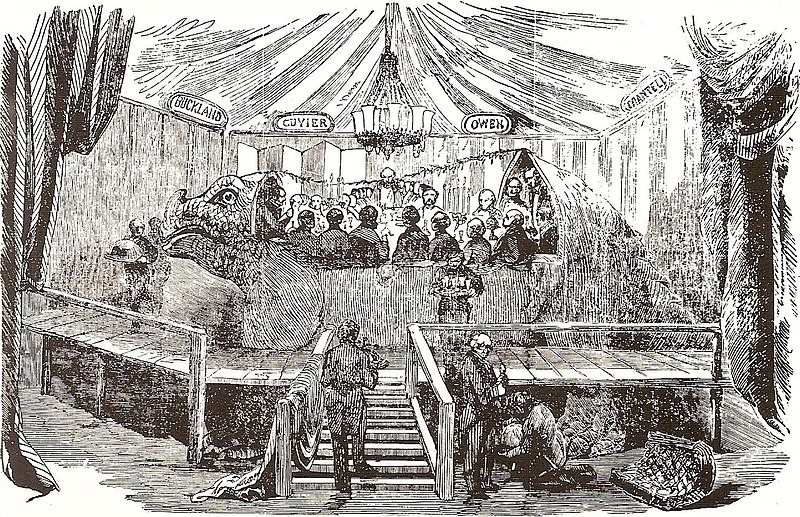
Many important scientists were invited. The seating area was a bit crowded, but everyone had a wonderful time. This was probably the only time in history that a dinner was inside a dinosaur without being the dinosaur’s dinner!
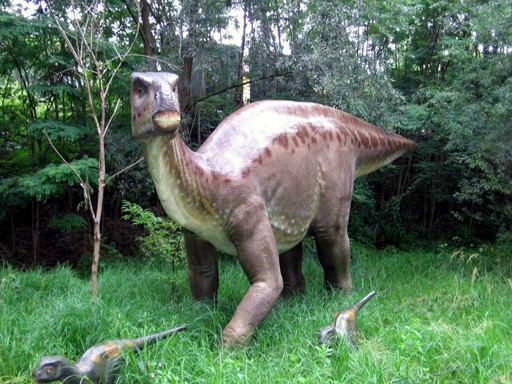
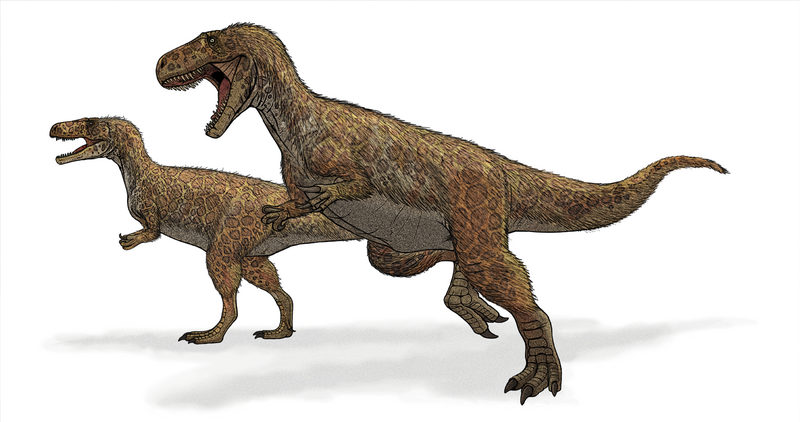
Since that time, we’ve learned so much more about dinosaurs, including more about how Iguanodon and Megalosaurus looked. They stood with all four legs directly under their bodies and didn’t drag their tails. They were active, not slow, sluggish creatures. But the excitement people felt then is the same excitement people still feel today.
Andrei, Mihai. “The Fearsome Megalosaurus: A Glimpse into the Jurassic World.” ZME Science. 9 August, 2023. https://www.zmescience.com/feature-post/natural-sciences/geology-and-paleontology/dinosaurs/megalosaurus/
Norman, David. The Illustrated Encyclopedia of Dinosaurs. Crescent Books, 1985.
Osterloff, Emily. “Dinosauria: How the ‘terrible lizards’ got their name.” London Natural History Museum. https://www.nhm.ac.uk/discover/how-dinosaurs-got-their-name.html
Walker, Bob. “Gideon Mantell: The Forgotten Man Who Discovered Dinosaurs.” The Guardian. 2020. https://www.theguardian.com/science/2019/feb/03/gideon-mantell-play-fight-over-first-dinosaur
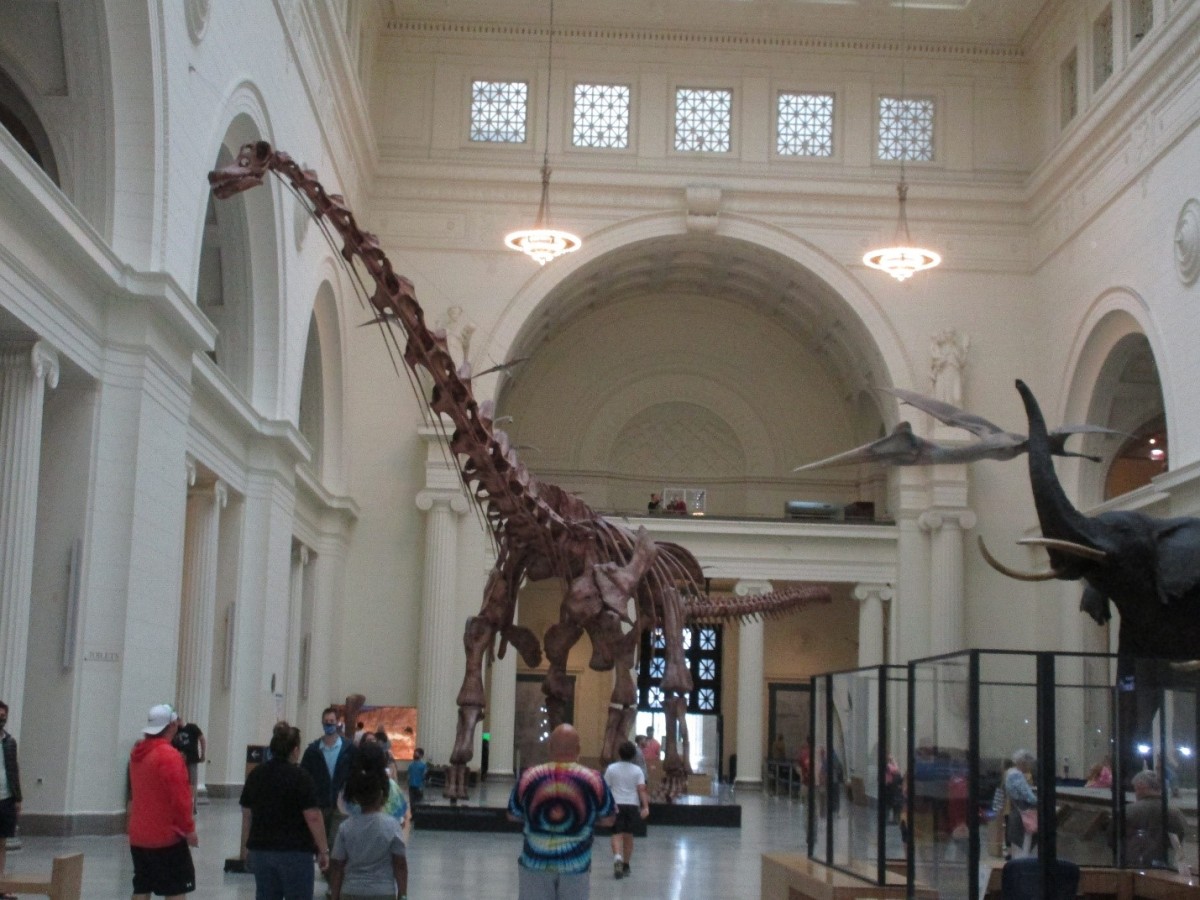
The best part of any museum is the dinosaurs– especially the huge skeletons! But they didn’t just walk into the museum on their own. And those bones weren’t always clean and perfectly shaped.
In fact, the bones fossil hunters dig up are usually damaged in some way. They might have been chewed on by predators or scattered about by wind or water. They can be cracked, split, or smashed. So how do they go from broken to beautiful? This happens in a fossil lab.
It starts with getting the bones safely back to the fossil lab. When a bone is dug out of the ground, sometimes it comes free easily. But more often the bone is attached to the rock, so fossil hunters need to carve out both. They use jackhammers and rock saws, pickaxes, hammers, and chisels.
Scientists call the rock next to the bone the matrix. Fossil hunters leave the matrix around the bone, so it can protect the bone. They cover the bone and its matrix with plaster to provide more protection. The whole thing can weigh several hundred pounds.
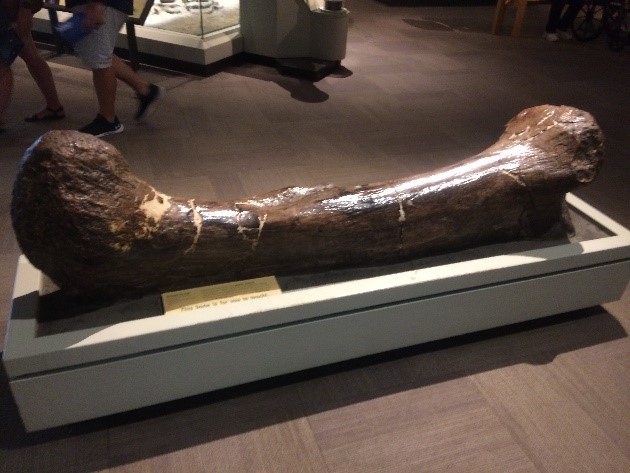
Small bones are packaged in crates while big bones may be lifted out by helicopter. They are all sent to a fossil lab. Unloading the bones must be done carefully. The big bones don’t always fit through the door. They need to come in through a loading dock.
Some bones are stored away. There are always more bones needing preparation than time and people to prepare them. Bones not being worked on are put on shelves or in specimen cabinets.
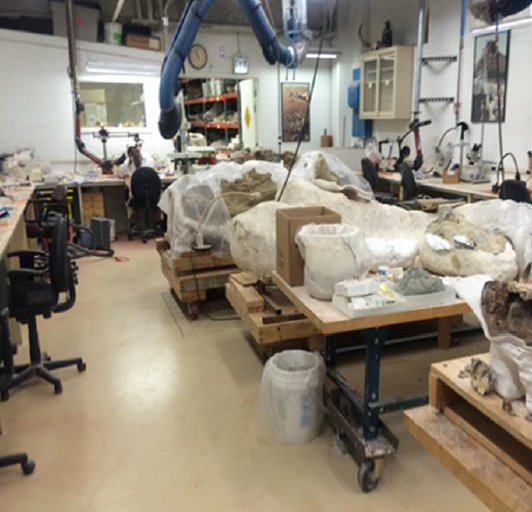
Other bones are brought into the prep lab to have the matrix removed from the bone. The workroom needs to have bright lights, so preparers can see what is rock and what is bone. It also needs good air flow because removing the matrix produces a lot of dust. Stations are set up around the room.
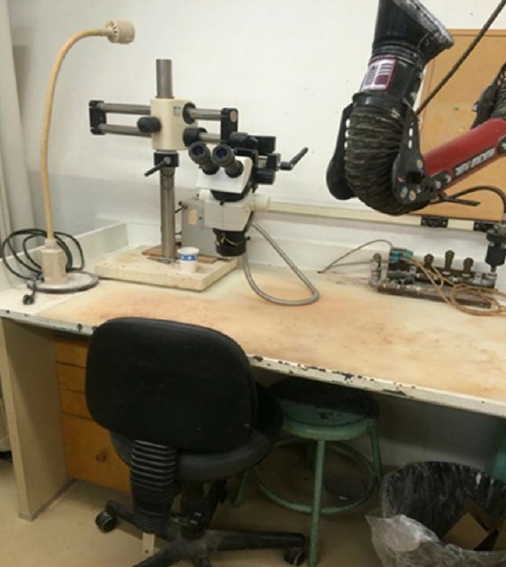
A work station needs to have a large, flat surface to place the fossil on. There should be storage space for the tools the preparer will need and its own light source. It may also have a microscope to study small fossils and an air tube to vacuum up the dust and tiny bits of rock. The preparer should wear protective goggles, a dust mask, and gloves. Preparers using noisy tools, such as a jackhammer, also need ear plugs.
When a bone is selected for preparation, first the preparers need to remove the plaster jacket. They use a cast-cutting saw, like the ones doctors use to remove a cast from a broken limb. A preparer might then use a small jackhammer called an air scribe to remove the matrix that is not too close to the bone.
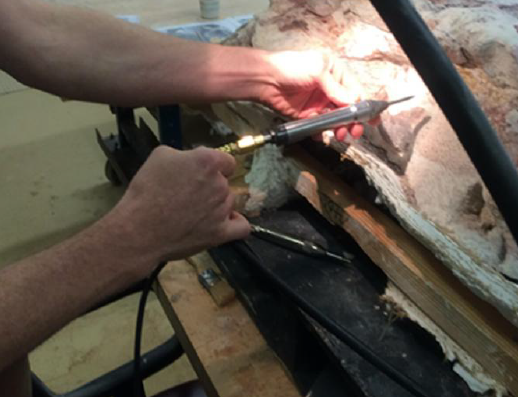
When preparers get close to the bone, they need to be very careful. The bones break very easily. Using a small metal pick called a pin vise (pictured to the side), preparers scrape away the rock, just like when a dentist scrapes plaque from your teeth. They scrape in a direction away from the bone so that if they slip, they don’t hurt the bone. The key is to go slowly. Sometimes they use a magnifying glass to make sure they are scraping away only the matrix.
Bits of matrix are blown away with an air tube as they come off. Brushes can also be used to keep the surface clean, and a very sharp needle might be used to remove matrix in small cracks. Exposed bone is covered with glue to keep it from breaking apart.
Sometimes preparers use chemicals, such as acid, to dissolve the matrix, but they must be careful to make sure the chemicals don’t hurt the bone. It can take anywhere from a few minutes to hundreds of hours to remove all the matrix. Sometimes part of the matrix is left to hold delicate bones together.
Once the matrix is removed, there is still work to be done. Often the bone is broken, so the pieces must be put together. That can be like putting a jigsaw puzzle together. Very small bones can be kept together with wax. Others need glue, and others need wire or steel bands.
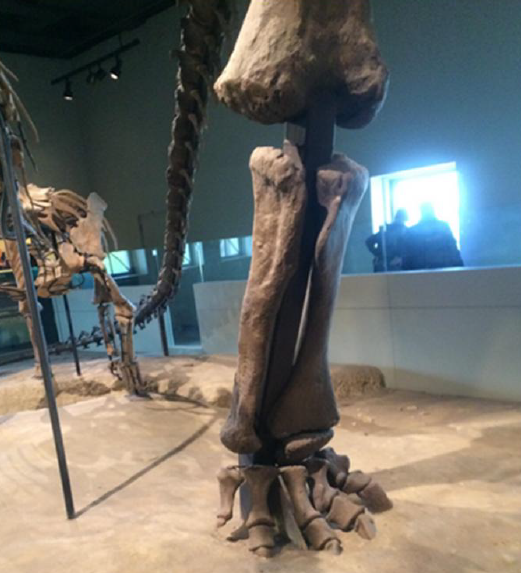
Putting together all the bones of a skeleton takes lots of patience. Preparers make sketches and 3-D models. Bones need to be placed next to each other in the same way they were when the dinosaur was alive. A natural-looking pose must be chosen.
It is rare that fossil hunters find all the bones for one dinosaur. Preparers need to figure out which bones are missing. To complete the skeleton, preparers may use bones from several dinosaurs of the same species. Sometimes they can figure out what a bone should look like by the bones around it. Then preparers can sculpt a bone from plaster or plastics.
Many of the prepared bones are stored in cabinets or lockers. They each have a number that tells when and where the fossil was found. Scientists can find the fossil they need and study it.
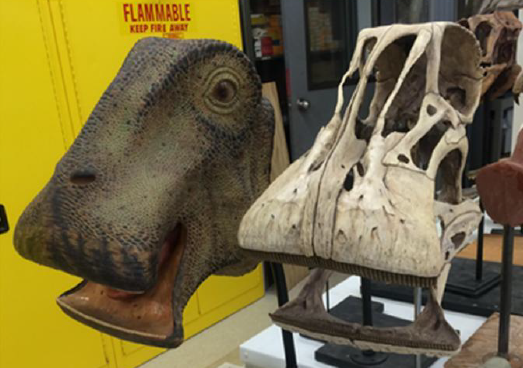
Sometimes the scientists make a cast of a bone. First, they make a rubber mold from the real bone. Then they put plaster or resin into the mold. When it dries, it’s a perfect copy. Museums often display casts rather than the real bones. This prevents damage to the real bones and makes it easier for scientists to study the real bones. Casts are also used to make model dinosaurs. Artists create realistic-looking dinosaurs for the movies or special exhibits. However, technology is already making this process easier and faster by using 3-D printing. In the future plaster casts will be a thing of the past.
To prepare a skeleton for an exhibit, it’s important for preparers to make sure every bone is stable. Fossils are very heavy, so the framework holding them up needs to be able to hold the weight without hurting the fragile fossils.
The bones are held together with such things as glue, metal pegs, bolts, wire, and thick cables. The preparers try to keep these out of sight because they want the dinosaur to look as natural as possible.
It can take several years to mount a big dinosaur. But when it’s all done, thousands and thousands of people will gaze up at the dinosaur skeleton and catch their breath with awe.
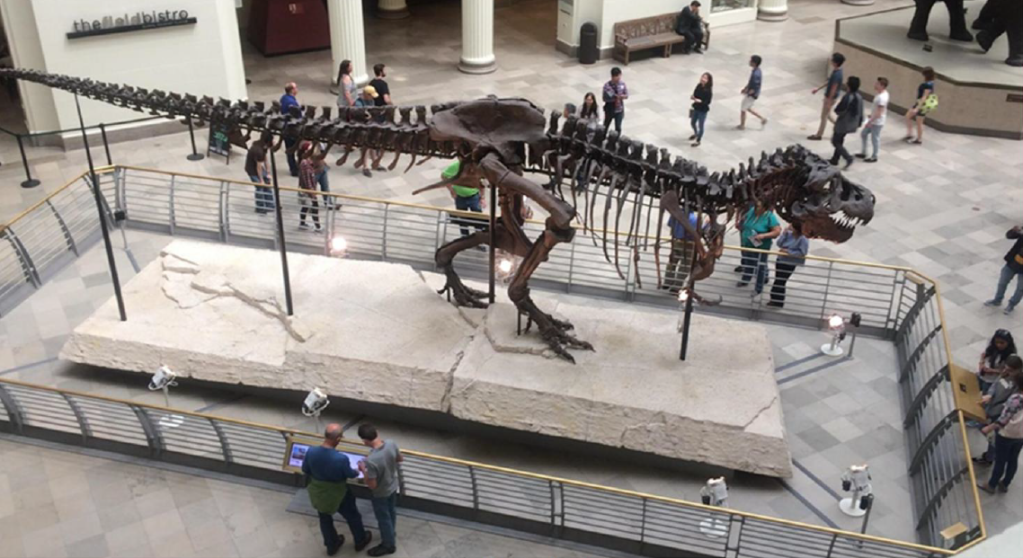
Would you like to work in a fossil lab? Please tell me why or why not in the comments section.
I took all the photos
The First Complete Dinosaur Skeleton
In 1868, the hottest ticket in town was to the Philadelphia Academy of Natural Sciences. Before that year about 30,000 people visited the museum annually. But in 1868, attendance more than doubled to 66,000. The next year it soared to 100,000. What was it that people stood in line for hours to see? The first complete dinosaur skeleton ever displayed to the public: Hadrosaurus. People stared in awe. It was three stories tall! Philadelphia had to build a bigger museum to have room for the crowds.
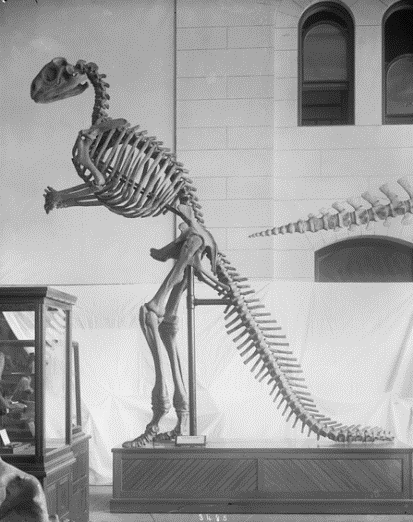
Hadrosaurus was found in New Jersey in 1858. And at that time, it was the most complete dinosaur skeleton that had ever been found in the whole world.
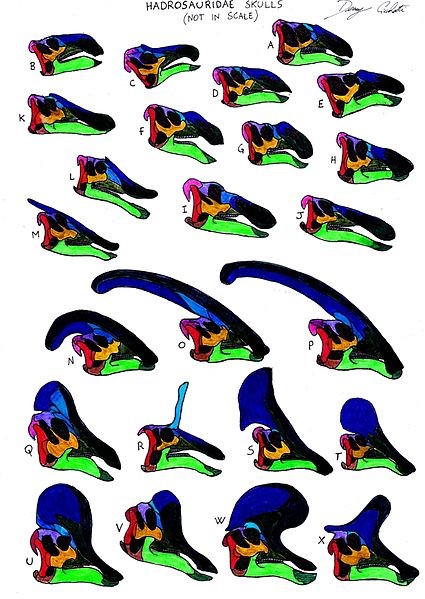
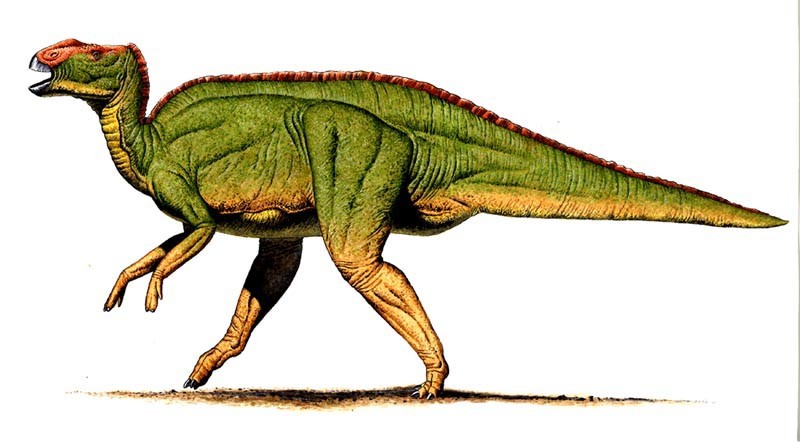
What do we know about it today? It was just an average duckbill dinosaur. It didn’t even have a crazy crest like some duckbill dinosaurs. Its head was flat.
It grew about 23-26 feet long and could have weighed 2-4 tons. Its back legs were much longer than its front legs. It could walk on just its hind legs or on all four legs. The front of its mouth was a beak, covered in keratin, just like your fingernails. This helped it nip off plants, which it ground up with its large teeth. It traveled in herds.
The original pose was upright. But we now think it probably stood like this, with the tail balancing the head:
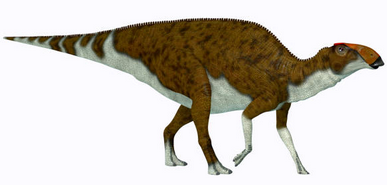
When it was first displayed almost everyone was thrilled to see it – but that’s almost. A copy of Hadrosaurus was made and was supposed to go on display in 1871 in New York City. But it never did. One of the most powerful men in New York in that day, William Tweed, known as Boss Tweed, ordered members of his gang to destroy the skeleton. No one knows why. They tore it apart and tossed the pieces of it into a nearby lake.
Today Hadrosaurus doesn’t cause any controversy. People know it as just an average dinosaur. But New Jersey is proud that it is its state dinosaur, and people still flock to see it.
Can you draw a duckbill dinosaur head with a crazy crest? Please put one in the comment section or message me on Facebook at Janet Riehecky
To learn more about dinosaurs, please visit here once a week. Please also visit my web site: www.janetriehecky.com
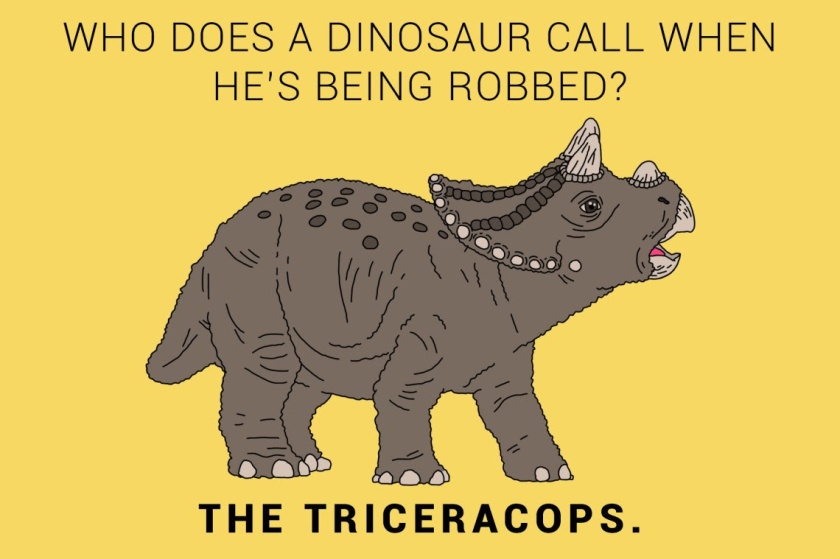
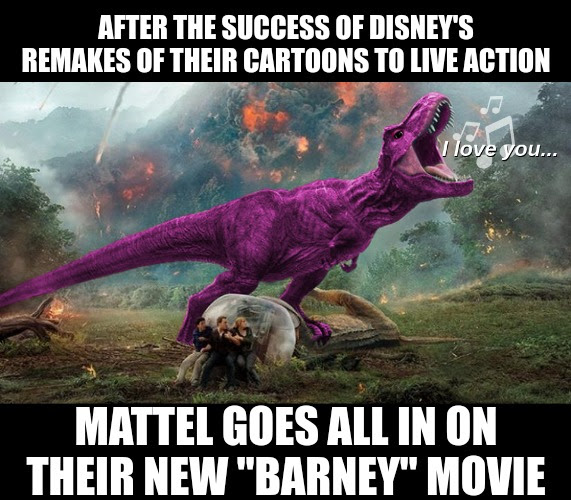
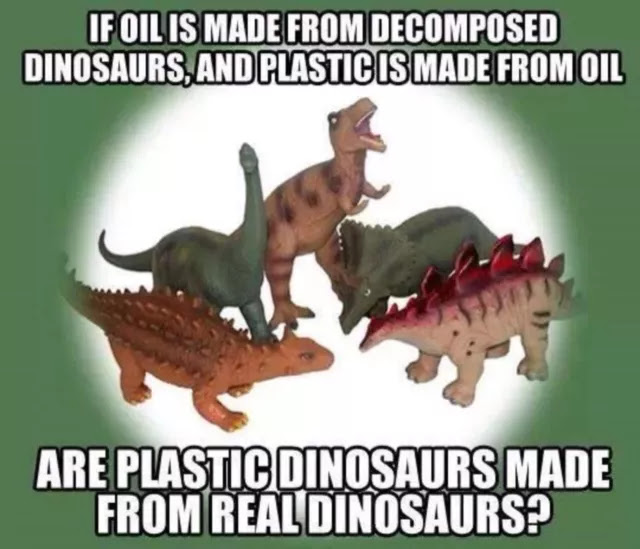
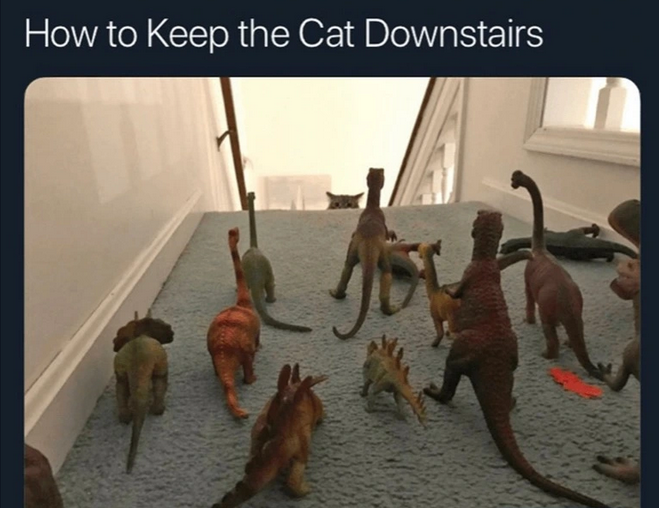
Hope everyone is adjusting to the fall nicely! Here are a few dinosaur jokes that made me chuckle. Feel free to post your own jokes in the comments down below.
Happy Tuesday Friends! Over the last few weeks we have covered a lot of Dino-related info, from the T-Rex to the Pachycephalosaurus. I appreciate the interest you all have shown in the world of dinosaurs!
Many of you have have left thought provoking and intriguing comments and I have enjoyed reading and responding to all of them. Because of this, I thought we should have an experiment this week.
For the next week, feel free to ask me about anything, or respond to other threads or messages. The hope is that we can have fun and share interesting facts about dinosaurs!
If this goes well, maybe we have more group discussions like this in the future 🙂
Thank you all for taking the time to read my little blog. Enjoy the rest of your week and don’t forget to comment below!

Triassic Period: Coelophysis– I have a lifesize figure of one in my living room.
Jurassic Period: Apatosaurus — I have 5′ 7″ femur from one in my living room, a gift from my husband
Cretaceous Period: Triceratops — All I have from it is a horn from its brow, but I’ve always like it best.
LikeLike

If you were being hunted by a dinosaur (pick any meat eater) how would you use your knowledge of dinosaurs to evade the predator and possibly even knock it in the noggin?
If you could have a dinosaur as a pet, which one would you choose and why?
Does it bother you when someone accuses another person of being out of date and says, “You are such a dinosaur”? Is that kind of a slam on dinosaurs?
You needn’t reply to all my questions. Pick the one(s) you like.
Thanks for your questions!
To avoid T-rex, the last thing you want to do is stand still. If you’re a good runner, you can out-distance it. It takes very large steps, but it was probably too heavy to run for an extended period of time.
I would like a Triceratops. They’ve always been my favorite.
Telling someone they’re a dinosaur is actually a compliment and not just because they’re awesome. They managed to live on Earth for 120 million years — not bad survival skills. People wouldn’t have managed any better in the face of that asteroid.
As we transition into the fall, I thought it would be fun to reminisce on one of my favorite summer vacations.
One of the best adventures of my life occurred one summer when my family and I spent a week in western Colorado. During two of those days, we joined a dinosaur dig. It was very hot and dirty. Insects swarmed us, the nearest porta-potty was a half mile away – and I never had more fun in my life!
The paleontologist in charge of the dig, Jim Kirkland, told us where to dig and what to do. The area we dug in was a vast bone bed dating to about 150 million years ago, during the late Jurassic (one of the three time periods during which dinosaurs lived). Many dinosaurs had died, perhaps in a flood, and had their bodies swept into this huge heap. Their bones were all jumbled together. Diggers in that area have found bones from Brachiosaurus, Stegosaurus, Allosaurus, Apatosaurus, and other Jurassic dinosaurs. We would not get to keep any bones we found. They would stay with the paleontologists for study, as they should.
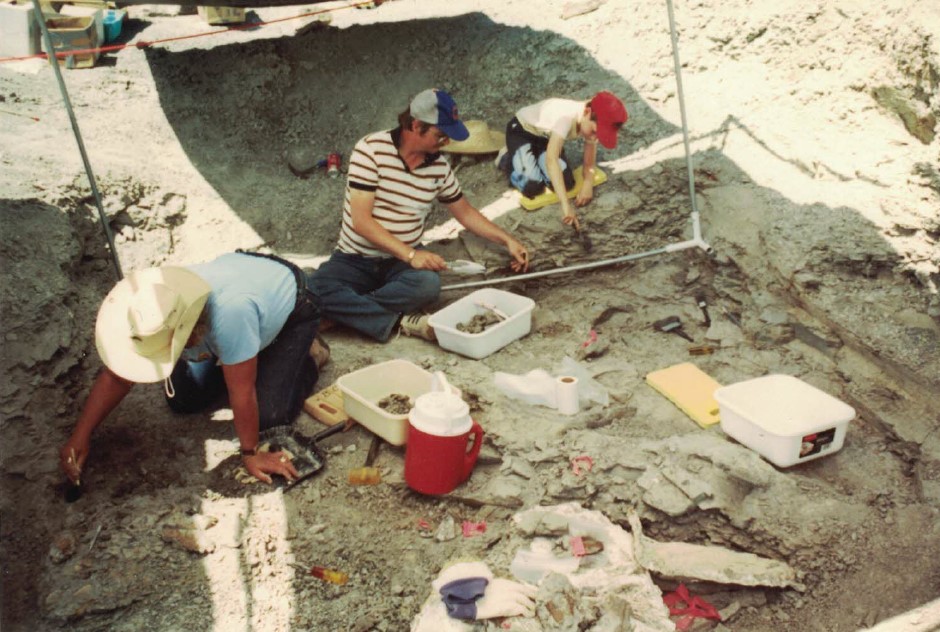
The rock was crumbly, like flaky pastry, and easily removed with just our hands. We searched through it and then discarded the rock into plastic bins. It’s not always easy to tell what’s rock and what’s bone, but at this site the rock was a light brown and the bones much darker brown, almost black. We moved a lot of rock before we saw anything. (Caption: That’s my husband, John, in striped shirt, my son, Patrick, in red cap, and Jim Kirkland in cowboy hat.)
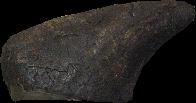
That thrill, though, when you see a bone that’s been buried for 150 million years is not like anything else. It was definitely worth the hours of digging. I felt awed and elated and also a little humble. I’m a tiny speck in this universe. You know, we also spent two days white water rafting while we were in Colorado, but digging up dinosaur bones was more exhilarating!

During those two days digging I only found three bones, but one of them in particular interested Dr. Kirkland (in red shirt at left; me in blue). It looked like a piece of armor from an armored dinosaur, but at that point no one had ever found an armored dinosaur in Jurassic rock. Further excavation after I left produced more of that dinosaur, and it turned out to be just what Dr. Kirkland suspected: an armored dinosaur, the first ever found from the Jurassic Period. He named it Mymoorapelta and wrote to me about it. He also put out a press release, and I got my picture on the front page of the local newspaper!

Mymoorapelta is a nodosaur, which means, among other things, that it doesn’t have a club at the end of its tail. It was one of the earliest armored dinosaurs ever to have lived, and, at 9.8 feet long, one of the smallest. It ate mostly plants that grew low to the ground, such as ferns, cycads, and conifers. Its teeth were small and leaf-shaped. Scientists can’t say for sure, but it is likely that it lived in herds.
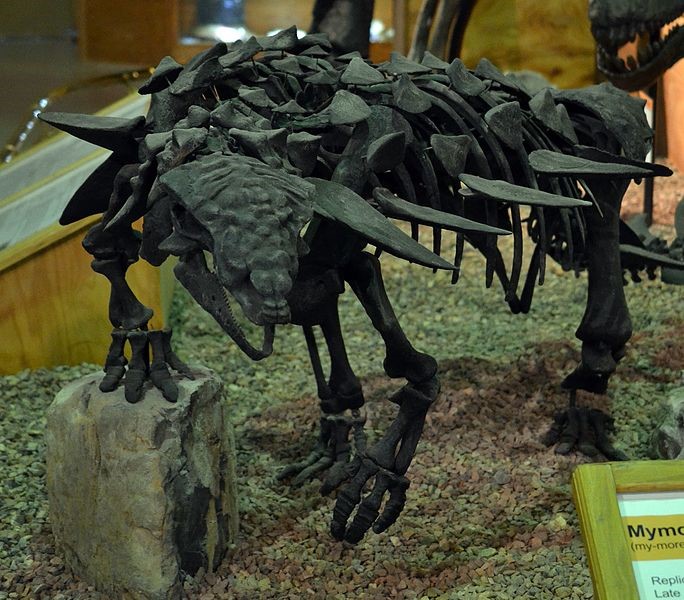
I will leave you with this question: If you found a new dinosaur, what would you name it? Please let me know in the comment section.
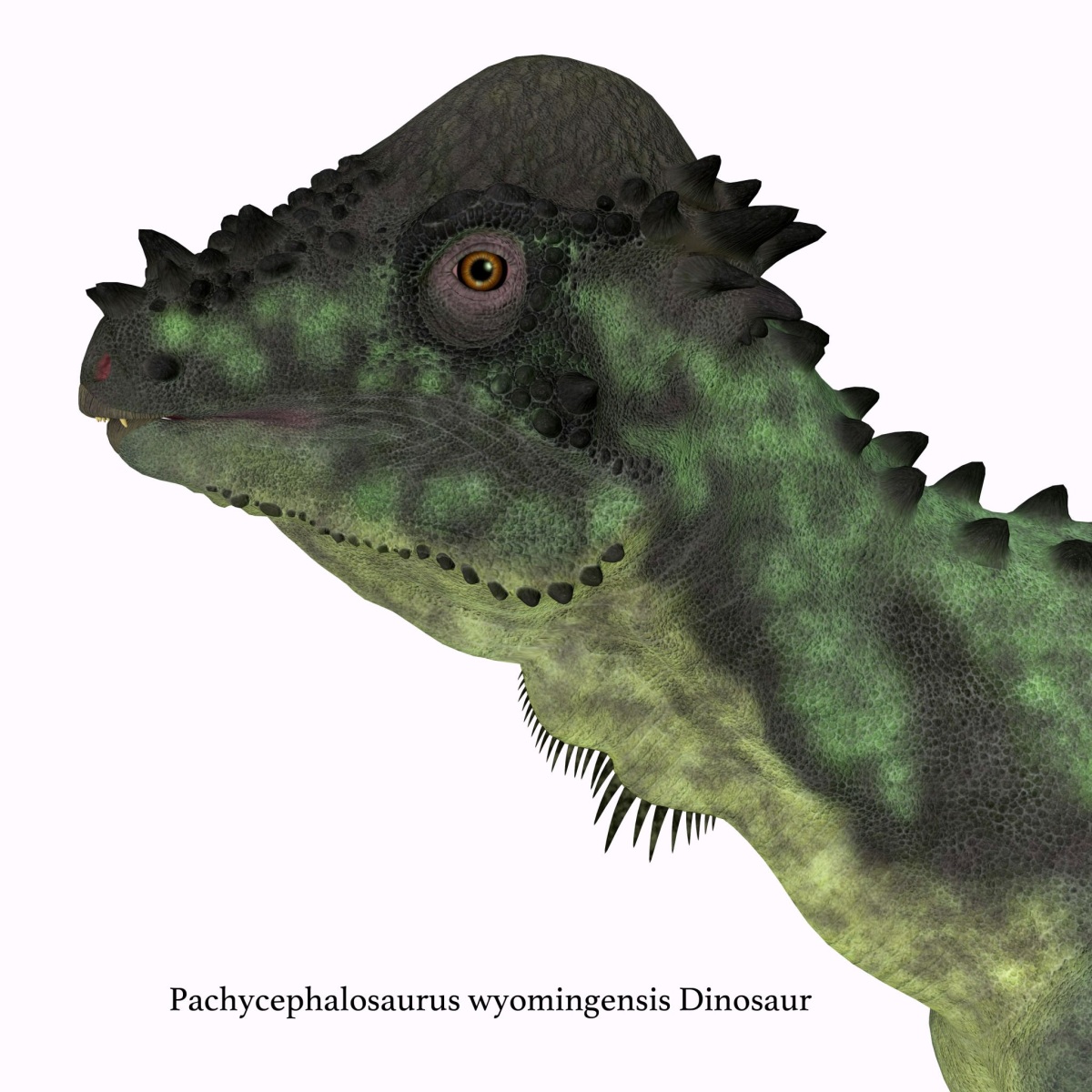
One of the reasons I like dinosaurs so much is that some of them are just plain weird. And, for me, one of the weirdest is Pachycephalosaurus
(pa-KEE-seh·fuh·luh-SORE-us).
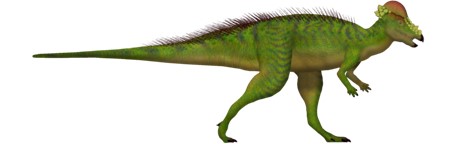
Pachycephalosaurus lived in the late Cretaceous Period, 72 – 66 million years ago, in what is now the western United States and Canada. This was the same time and place that Tyrannosaurus and Triceratops lived. Pachycephalosaurus probably walked on two legs with its tail stretched out behind it and its head leaning forward to balance it. It was about 15 feet long, and weighed almost 1000 pounds. None of that makes it unusual. But when people take a closer look at this dinosaur, it definitely stands out.
Pachycephalosaurus means “thick-headed lizard.” It is a bizarre creature for several reasons. First, the name is weird, even for a dinosaur, because it has so many syllables. If you ever want to impress someone, just rattle off that name without any pauses.
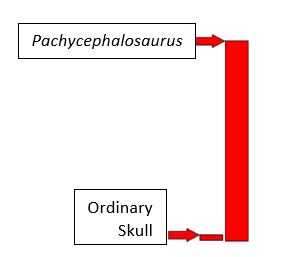
Second, it had nine to ten inches of solid bone in a dome on top of its skull, twenty times thicker than the skulls of most other dinosaurs. That’s a huge difference!
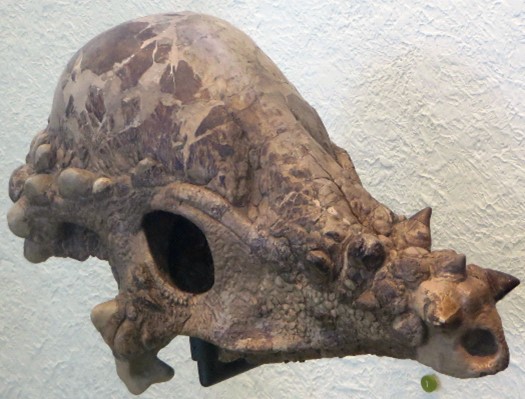
Scientists don’t know for sure why this dinosaur had such a thick skull, but some of them think Pachycephalosaurus liked to butt its head into things, especially other dinosaurs. Head-butting is used by modern animals, such as bighorn sheep or mountain goats, to establish dominance.
The winner controls a territory and impresses the females. The thick skull of Pachycephalosaurus might have protected its brain when it collided with another dinosaur. Scars on the domes of some skulls also support this idea.
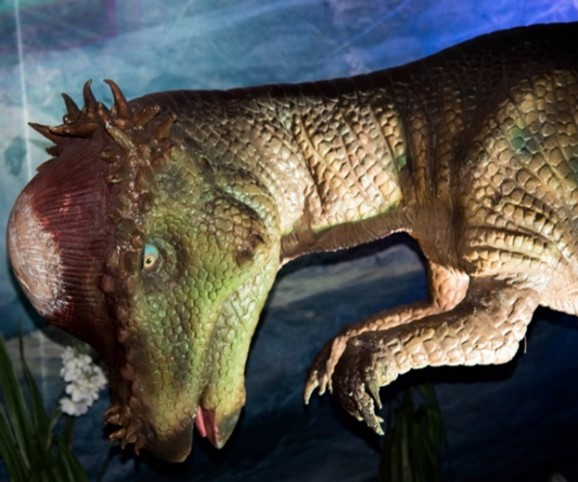
But some scientists doubt head-butting was possible, saying the shape of its neck makes it unlikely its spine could withstand a head-on collision. And, the top of its head is rounded, so not much surface would collide with the other dinosaur. These scientists think that maybe Pachycephalosaurus used glancing blows to the side while fighting others to see who would control a territory. It also might be that Pachycephalosaurus having a big head just helped males to attract females. One thing scientists do agree on is that its thick skull wouldn’t have been much good as defense if it were attacked by Tyrannosaurus because the rest of its body had no defenses.
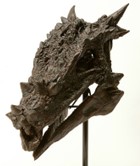
However, it wasn’t just the thickness of the skull that made this dinosaur weird. Across the back of the dome and on its snout, it had large circular bumps (see skull above). Bumps aren’t all that weird, but scientists think most of the bumps started out as spikes, flattening as the dinosaur grew older. They have found skulls of smaller dome-headed dinosaurs that were thought to be different species of dinosaurs, such as one called Dracorex hogwartsia, which means “the Dragon King of Hogwarts” (named for Harry Potter’s school). They are now thought to be juvenile pachycephalosaurs. It seems odd that spikes would flatten into bumps as the dinosaur grew up, as spikes seem more useful than bumps, but, as I said, this is a weird dinosaur.
Another strange thing was its teeth. In the back of its mouth, it had wide, leaf-shaped teeth, similar to those found in many plant-eating dinosaurs. According to paleontologist, Philip Currie, “We have always been somewhat mystified by what these animals were eating, but I think the teeth at the back of the jaws clearly show it’s an herbivore.” But in 2018, paleontologists reported finding a more complete jaw, and they couldn’t believe what it showed. In the front of its mouth, it had sharp, triangular teeth, that were more like a carnivore.
Paleontologist, Steve Brusatte, said, “It had the combination of a beak with these very sharp, steak knife-like serrated teeth … They must have been eating some kind of meat. Why else would you have steak knives at the front of your mouth?” This combination is very unusual. Scientists have suggested that this means it might be an omnivore, eating both plants and meat. The meat would have been small animals, such as lizards, frogs, or even small mammals; the plants would have been ferns, leaves, and conifer needles.
All in all, Pachycephalosaurus certainly qualifies as a strange and weird dinosaur. It’s one of my favorites, and I hope it is now one of yours.
Title Image provided by DKfindout
Sykes, Ben. “Seventeen Unusual, Bizarre, and Downright Weird Dinosaurs.” BBC Science Focus Magazine. 31 May 2018. https://www.sciencefocus.com/nature/17-of-the-weirdest-dinosaurs-to-walk-the-planet/
“Pachycephalosaurus.” Find Out. Dorling Kindersley Limited. 2022. https://www.dkfindout. com/us/dinosaurs-and-prehistoric-life/dinosaurs/pachycephalosaurus/
Pickrell, John. “Vegetarian Dinosaur May Have Actually Eaten Meat, Skull Suggests.” National Geographic. 24 Oct. 2018. https://www.nationalgeographic.com/science/article/news-vegetarian-dinosaur-ate-meat-pachycephalosaurus-paleontology


 Dinosaur Lady
.jpg)


Leave a comment