We finally conclude our deep dive into the extinction event that killed the dinosaurs. We end with Robert dePalma, whose findings shaped our understanding of the asteroid.
At first it was just disappointment. Thirty-year-old graduate student, Robert dePalma, was excavating a fossil site on a ranch in North Dakota. When he began digging in 2021, he had hoped to find layers of sediment that would show the years leading up to the end of the Cretaceous Time Period. The site was a large area, covering about two acres and measuring about three-feet deep, but it was clear the entire layer had been laid down all at once by some kind of flood. There were fish fossils, but they broke apart into tiny flakes when he tried to dig them out.
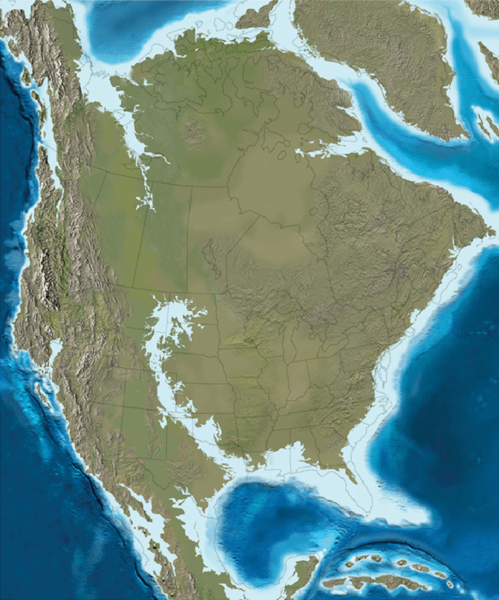
North America at the End of the Cretaceous Period Ron Blakely, Colorado Plateau Geosystems is credited for the maps, in the paper, and Terry A. Gates et al are stated to be the copyright holders for the paper and its contents, CC BY 1.0, via Wikimedia Commons
He continued to dig, though, and he found tiny, white/gray bits that looked like sand. When he looked at them under a magnifying glass, he recognized their tear-drop shape as belonging to microtektites. Tektites, as mentioned in last week’s blog, are created when rock becomes so hot that it turns to liquid. They can be formed by volcanos or by an asteroid hitting the earth. The liquid rock is flung into the air in small bits until it goes high enough the air cools them. As they fall to Earth, they form tear-shaped, glass fragments. Over millions of years, they turn to clay. The tektites he found were so small they were classified as microtektites. DePalma found millions of them. He knew the bed he was digging in was from the end of the Cretaceous Time Period. It dawned on him that the microtektites might be from the asteroid that hit the Earth then.
DePalma continued his excavation. He found an amazing number of fossils. Most of the time fossils are flat, crushed by layers and layers of rock, laid down over time. But many of these fossils were three-dimensional because they had been deposited and covered immediately, and the sediment around them acted as support.
He found new species of fish and a variety of plants, including tree trunks smeared in amber. The amber contained what appeared to be asteroid debris. He suspected that the site he was working on had been formed the very day the asteroid hit! If that was true, it was an incredible find!
As a child and young adult, dePalma had collected bones and fossils. He lent them to a nearby museum where he also reconstructed some dinosaur skeletons. But when the museum went bankrupt, they refused to return his collection. After that he was very careful about the fossils he excavated. In the United States, fossils belong to whoever’s property they are found on and can be sold to anyone. It is not unusual for a paleontologist or commercial fossil collector to sign a contract with a private land owner for an excavation. They usually agree to split the profit on any fossils that are found and sold. Museums and universities don’t like this arrangement because important finds can disappear into private collections.
Realizing that this site was potentially one of the most important ever found, he entered a long-term agreement with the ranch owner. The details of the agreement have been kept private.
Over the next several years, dePalma continued to excavate. He confided in only three other people what he had found, including Walter Alvarez, the man who had originally proposed the asteroid theory. DePalma did publish a paper that described a hadrosaur bone he’d found with a tyrannosaur tooth embedded in it. The bone had healed, indicating that the hadrosaur had gotten away after the attack, which dePalma said proved Tyrannosaurus hunted live prey. Scientists have long debated whether Tyrannosaurus was just a scavenger who lived by finding meals that were already dead or if it hunted live prey. DePalma’s evidence was not taken very seriously because he was just a student and a commercial fossil collector.
Continued excavation at the site revealed a paddlefish, but underneath it was a mosasaur tooth. A paddlefish is a freshwater fish, but a mosasaur is a giant, saltwater reptile. How could fossils of both be in the same site? DePalma and the others tried to come up with a theory to explain this, but they couldn’t.
Then he found small impact craters, about three inches across. At the bottom of each crater was a normal-sized tektite. DePalma was sure they had to be from the asteroid that ended the Cretaceous Period, even though the impact site was about 2000 miles away. He arranged to have a laboratory compare the tektites to material from the Chicxulub (CHICKS-ih-lube) Crater. They matched! The asteroid impact was so explosive that debris was thrown 2000 miles away!
For years dePalma had worked on the site in secret, sharing it with just a few others. But in 2019, he invited a reporter from New Yorker magazine to see the site and tell the world its story. When the story was published, the scientific community was skeptical. The normal procedure for announcing a significant discovery would be to submit a paper to a peer-reviewed journal where experts would evaluate the evidence before it was published, not submit it to a literary magazine. Many scientists disparaged his theories because dePalma was just a student only working on a PhD, a nobody who dug up fossils to sell rather than to study. But they sold dePalma short, as evidence he was right continued to pour in. (And he did eventually publish papers in peer-reviewed journals.)
Depiction of a Cretaceous forest of what is today the Tanis site, in North Dakota, hours after the K-Pg impact. Notice a burnt carcass of a Thescelosaurus, an impaled turtle, a small mammal and a small ornithuran avialan. YellowPanda2001, CC0, via Wikimedia Commons
DePalma has named the site Tanis, after an ancient Egyptian city. In the late Cretaceous, a large inland sea stretched from the Gulf of Mexico to what is now the U.S./Canadian border. What is now North Dakota was subtropical. DePalma and the people he has now working with him on the site have determined that Tanis was a sandbar located between a river and a forest. They think that when the asteroid hit in the Gulf of Mexico, it created a gigantic earthquake. It took maybe ten minutes for the shock waves to reach Tanis. The disturbance caused giant waves to form on the inland sea shown in the map above. They flung sea creatures, such as the mosasaur, at Tanis, many miles away. In addition, waves were formed in the nearby river, flinging freshwater creatures onto the site. DePalma found a turtle that was flung so hard that a tree branch went right through its body.
Continued excavation has also revealed
Fish with asteroid debris clogging their gills,
Ant nests with the ants still in them and asteroid debris in their tunnels,
Large feathers that likely came from a large dinosaur,
Broken bits from almost all the dinosaurs known to have lived in that area during the late Cretaceous,
A small burrow inhabited by a small mammal,
Dinosaur eggs and hatchlings,
Pterosaur bones,
A partial mummified Thescelosaurus with its skin still intact,
And pieces of the actual asteroid preserved in amber.
DePalma and his crew continue to work on the site. It will take years to explore it thoroughly. Right now, though, it’s an amazing picture of what happened the day the dinosaurs died.
Everyone knows an asteroid killed the dinosaurs. But is that all we know? Join me as we go down the rabbit hole of how the dinosaurs went extinct…
Sixty-six million years ago, life on Earth was very different from today. Trees, ferns, and flowering plants covered the land. There wasn’t any grass (despite what the picture below shows. I couldn’t find a free Cretaceous scene anywhere without green ground). Grass hadn’t evolved yet.
User:Debivort, CC BY-SA 3.0, via Wikimedia Commons
The only mammals were small creatures, no bigger than about three feet long. Dinosaurs dominated the planet. There were small dinosaurs, medium-sized dinosaurs and BIG dinosaurs. They lived in every part of the world. They lived in valleys and on mountains. They lived in dry places and wet places. They lived in forests and on open plains. They had ruled the Earth for 180 million years, and it seemed they would continue to do so indefinitely.
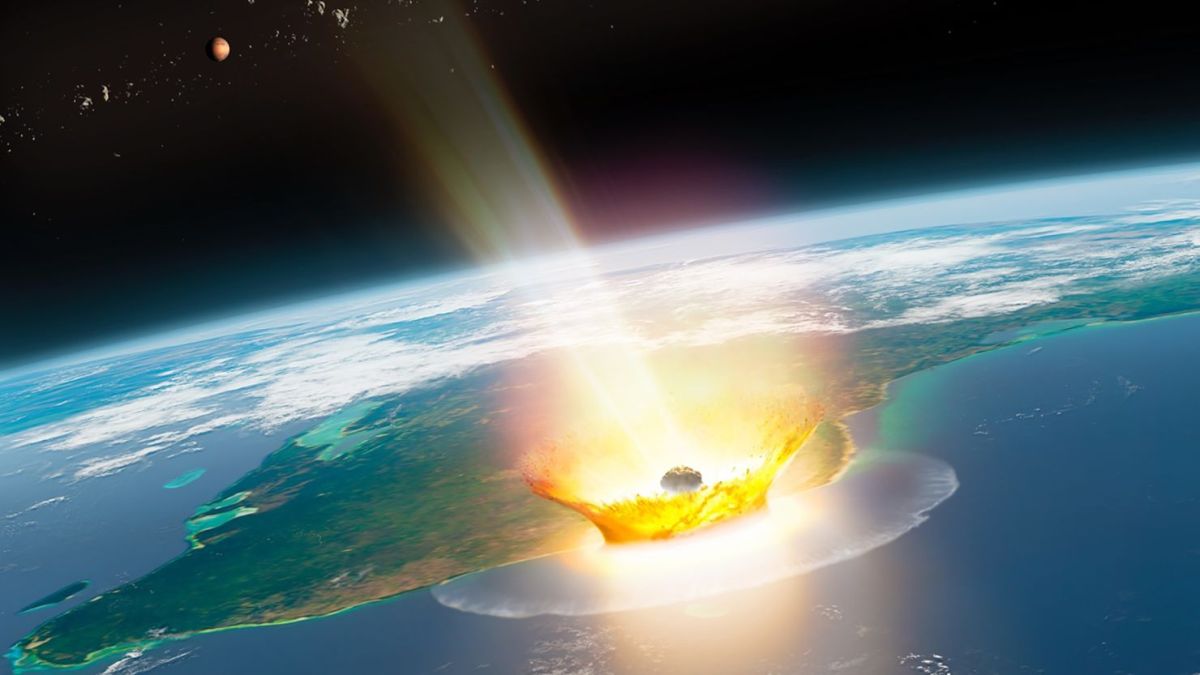
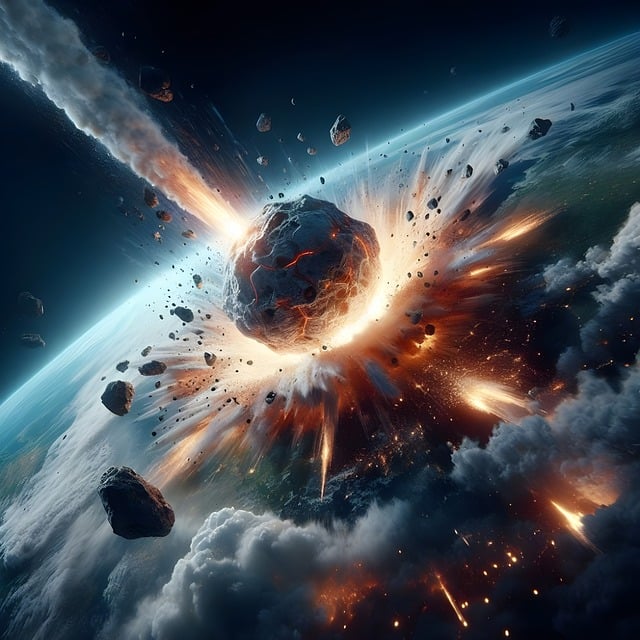
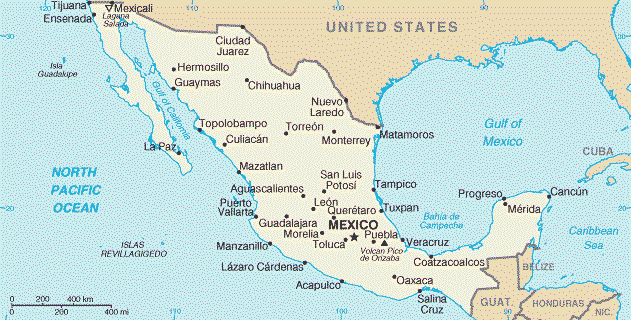
But out in space an asteroid was plunging toward Earth. It was about six miles wide and the height of Mt. Everest. When it reached the Earth’s atmosphere, it would have looked like a fireball brighter than the sun. It was seen, though, for only a few seconds before it hit the Earth because it was hurtling through the air at about 45,000 mph! It hit in the Yucatan Peninsula in Mexico, forming a crater that covers a large portion of the Gulf of Mexico. The crater has been named Chicxulub (CHICKS-ih-lube) Crater.
NASA/JPL-Caltech, modified b, Public domain, via Wikimedia Commons
The asteroid hit with a force 10 billion times larger than the atomic bomb detonated on Hiroshima, blowing a hole in the ground 120 miles wide and 18 miles deep. Imagine how loud that explosion must have been! In an instant, the intense heat of the explosion vaporized the asteroid and turned thousands of cubic miles of rock into liquid and spewed it into the air, like a colossal volcano erupting. Anything within 600 miles or more would have been instantly incinerated by the fireball. A combination of soot, sulfuric gases, and extremely fine dust was flung into the atmosphere. For the next several hours, titanic winds blew this debris around the whole Earth. They ignited a world-wide firestorm that probably killed most of life on Earth. In addition, a mega-earthquake shook all of Mexico and Central America, the southern United States, and as far south as far as Argentina. The earthquake (magnitude 13 – likely the biggest earthquake the Earth has ever felt) triggered giant tsunamis and mudslides. One-thousand-foot-high waves of water hit the coast where now Texas, Alabama, Mississippi, northern Mexico, and Cuba lie. Secondary waves traveled as far as what is now North Dakota.
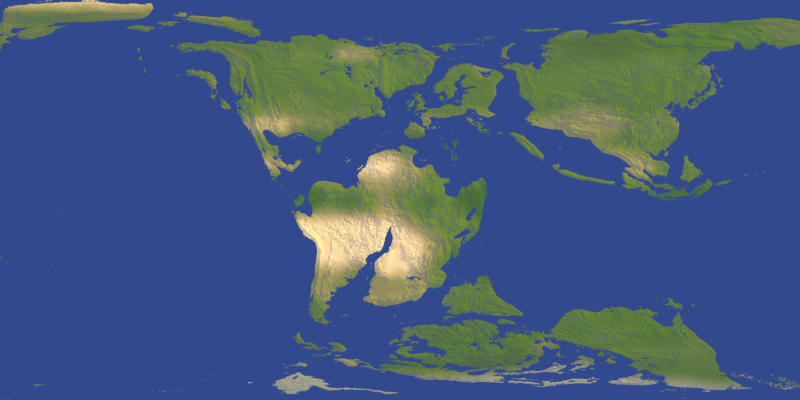
Continent placement at the end of the Cretaceous Era Merikanto, CC BY-SA 4.0, via Wikimedia Commons
Life that somehow survived this, now faced another horror. Dust and soot lingered in the atmosphere blocking most of the sunlight for at least a year. Without sunlight plants couldn’t grow and thrive. Plant eaters lost their food source and died. Meat eaters lost their food source and died. In addition, the lack of sunlight lowered the temperature on Earth by about 80° Fahrenheit.
As if this weren’t bad enough, volcanos in India had been erupting at this same time, with lava flows covering 190,000 square miles of land, killing all life in that area. The eruptions also added more toxic fumes and debris to the atmosphere.
Scientists disagree about how long it took, but about 75% of all life on earth, plant and animal, died because of the asteroid hit and the volcanos, including all the dinosaurs (except birds which most scientists believe are direct descendants of dinosaurs). Some small animals survived, including the ancestors of today’s frogs, snakes, lizards, alligators, crocodiles, a variety of insects, birds, and mammals.
How do we know all this happened? I’ll explain in my next blog.
Ever wonder how the Brontosaurus lost its name? Commonly known as the icon of Sinclair Oil, this sauropod’s history is complex and newsworthy.
The Brontosaurus is one of the most famous dinosaurs in the world. Millions of people know its name. Most can recognize its huge shape. It’s been on lunch boxes, made into countless toys, and was featured on a U.S. postage stamp. It even served as the official icon of Sinclair Oil company. However, there is one problem: there is no dinosaur named Brontosaurus.
How did this happen? When dinosaurs were first discovered in the 1820s, the idea of those huge reptiles stalking the earth caught people’s imagination. Every museum in the world wanted to display a huge skeleton of a dinosaur. But it takes many years to find dinosaur bones, dig them up and put together a dinosaur skeleton. Over the next sixty years the competition to discover dinosaur bones grew, and then it became especially fierce during the 1880s. In fact, that time is now known as the “Bone War.”
From 1877 to 1892, two paleontologists in particular, Edward Cope of the Academy of Natural Sciences in Philadelphia and Othniel C. Marsh of the Peabody Museum in Connecticut, were the fiercest competitors. They used their own money to finance expeditions and to buy dinosaur bones from other fossil hunters.
In the beginning Cope and Marsh just paid collectors to send them fossils. But this was only the start. As the rivalry intensified, each side spied on the other, stole bones when they could, bribed workers, and even blew up fossils with dynamite so that the other side couldn’t get them. As soon as either dinosaur hunter got new bones, he rushed to get a description into print. Whoever publishes a description of a new dinosaur first gets to name it, and each man wanted to be the one to name the most. In the end Cope lost. He named 56 new dinosaur species, while Marsh named 80. And by the end of the Bone Wars in 1892, both men had gone nearly bankrupt trying to be the best (or most famous) paleontologist. And the hurry of both men led to mistakes.
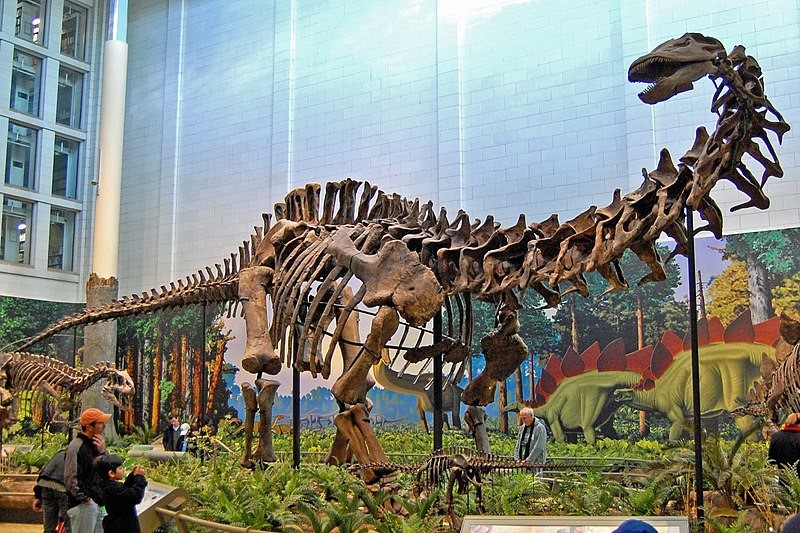
Tadek Kurpaski from London, Poland, CC BY 2.0, via Wikimedia Commons
In 1877 Marsh published a papernaming a new dinosaur, Apatosaurus ajax. Its name means “deceptive lizard,” which turned out to be the truth. The description was based on only a few bones. Two years later Marsh published another article describing what he thought was a different dinosaur, Brontosaurus excelsius. This description was based on one of the most complete skeletons of a long-necked dinosaur ever found. Brontosaurus means “thunder lizard,” and the catchy name became popular. The mount of that Brontosaurus skeleton in the Yale Peabody Museum of Natural History increased its popularity. Unfortunately, one of the missing pieces of the skeleton was its skull. Not to worry. Marsh just put a Camarasaurus skull on it.
But, in 1903, Chicago paleontologist Elmer Riggs took a look at both dinosaurs. He determined that the two dinosaurs were actually the same dinosaur. It was given the name Apatosaurus first, and the International Code of Zoological Nomenclature states that the oldest name has priority, so that is the name used by scientists. Brontosaurus became Apatosaurus. And in 1979 scientists finally put the right skull on the skeleton. Still, the general public didn’t let go of the name Brontosaurus until about the 1990s. It was just too cool a name to let go.
However, all is not lost. There is a movement to resurrect the name Brontosaurus. In 2015 paleontologists studied hundreds of bones from Apatosaurus and the dinosaur called Brontosaurus and found differences in the neck, back, and shoulder bones. Originally scientists thought those difference were because one of the dinosaurs was a juvenile. Now some feel these differences are enough to say Brontosaurus and Apatosaurus are different dinosaurs. But this has not gained wide acceptance. More research may resolve the problem. But a lot of people who are just dinosaur lovers would welcome the return of the “thunder lizard.”
Cover Image Source: An Errant Knight, CC BY-SA 4.0, via Wikimedia Commons










 Dinosaur Lady
.jpg)


