Stegosaurus

Stegosaurus is one of the most iconic herbivores, but is also one of the most peculiar…

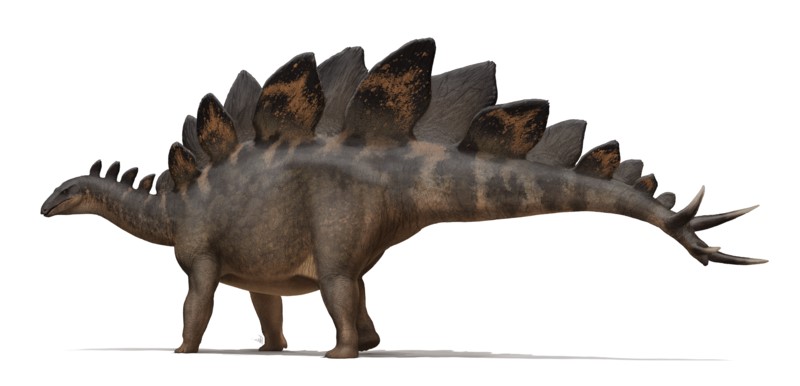
            Many dinosaurs are strange. But one of the strangest is Stegosaurus. Imagine what you would look like if you walked on your feet and your elbows! Well, that’s sort of what Stegosaurus looked like. Its back legs were twice as long as its front legs. That meant its hips were stuck way up in the air – 9-13 feet! Its head and shoulders were close to the ground, and its back curved like a slide down to its tail.  From front to back it was about 24-30 feet long, and it weighed about 5 ½ tons. In a bowling alley, it would take just two stegosaurs to stretch from the beginning of the alley all the way down to the bowling pins.
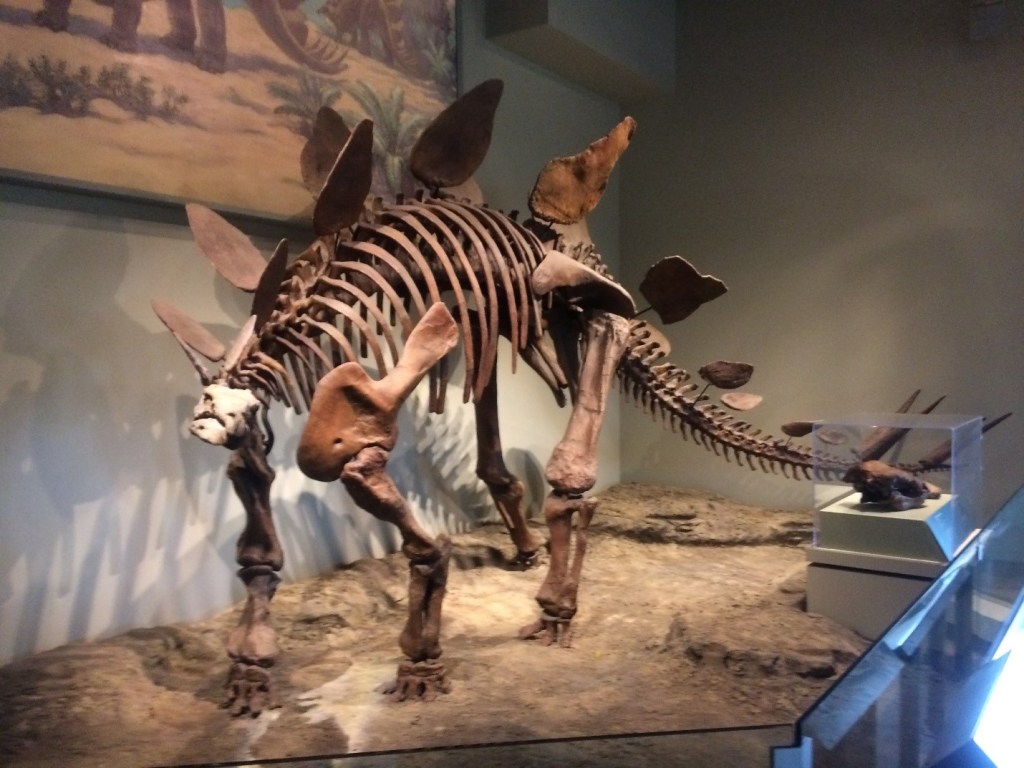
Stegosaurus skeleton at the Field Museum of Natural History in Chicago

            That was certainly a strange shape, but Stegosaurus had an even stranger mouth. The front of its mouth was a beak, like that of a parrot or turtle. Most plant eaters have strong teeth that can grind up food, but not Stegosaurus. In the back of its mouth, it had rows of small, weak teeth. Its jaws could only move up and down, not to the side, which made chewing hard. As you can imagine, all this made it hard for Stegosaurus to eat. It could break off a mouthful of plants, but it couldn’t really chew them up very well before swallowing them. So, most things went down whole. There’s no evidence to indicate that it ate rocks (called gastroliths) as did other dinosaurs that couldn’t chew. The rocks helped break up the food in a special sac called a gizzard. But Stegosaurus didn’t do this. So, scientists have no idea how this strange creature managed to digest its food.

Frederick Berger, Public domain, via Wikimedia Commons

            Stegosaurus not only had trouble eating – it also had trouble thinking. The Stegosaurus had a tiny head and probably the smallest brain compared to its size of any dinosaur. It was only about as big as a golf ball or walnut.

            Stegosaurus might not have been very smart, but it knew enough to avoid somebody who tried to take a bite out of it. And there were plenty of creatures that wanted to take a bite out of Stegosaurus.

FabSubeject, CC BY-SA 3.0, via Wikimedia Commons

            The Stegosaurus lived at the same time as the fierce Allosaurus and many other meat eaters. It couldn’t run fast, and it couldn’t think fast. It had to have some way to protect itself – so it grew a very strange weapon. Most dinosaurs that needed to defend themselves grew sharp claws on their feet or horns on their heads. But Stegosaurus did things backwards. It grew four, foot-long spikes on the end of its tail!
Fred Wierum, CC BY-SA 4.0, via Wikimedia Commons

            These spikes were good weapons and helped the Stegosaurus, but they were not good enough to fight off a determined attack. So, Stegosaurus’ best chance for survival was either to hide from meat eaters (and it was too big to do that!) or to stay with a herd of stegosaurs. Like any bully, an Allosaurus would rather attack a Stegosaurus found alone than one with a lot of friends nearby.

            Probably the weirdest thing about Stegosaurus was the plates on its back. Scientists have wondered whether there was one row of plates or two, whether they stood up straight or lay down flat, and whether they were arranged in pairs or alternated. They have also wondered what the plates were for.

©Diana Magnuson

            They weren’t dinner plates – but they may have helped keep Stegosaurus from becoming someone else’s dinner, serving as defense. This isn’t too likely because their whole sides had no covering. Just protecting the top wasn’t very effective.

            Or the plates may have worked to keep the Stegosaurus from becoming too hot. Their position and shape seem designed to pull heat from the body of Stegosaurus and let the wind carry it away. But dinosaur species similar to Stegosaurus, such as Kentrosaurus, have spikes instead of plates, which wouldn’t work as heat dispersers. Most likely, the plates may have been just for display, to help Stegosaurus attract a mate. Scientists have considered all of these ideas, but they have not been able to agree. They continue to study the plates, but they may never know for sure why Stegosaurus had them.

Kentrosaurus
Connor Ashbridge, CC BY-SA 4.0, via Wikimedia Commons

            Scientists also don’t know much about the kind of life Stegosaurus led. Scientists have found Stegosaurus footprints which seem to indicate it traveled in herds, living on flat floodplains and in conifer forests bordering rivers. It is likely it ate plants that grew close to the ground, such as mosses or ferns. They think it laid eggs and that it probably left its babies on their own to take care of themselves because they weren’t smart enough to take care of them. Many reptiles, such as sea turtles and snakes, do this. But scientists don’t know for sure. There will always be things we don’t know about Stegosaurus. But that’s part of the fascination of this strange creature.

ABelov2014 (https://abelov2014.deviantart.com/), CC BY-SA 3.0, via Wikimedia Commons
Sources (Click Me!)

Naish, Darren. “The Stegosaurus Plate Controversy.” Scientific American. 11 July 2016.  https://www.scientificamerican.com/blog/tetrapod-zoology/the-stegosaurus-plate-controversy/

Norman, David. The Illustrated Encyclopedia of Dinosaurs. Crescent Books, 1985.

Rafferty, John P. “Stegosaurus.” Britannica. 10 July 2024. https://www.britannica.com/animal/ ornithischian

Riehecky, Janet. Stegosaurus. The Child’s World, 1988.

Title Image from https://wallpaperaccess.com/stegosaurus
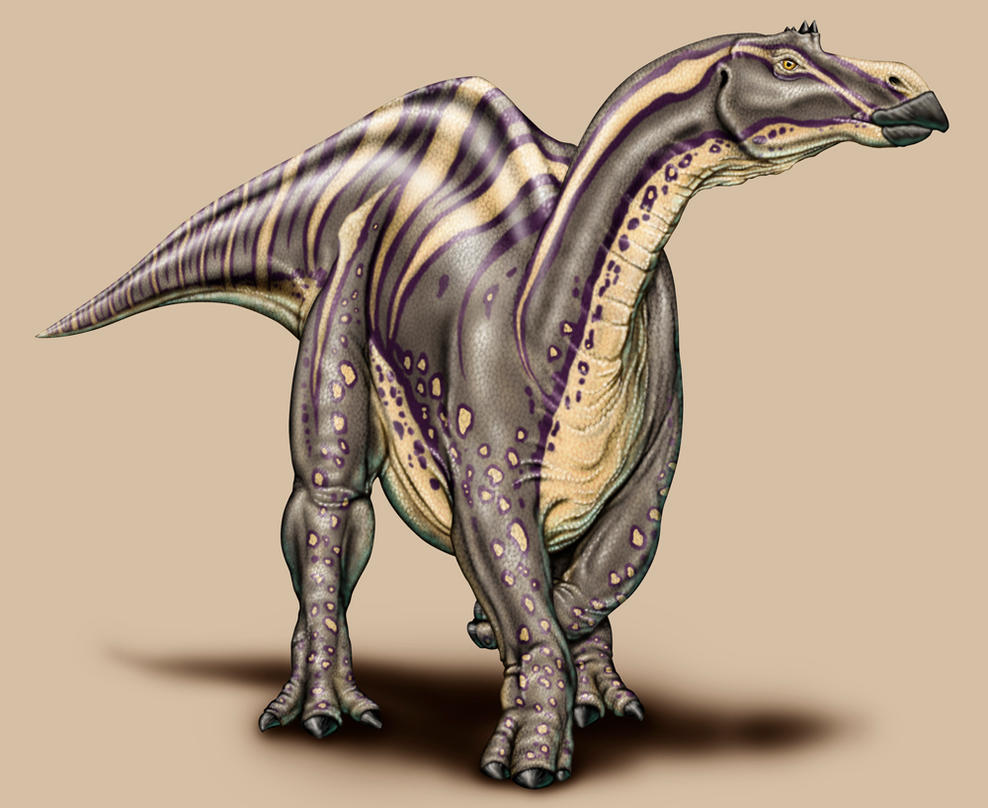
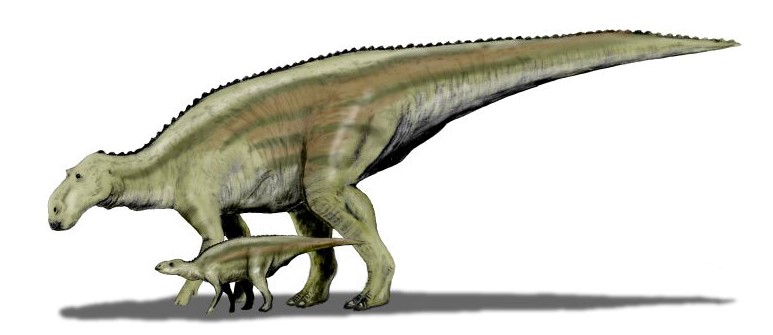
Maiasaura: The Good Mother Lizard

Have you heard of Maiasaura? This dinosaur discovery was integral to our understanding of how dinosaurs behaved.

Title Image by JBStuka          

            For decades after dinosaurs were discovered, people thought they were just big, dumb, plodding animals. One of the discoveries that helped convince scientists that there was much more to dinosaurs than that was the discovery of Maiasaura.

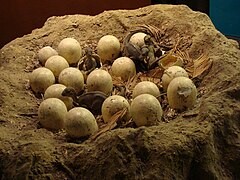
Maiasaura Nest Model
Fernando Losada Rodríguez, CC BY-SA 4.0, via Wikimedia Commons

            In 1978, paleontologist, Jack Horner, discovered a field of dinosaur nests in Montana. The nests not only had unhatched dinosaur eggs but also skeletons of baby dinosaurs. The babies were not newborns. They were too big to have just hatched. That meant they were living in the nest — which meant the mother dinosaurs were taking care of the babies! If the babies had to feed themselves, they would have wandered away from the nest. This was an amazing idea at the time. No one thought dinosaurs were smart enough to take care of their babies. Horner named the dinosaur Maiasaura, which means “good mother lizard.”

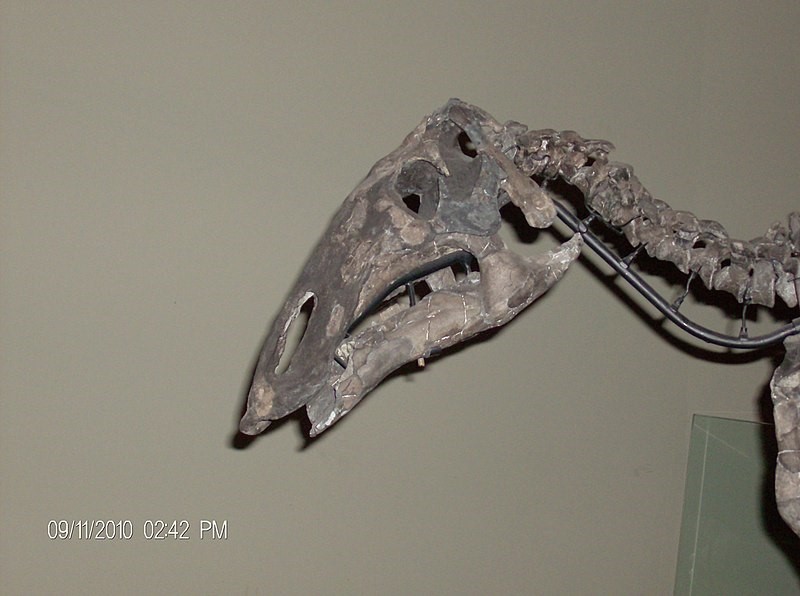
            In many ways, Maiasaura was just an average dinosaur, which makes their caretaking even more interesting. It is one of the duckbilled dinosaurs. Duckbilled is a nickname given to several different types of dinosaurs that had mouths shaped like a duck’s bill. The Maiasaura didn’t have any teeth in the front of its long, flat mouth, but in its cheeks, it had hundreds of them.

T-Rex Taylor, Public domain, via Wikimedia Commons

            Many duckbilled dinosaurs had fancy crests on their heads, but the Maiasaura’s head was flat, with just a very short, bony spike above its eyes. Some scientists think the Maiasaura might have had a flap of skin, like the comb of a rooster, attached to the spike. Male Maiasauras could have used that to attract the attention of female Maiasauras.

            A Maiasaura was about the size of a camping trailer. That may sound big, but it was only average for a dinosaur. Most adult Maiasauras grew about 20 feet long. They stood about 15 feet high and weighed about two-and-a-half tons.

            Maiasauras walked on all four legs much of the time, but they could walk on just their two back legs if they needed to. Their front legs were smaller and thinner than their back legs and had four fingers.

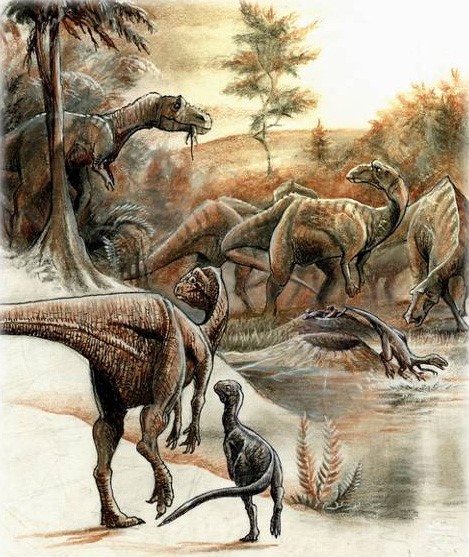
Pavel.Riha.CB, CC BY-SA 3.0, via Wikimedia Commons

            The Maiasaura was a plant-eating dinosaur. It ate tree needles, twigs, seeds and berries. As you might expect, chewing these tough, woody foods wore its teeth down. But the Maiasaura had an easy way to avoid the dentist. It had teeth stacked inside its jaws, one on top of the other. Whenever a tooth wore out, it just fell out and was replaced by the one underneath.

            All dinosaurs hatched from eggs. The Maiasaura laid her eggs in bowl-shaped nests. As you might guess, these big creatures needed BIG nests – about six-feet wide! Scientists think the mothers used their powerful back legs to make a huge mound of dirt on a flat area and used their arms to hollow out the center. Many Maiasauras made their nests in the same area, keeping them about 23 feet apart. That allowed the mothers space to walk between the nests without stepping on anyone else’s nest. The mothers probably brought plants to the nest to cover the eggs to keep them warm. If they had sat on them, they would have squashed them!

            The babies were about 14 inches long when they were born – about the size of one of their mother’s feet. Each weighed only three or four pounds. The mother brought food to the nest, just as a mother bird will do today. We know the babies stayed at least part of the time in the nest because the shells in the nest were broken into tiny pieces as if walked over many times. Some of the baby skeletons Horner found in the nests were about three feet long. It probably took them several months to grow that big, so an adult must have not only brought them food all that time, but also guarded them from meat-eating dinosaurs looking for a snack.

Debivort, CC BY-SA 3.0, via Wikimedia Commons

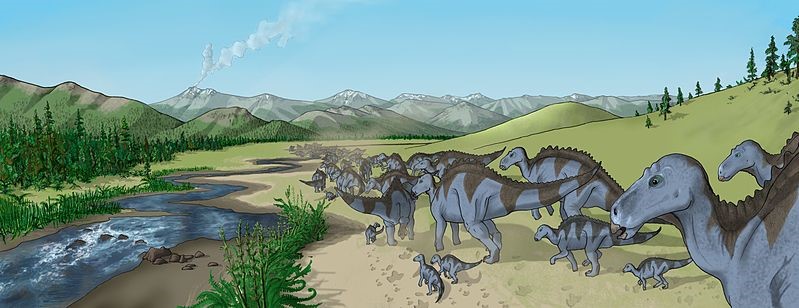
            When the babies were big enough, they joined a herd. Huge herds of Maiasauras roamed the upper coastal plains – as many as 10,000 in a single herd! This was their best defense against predators. Meat eaters would have to look for a single dinosaur that became separated from the herd. Maiasauras had good hearing and good eyesight, so they could be aware of danger. They would eat all the plants in one place and then move on to another. Scientists think they may have traveled a regular route, always returning to the same nesting ground when it was time to lay their eggs.

            Over the years many paleontologists have returned to what they call “Egg Mountain” in Montana to study the bones, eggs, and nests fossilized there. The more they learn, the more amazing this “good mother” dinosaur seems.

Nobu Tamura (http://spinops.blogspot.com), CC BY 3.0, via Wikimedia Commons
Sources (Click me!)

Gaur, Aakanksha. “Maiasaura.” Britannica. 6 December 2019.             https://www.britannica.com/ animal/Maiasaura

Horner, John R. and James Gorman. Maia: A Dinosaur Grows Up. Running Press, 1987. “Largest dinosaur population growth study ever shows how Maiasaura lived and died.” Montana State University News Service. 1 October 2015. https://www.montana.edu/news/15769/largest-dinosaur-population-growth-study-ever-shows-how-maiasaura-lived-and-died

Okoyomon, Adesuwa. “Meet Maiasaura, the Good Mother Lizard.” Science World. 12 July 2022. https://www.scienceworld.ca/stories/maiasaura-good-mother-lizard/

Riehecky, Janet. Maiasara. The Child’s World, 1989.