When the dinosaurs lived, they often had just one thing on their minds – FOOD! Whether a dinosaur ate plants or meat, getting food was a full-time job. Scientists have found evidence that at least one type of dinosaur went fishing for its food. That dinosaur was Baryonyx (BAR-ee-ON-ix).
Scientists know Baryonyx was a meat eater because it had the sharp curved teeth needed to cut through meat. But in many ways, it was different from other meat-eating dinosaurs.
Most meat-eating dinosaurs had strong jaws, heavy skulls, and enormous teeth, so they could slice through tough skin and bone. But Baryonyx’s jaws were not very strong, and its head was long and flat, like a crocodile’s. Its teeth were much smaller than most meat eaters’ – and it had almost twice as many of them. Baryonyx was not made for attacking other dinosaurs. It was made for catching fish.
A lot of animals like the taste of fish, but it takes a very special kind of animal to catch them. Fish dart about very quickly in the water. To catch them, an animal has to be even quicker. Fish are also very slippery. Holding onto them takes special claws or teeth.
So, how could Baryonyx catch fish? Scientists have suggested several ways. It might have stood by the edge of a shallow lake, waiting as patiently as a heron. When an unsuspecting fish swam by, it might have snapped it up. Its long mouth and many sharp teeth could have grabbed a quick-moving fish and held onto it no matter how much it wiggled.
Or the Baryonyx might have played crocodile. Some scientists picture it floating in the water, watching carefully. If a fish swam by, it was scooped up in the long mouth of Baryonyx.
Artwork by Jim Conaway
Another way it might have fished was with its front feet. It could use its front feet as hands. It had long, slender fingers which may have been used to grab fish. Or if it didn’t feel like grabbing, it might have gone “spear fishing.” The name Baryonyx means “heavy claw.” It got this name because it had a huge claw, one of the biggest dinosaur claws that has ever been found – 12 inches long! Scientists think Baryonyx had one of the super claws on each front foot. It could stand in shallow water, waiting. Then, when a fish swam past, it could stab quickly into the water and catch it.
Artwork by Jim Conaway
What makes scientists so sure Baryonyx ate fish? The first skeleton found had fish scales where its stomach would have been. They also found a few bones of a plant-eating dinosaur. How did Baryonyx hunt large plant eaters when it wasn’t a very big or strong dinosaur? Well, many scientists think it let a powerful meat eater like Megalosaurus do all the work. Megalosaurus might kill a plant eater too big for it to eat. Baryonyx could come by when it was done and eat the leftovers. So, the life of Baryonyx was like a vacation – lots of fishing and somebody else prepares the food!
Scientists don’t know much about how Baryonyx lived. They don’t know if it traveled in a pack or alone, they don’t know if it took care of its babies or left them on their own, and they don’t know if it had feathers or scaly skin. They can describe its size because the first skeleton found of it was 85% complete. It grew about 30-33 feet long and was about twice as tall as an average person. Its legs were short compared to some dinosaurs and lacked strong muscles, so it wasn’t a runner. It was not very strong in general, but its large claw would have made a great weapon to defend itself. Only a very big and very hungry meat eater would have bothered it.
Scientists are fascinated by this dinosaur because it’s so different from other dinosaurs. The wide variety of dinosaurs makes them very interesting to study, and each new discovery adds to our picture of what they were like.
What is the evidence that an asteroid hit the Earth? The history of the Earth is recorded in rocks…
One of the most basic things geologists study are layers of rock. You’ve probably seen them.
Rock layers are easily seen in the Grand Canyon
These layers are laid down by sand, river silt, lava, and other inorganic ground cover. Some are formed quickly; others take thousands of years. Earthquakes can shove some layers up and others down. Each layer represents an era of time.
Scientists can determine the age of layers of rock by looking at fossils and elements found in the rock. Some elements are especially helpful in this because they change over time. For example, some forms of potassium change into argon. Scientists know how long it takes for this to happen (millions of years), so by measuring how much of a sample is still potassium and how much argon, they can tell how old the rock is. They can also do this with some uranium, which changes into lead. It’s more complicated than that, but that’s the basic idea.
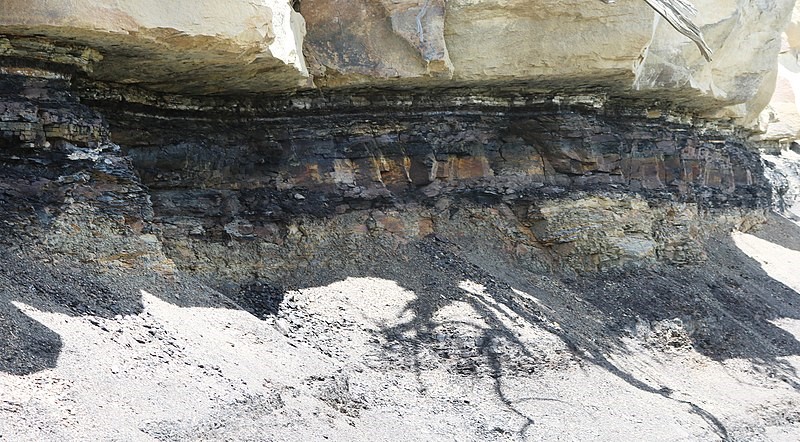
Scientists have known for a long time that there is a layer of rock that marks the end of the dinosaurs. It’s called the K-Pg boundary and it dates to 66 million years ago, (K stands for the German word for Cretaceous and the Pg for Paleogene, the next time period.) Below that layer dinosaur fossils are found. No dinosaur fossils have ever been found above it.
At first, scientists believed that this extinction happened gradually. Dinosaurs died out because they were replaced by “superior” mammals. But in the mid-1970s, while studying layers of rock in Italy, geologists Walter Alvarez and Bill Lowrie, noted that the layer of rock below the K-Pg boundary had loads of microfossils of sea creatures in it, but a thin layer of clay just above it had almost none. It looked like nearly all these creatures had died suddenly. Alvarez realized that their near extinction occurred at the same time with a much bigger extinction – the dinosaurs!
Cretaceous-Tertiary boundary clay Jeffrey Beall, CC BY 4.0, via Wikimedia Commons
Alvarez talked to his father, Luis Alvarez, a Nobel prize winning physicist, about the problem. His father had the idea of trying to look for the element iridium in order to tell if the layer of clay was deposited quickly (which could mean a catastrophe killed the dinosaurs) or gradually (which would mean scientists were right about dinosaurs dying off slowly). Iridium comes from asteroids. It’s very, very rarely found on Earth. But dust from asteroids drifts down through the atmosphere in tiny amounts at a consistent rate. If there was a lot of iridium dust, that would mean the extinction happened gradually. If a small amount, then it happened quickly.
But father and son were not prepared for what they found: a lot of iridium. That should have meant that the layer was laid down gradually, but it was too much iridium, nine times more than just dust could account for. They decided to look in another location of the K-Pg boundary to see if they found the same thing. They found a site in Denmark. It also had lots of iridium. Later a site in Spain got the same result.
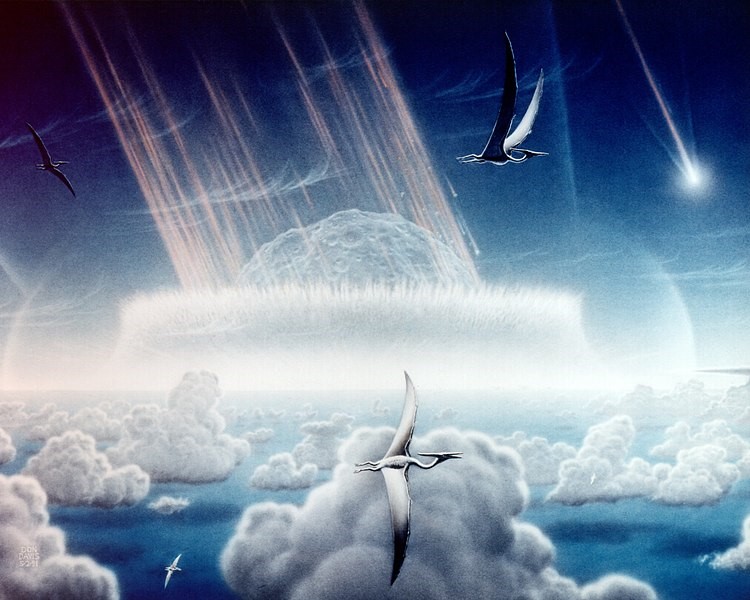
Father and son discussed the idea that the iridium could have come from an asteroid hitting the Earth, but they couldn’t figure out how one impact could cause worldwide extinction. Walter presented the iridium data at a conference and met with lots of resistance. Scientists did not want to let go of the idea that dinosaurs had died out gradually.
Artist impression of asteroid impact Donald E. Davis, Public domain, via Wikimedia Commons
Luis then had the idea that a large enough impact would cast so much debris into the air that sunlight would be blocked. With no sunlight, plants wouldn’t grow. Plant eaters would have nothing to eat and would die. Then meat eaters would have nothing to eat. This could cause mass extinction. Meanwhile, reports came in from all over the world showing lots of iridium in the K-Pg boundary. But nearly all scientists still rejected the idea of an asteroid impact leading to mass extinction.
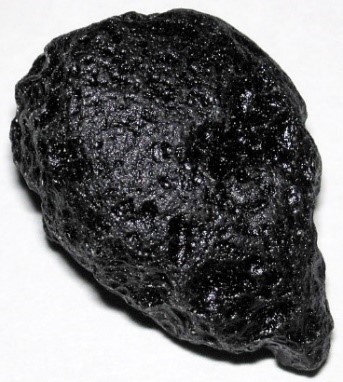
Over the next decade other evidence of an impact was found in rocks. Scientists found shocked quartz in the K-Pg boundary. Shocked quartz is formed from a powerful shock wave (like an earthquake) passing through rock and deforming the structure inside regular quartz. An asteroid impact would have sent a shock wave like that through the ground. They also found tektites, which are made when rock is heated so hot it becomes liquid (usually by a volcano). Bits of liquid rock are flung into the air. When they get high enough, the rock solidifies, and it falls to Earth in a distinctive tear-drop shape. An asteroid hitting the Earth would have made an explosion so hot it would have melted the rock and produced tektites. Scientists also found sand deposits that indicated a tsunami had occurred and soot from the worldwide firestorm there would have been.
All this was great, but skeptics still held out. They asked, “If an asteroid hit the Earth, where is the crater that it would have formed?” It wasn’t until 1990 that scientists found that the Gulf of Mexico had been hiding the crater. The Chicxulub Crater in the Yucatan Peninsula became the smoking gun that confirmed that a huge asteroid had indeed struck the Earth. Scientists were able to date the crater to about 66 million years ago – the end of the Cretaceous Period and the end of the dinosaurs. This finally convinced most scientists.
The Formation of Chicxulub Crater The original uploader was David Fuchs at English Wikipedia., CC BY 3.0, via Wikimedia Commons
Further research has strengthened the asteroid theory. The Chicxulub Crater is the largest impact crater on Earth, about 120 miles wide and 18 miles deep. The asteroid that hit it was about six miles wide and moving about 45,000 mph. As I said in my last blog, it hit with so much power that it blew a huge hole in the Earth and melted thousands of cubic miles of rock, throwing massive debris into the air. We now know that the rock bed of the impact site was limestone and anhydrite. These rocks would have released vast amounts of carbon dioxide, carbon monoxide, and sulfur into the air when they exploded. The sulfur would have combined with water to form acid rain. All this would have contributed to the extinction event by contaminating the air and reducing oxygen.
Imagine the horror of that day – an explosion 10 billion times bigger than the WWII atomic bomb, a tsunami with one-thousand-foot-high waves of water covering what is now Mexico and the southern United States, a magnitude 10 earthquake, a worldwide firestorm, and billions of tons of debris, ash, and acid rain polluting the atmosphere. And don’t forget, as I mentioned last week, there were huge volcanoes erupting in what is now India. We don’t know if the asteroid had anything to do with those eruptions or not, but they certainly contributed to the extinction event. About 75% of life on Earth became extinct.
It’s hard to picture it all, but a recent discovery in North Dakota gives us a freezeframe of that day. That site will be the subject of next week’s blog.
Everyone knows an asteroid killed the dinosaurs. But is that all we know? Join me as we go down the rabbit hole of how the dinosaurs went extinct…
Sixty-six million years ago, life on Earth was very different from today. Trees, ferns, and flowering plants covered the land. There wasn’t any grass (despite what the picture below shows. I couldn’t find a free Cretaceous scene anywhere without green ground). Grass hadn’t evolved yet.
User:Debivort, CC BY-SA 3.0, via Wikimedia Commons
The only mammals were small creatures, no bigger than about three feet long. Dinosaurs dominated the planet. There were small dinosaurs, medium-sized dinosaurs and BIG dinosaurs. They lived in every part of the world. They lived in valleys and on mountains. They lived in dry places and wet places. They lived in forests and on open plains. They had ruled the Earth for 180 million years, and it seemed they would continue to do so indefinitely.
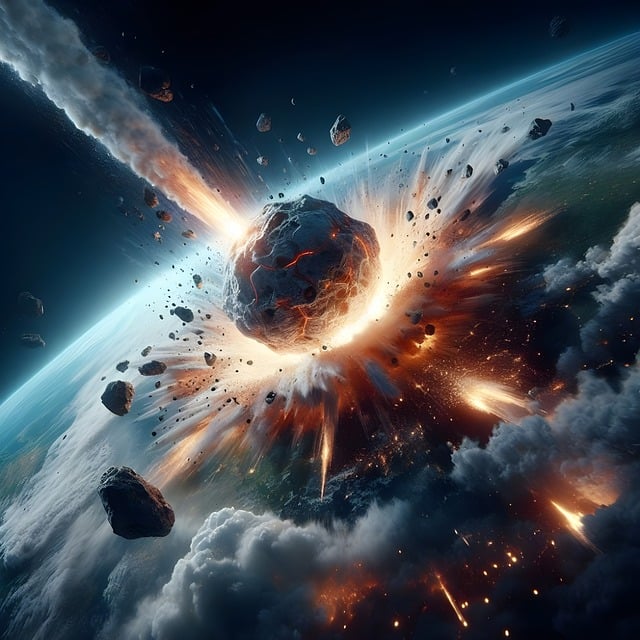
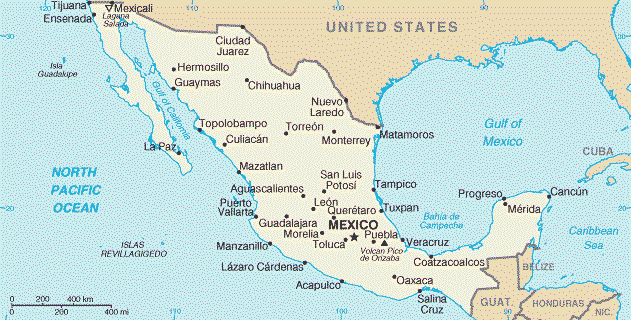
But out in space an asteroid was plunging toward Earth. It was about six miles wide and the height of Mt. Everest. When it reached the Earth’s atmosphere, it would have looked like a fireball brighter than the sun. It was seen, though, for only a few seconds before it hit the Earth because it was hurtling through the air at about 45,000 mph! It hit in the Yucatan Peninsula in Mexico, forming a crater that covers a large portion of the Gulf of Mexico. The crater has been named Chicxulub (CHICKS-ih-lube) Crater.
NASA/JPL-Caltech, modified b, Public domain, via Wikimedia Commons
The asteroid hit with a force 10 billion times larger than the atomic bomb detonated on Hiroshima, blowing a hole in the ground 120 miles wide and 18 miles deep. Imagine how loud that explosion must have been! In an instant, the intense heat of the explosion vaporized the asteroid and turned thousands of cubic miles of rock into liquid and spewed it into the air, like a colossal volcano erupting. Anything within 600 miles or more would have been instantly incinerated by the fireball. A combination of soot, sulfuric gases, and extremely fine dust was flung into the atmosphere. For the next several hours, titanic winds blew this debris around the whole Earth. They ignited a world-wide firestorm that probably killed most of life on Earth. In addition, a mega-earthquake shook all of Mexico and Central America, the southern United States, and as far south as far as Argentina. The earthquake (magnitude 13 – likely the biggest earthquake the Earth has ever felt) triggered giant tsunamis and mudslides. One-thousand-foot-high waves of water hit the coast where now Texas, Alabama, Mississippi, northern Mexico, and Cuba lie. Secondary waves traveled as far as what is now North Dakota.
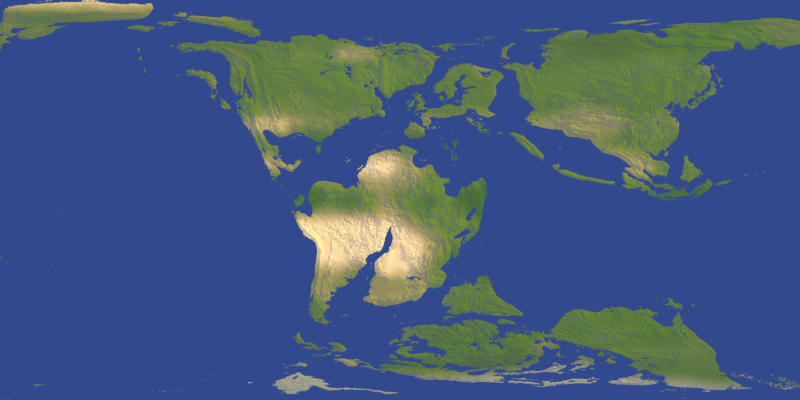
Continent placement at the end of the Cretaceous Era Merikanto, CC BY-SA 4.0, via Wikimedia Commons
Life that somehow survived this, now faced another horror. Dust and soot lingered in the atmosphere blocking most of the sunlight for at least a year. Without sunlight plants couldn’t grow and thrive. Plant eaters lost their food source and died. Meat eaters lost their food source and died. In addition, the lack of sunlight lowered the temperature on Earth by about 80° Fahrenheit.
As if this weren’t bad enough, volcanos in India had been erupting at this same time, with lava flows covering 190,000 square miles of land, killing all life in that area. The eruptions also added more toxic fumes and debris to the atmosphere.
Scientists disagree about how long it took, but about 75% of all life on earth, plant and animal, died because of the asteroid hit and the volcanos, including all the dinosaurs (except birds which most scientists believe are direct descendants of dinosaurs). Some small animals survived, including the ancestors of today’s frogs, snakes, lizards, alligators, crocodiles, a variety of insects, birds, and mammals.
How do we know all this happened? I’ll explain in my next blog.
Dinosaurs varied in size, most know the giants, but today we are tackling one of the smallest dinos: Compsognathus
When most people think of dinosaurs, they think of huge creatures. And many of the dinosaurs were enormous. Supersaurus was longer than a basketball court, and Sauroposeidon (SORE-oh- poe- seye-don) was as tall as a five-story building. But not every dinosaur was huge. During the Jurassic Time Period, when many of the biggest dinosaurs lived, there also lived Compsognathus (KOMP-sog-nath-us)). Compsognathus was a tiny dinosaur, not much bigger than a chicken.
My life-size model of Compsognathus compared to my cat.
The largest Compsognathus ever found was not quite four feet long – and most of that was just its tail. It stood about 11 inches high at the hip and weighed about 9-12 pounds. There were some advantages to being a tiny dinosaur in a land of giants. Many big meat eaters were likely to overlook such a small animal. They could feast on hundreds of pounds of tasty plant eaters. Why should they bother with one, stringy, little mouthful?
Of course, it wouldn’t be so great to be caught in the path of one of the giant dinosaurs. Some of the really big ones could step on a Compsognathus and hardly know it – the way you might step on a large bug.
But Compsognathus wasn’t likely to get stepped on often. Scientists say it was built for speed with hollow bones and a slender, streamlined body. It ran on two long, strong, back legs, and its tail helped keep it balanced as it ran. It could zip along dodging giant dinosaurs with ease.
It may not have needed to dodge too many other dinosaurs. Only two skeletons of Compsognathus have been found, and both of them seemed to have lived on atolls, islands that have a lagoon in their center. If all Compsognathus lived on these types of islands, they may have been the biggest predator on them.
Satellite picture of the Atafu atoll in TokelauAtafu.jpg: NASA Johnson Space Center derivative work: Talkstosocks, Public domain, via Wikimedia Commons
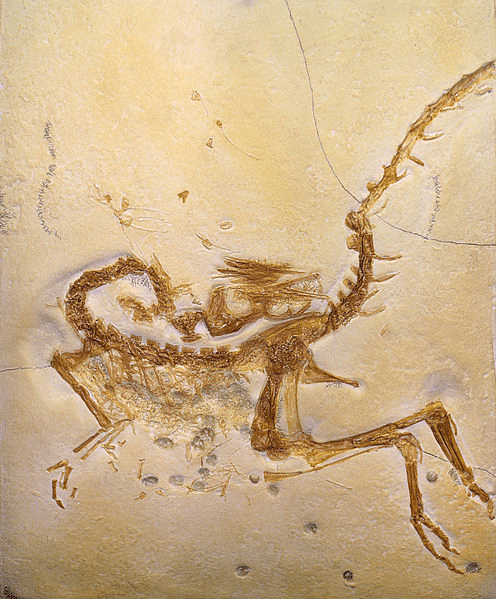
Compsognathus still needed to be speedy – to catch its own food. Scientists think Compsognathus ate such things as insects, frogs, and small lizards. It took speed to catch such quick-moving creatures. One skeleton of a Compsognathus was found with a particularly fast lizard in its stomach. The lizard may have been fast, but Compsognathus was faster.
Compsognathus skeletonH. Zell, CC BY-SA 3.0, via Wikimedia Commons
Compsognathus could grab its lunch with the long fingers on its hands. It had three fingers on each “hand,” but only two of them were usable. Each one of them had a very long claw, good for grabbing food. Once it caught its lunch, Compsognathus could crunch its victim with its many sharp, pointed teeth, though it may have just swallowed it whole. The name Compsognathus means “pretty jaw,” but if you were a pterosaur (TAIR-uh-sore), grounded with a broken wing, you wouldn’t think those jaws were so pretty.
It’s hard for scientists to learn much about Compsognathus and other little dinosaurs because so few of their skeletons are ever found. Many such dinosaurs were probably gulped down whole by big meat eaters. Even if a tiny dinosaur were fossilized, chances are no one would find it. It’s just much easier to find a six-foot bone than a two-inch one.
Rigorius, CC BY-SA 4.0, via Wikimedia Commons
Scientists have found a few dinosaurs that were as small or even smaller than Compsognathus. These include Microraptor which is in the same family as Velociraptor and Utahraptor, except it was only two feet long and weighed about two pounds, and Aquilops, (uh-QUIL-ops) which was a little bigger – 3-5 pounds. Its descendants included the mighty Triceratops. Studying them alongside Compsognathus makes scientists think that any small dinosaur must have been quick and active.
Scientists want to learn all they can about what made small dinosaurs special. They would like to know whether they lived in packs or by themselves. In the Jurassic Park franchise (where they were called “compis”) a pack of Compsognathus were shown working together to attach someone, but we don’t know if that was true or not. Scientists would also like to know whether or not they took care of their babies or left the babies alone to fend for themselves. And they would like to know whether they lived in fear of the big dinosaurs or simply ignored them.
So far, the fossil record hasn’t answered those questions. In the meantime, scientists continue to search for clues. One thing is already known – tiny dinosaurs are just as fascinating as huge ones!
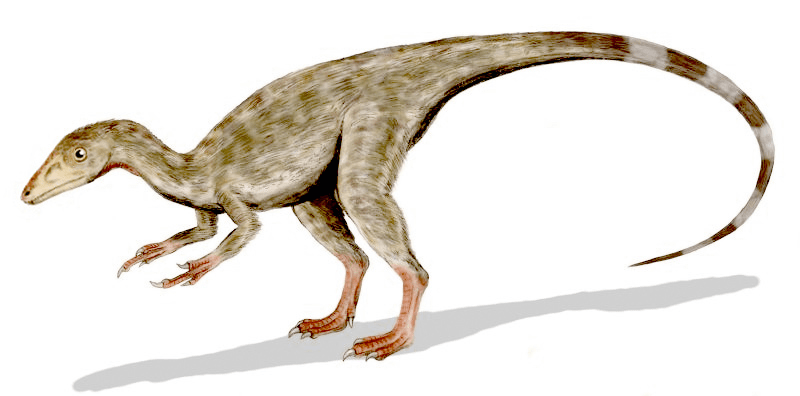
CompsognathusNobu Tamura (http://spinops.blogspot.com), CC BY-SA 3.0, via Wikimedia CommonsSources (Click Me!)
Norman, David. The Illustrated Encyclopedia of Dinosaurs. Crescent Books, 1985.
Riehecky, Janet. Compsognathus. The Child’s World, 1991.
Strauss, Bob. “The 19 Smallest Dinosaurs and Prehistoric Animals.” ThoughtCo. 5 Apr. 2023, thoughtco.com/smallest-dinosaurs-and-prehistoric-animals-1093812.
Ever wonder how the Brontosaurus lost its name? Commonly known as the icon of Sinclair Oil, this sauropod’s history is complex and newsworthy.
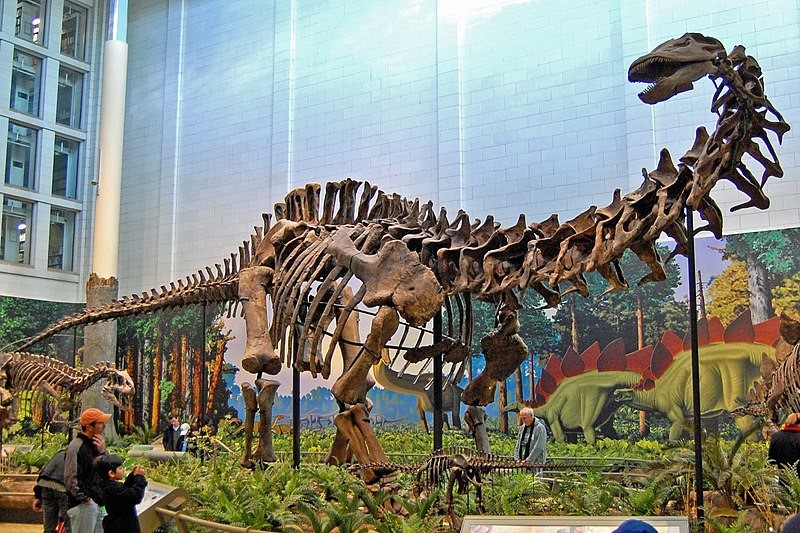
The Brontosaurus is one of the most famous dinosaurs in the world. Millions of people know its name. Most can recognize its huge shape. It’s been on lunch boxes, made into countless toys, and was featured on a U.S. postage stamp. It even served as the official icon of Sinclair Oil company. However, there is one problem: there is no dinosaur named Brontosaurus.
How did this happen? When dinosaurs were first discovered in the 1820s, the idea of those huge reptiles stalking the earth caught people’s imagination. Every museum in the world wanted to display a huge skeleton of a dinosaur. But it takes many years to find dinosaur bones, dig them up and put together a dinosaur skeleton. Over the next sixty years the competition to discover dinosaur bones grew, and then it became especially fierce during the 1880s. In fact, that time is now known as the “Bone War.”
From 1877 to 1892, two paleontologists in particular, Edward Cope of the Academy of Natural Sciences in Philadelphia and Othniel C. Marsh of the Peabody Museum in Connecticut, were the fiercest competitors. They used their own money to finance expeditions and to buy dinosaur bones from other fossil hunters.
In the beginning Cope and Marsh just paid collectors to send them fossils. But this was only the start. As the rivalry intensified, each side spied on the other, stole bones when they could, bribed workers, and even blew up fossils with dynamite so that the other side couldn’t get them. As soon as either dinosaur hunter got new bones, he rushed to get a description into print. Whoever publishes a description of a new dinosaur first gets to name it, and each man wanted to be the one to name the most. In the end Cope lost. He named 56 new dinosaur species, while Marsh named 80. And by the end of the Bone Wars in 1892, both men had gone nearly bankrupt trying to be the best (or most famous) paleontologist. And the hurry of both men led to mistakes.
Tadek Kurpaski from London, Poland, CC BY 2.0, via Wikimedia Commons
In 1877 Marsh published a papernaming a new dinosaur, Apatosaurus ajax. Its name means “deceptive lizard,” which turned out to be the truth. The description was based on only a few bones. Two years later Marsh published another article describing what he thought was a different dinosaur, Brontosaurus excelsius. This description was based on one of the most complete skeletons of a long-necked dinosaur ever found. Brontosaurus means “thunder lizard,” and the catchy name became popular. The mount of that Brontosaurus skeleton in the Yale Peabody Museum of Natural History increased its popularity. Unfortunately, one of the missing pieces of the skeleton was its skull. Not to worry. Marsh just put a Camarasaurus skull on it.
But, in 1903, Chicago paleontologist Elmer Riggs took a look at both dinosaurs. He determined that the two dinosaurs were actually the same dinosaur. It was given the name Apatosaurus first, and the International Code of Zoological Nomenclature states that the oldest name has priority, so that is the name used by scientists. Brontosaurus became Apatosaurus. And in 1979 scientists finally put the right skull on the skeleton. Still, the general public didn’t let go of the name Brontosaurus until about the 1990s. It was just too cool a name to let go.
However, all is not lost. There is a movement to resurrect the name Brontosaurus. In 2015 paleontologists studied hundreds of bones from Apatosaurus and the dinosaur called Brontosaurus and found differences in the neck, back, and shoulder bones. Originally scientists thought those difference were because one of the dinosaurs was a juvenile. Now some feel these differences are enough to say Brontosaurus and Apatosaurus are different dinosaurs. But this has not gained wide acceptance. More research may resolve the problem. But a lot of people who are just dinosaur lovers would welcome the return of the “thunder lizard.”
Cover Image Source: An Errant Knight, CC BY-SA 4.0, via Wikimedia Commons
As we transition into the fall, I thought it would be fun to reminisce on one of my favorite summer vacations.
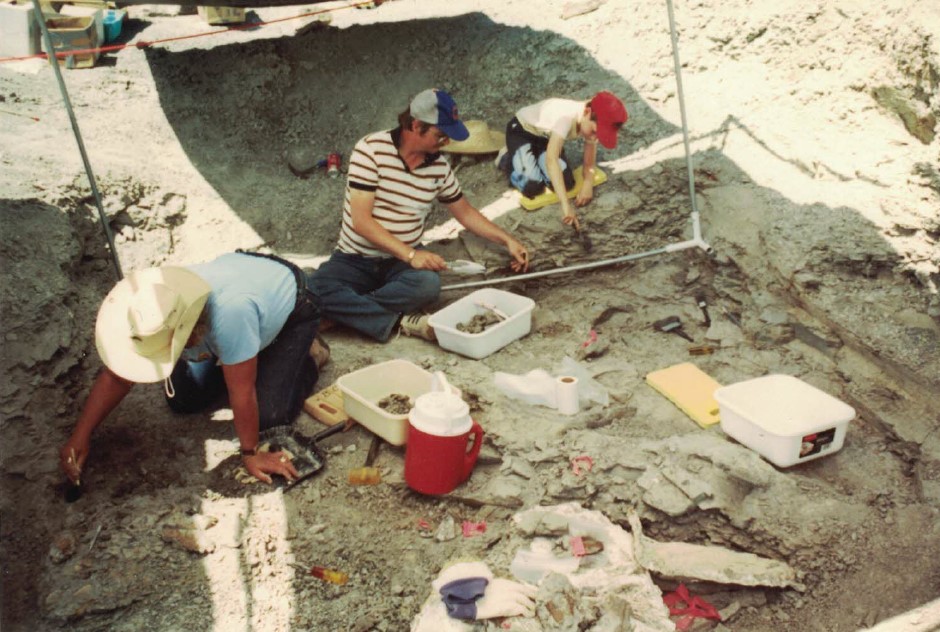
One of the best adventures of my life occurred one summer when my family and I spent a week in western Colorado. During two of those days, we joined a dinosaur dig. It was very hot and dirty. Insects swarmed us, the nearest porta-potty was a half mile away – and I never had more fun in my life!
The paleontologist in charge of the dig, Jim Kirkland, told us where to dig and what to do. The area we dug in was a vast bone bed dating to about 150 million years ago, during the late Jurassic (one of the three time periods during which dinosaurs lived). Many dinosaurs had died, perhaps in a flood, and had their bodies swept into this huge heap. Their bones were all jumbled together. Diggers in that area have found bones from Brachiosaurus, Stegosaurus, Allosaurus, Apatosaurus, and other Jurassic dinosaurs. We would not get to keep any bones we found. They would stay with the paleontologists for study, as they should.
The rock was crumbly, like flaky pastry, and easily removed with just our hands. We searched through it and then discarded the rock into plastic bins. It’s not always easy to tell what’s rock and what’s bone, but at this site the rock was a light brown and the bones much darker brown, almost black. We moved a lot of rock before we saw anything. (Caption: That’s my husband, John, in striped shirt, my son, Patrick, in red cap, and Jim Kirkland in cowboy hat.)
That thrill, though, when you see a bone that’s been buried for 150 million years is not like anything else. It was definitely worth the hours of digging. I felt awed and elated and also a little humble. I’m a tiny speck in this universe. You know, we also spent two days white water rafting while we were in Colorado, but digging up dinosaur bones was more exhilarating!
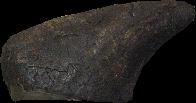
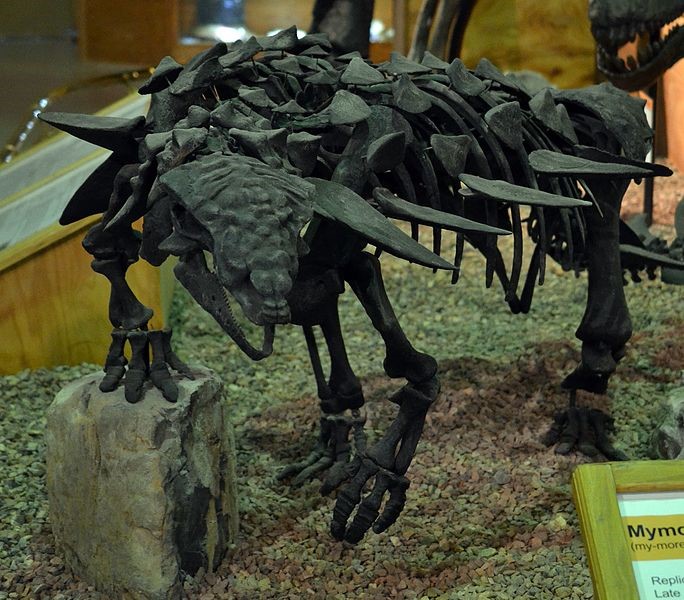
During those two days digging I only found three bones, but one of them in particular interested Dr. Kirkland (in red shirt at left; me in blue). It looked like a piece of armor from an armored dinosaur, but at that point no one had ever found an armored dinosaur in Jurassic rock. Further excavation after I left produced more of that dinosaur, and it turned out to be just what Dr. Kirkland suspected: an armored dinosaur, the first ever found from the Jurassic Period. He named it Mymoorapelta and wrote to me about it. He also put out a press release, and I got my picture on the front page of the local newspaper!
Dr. Kirkland is now the state paleontologist of Utah.
Mymoorapelta is a nodosaur, which means, among other things, that it doesn’t have a club at the end of its tail. It was one of the earliest armored dinosaurs ever to have lived, and, at 9.8 feet long, one of the smallest. It ate mostly plants that grew low to the ground, such as ferns, cycads, and conifers. Its teeth were small and leaf-shaped. Scientists can’t say for sure, but it is likely that it lived in herds.
I will leave you with this question: If you found a new dinosaur, what would you name it? Please let me know in the comment section.
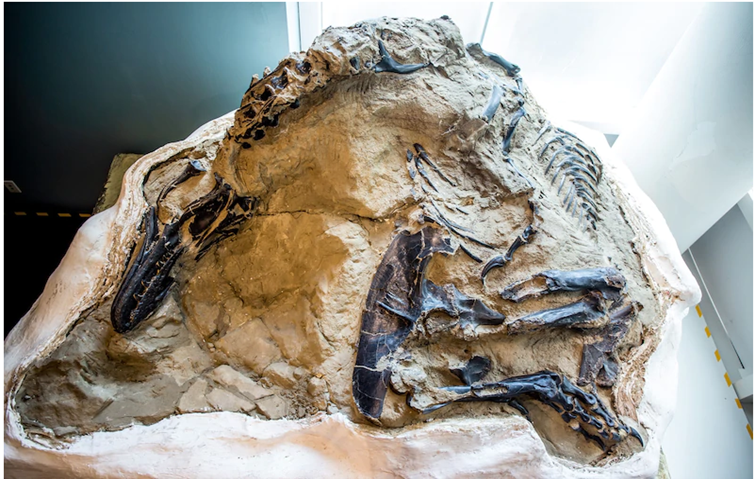
On a summer day in 2006, a fossil hunter named Clayton Phipps made a discovery that ranks among the most spectacular dinosaur finds ever. While exploring the rocky terrain of the Montana hills, he spotted a bit of bone weathering out of the rock. It turned out to be part of the pelvis of a Triceratops. After digging on and off for months, he discovered that it might be a complete skeleton of a 28-foot-long Triceratops.
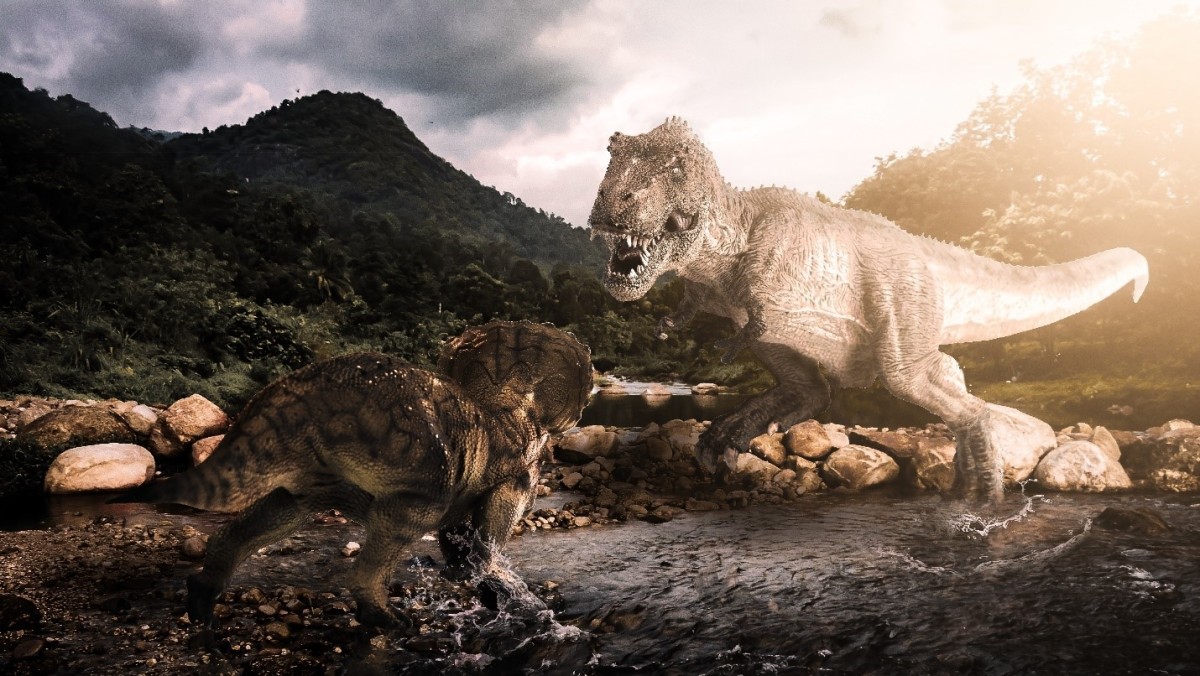
That’s rare, but that’s not all he found. With it, he unearthed the only 100% complete skeleton of a juvenile Tyrannosaurus Rex that has ever been found. It is 22 feet long, with all the bones are articulated – in their natural positions next to each other – which is very rare. And on top of that, they look like they were locked in battle when they died! This is a spectacular discovery! Only one other pair of apparently fighting dinosaurs – a Velociraptor and Protoceratops – has ever been found.
Did the two dinosaurs die fighting each other? Scientists need more time before they can say for sure. Because there was a long court battle over who owned these bones, they are only just now getting to study them. They know that some of the Tyrannosaurus’ teeth are broken, and that some tyrannosaur teeth are in the Triceratops’ bones and body cavity, but they don’t know yet if those teeth belonged to this Tyrannosaurus. If they do, they could have gotten there in a fight, or it could be that the Tyrannosaurus found a dead Triceratops and took a bite. The Tyrannosaurus’ skull is cracked, and one finger is broken. But if the two creatures were killed by a mudslide, the impact of the mud and the debris it carried might have caused those injuries.
However, it is also reasonable to think that those injuries happened in a fight. Scientists have never found skin impressions from a Triceratops frill – until now. There are also skin impressions on the Tyrannosaurus’ feet And they think some of the soft tissue inside the dinosaurs has been preserved, such as the stomachs. It might be possible to find out the last meal of each of these dinosaurs – before they ran into each other!
Scientists are excited about the chance to study these unique dinosaurs. And very soon, the public will get to see them, too. These “Dueling Dinosaurs,” as they have been nicknamed, will be on show for the public at the North Carolina Museum of Natural Sciences in Raleigh, NC, beginning in 2024. I can’t wait to go!
Do you think they died fighting each other? Let me know in the comment section.
When did you start to love dinosaurs? I began when I watched The Flintstones on TV as a kid. It was a cartoon show about a “stone age” family, Fred and Wilma Flintstone. The people on the show used dinosaurs for all kinds of things, such as a little dinosaur as a garbage disposal in the kitchen and a big dinosaur for construction. Their airplanes were Pteranodons. I wanted a pet dinosaur, like the Flintstones had, but I knew it was all make-believe.
I learned about real dinosaurs by going to the Field Museum in Chicago. We went there on field trips throughout elementary school, and my family visited there, too. Staring up at those huge skeletons was just amazing! They were so big! I didn’t even come up to their knees. There weren’t as many of them in the museum then as there are now. And the scientists still had a lot to discover, such as that dinosaurs didn’t drag their tails. But those extinct creatures stirred my imagination. If there was a real Jurassic Park, I would go in a second.
I remember in sixth grade reading The Lost World by Sir Arthur Conan Doyle. It was a story about a group of explorers who find live dinosaurs on a plateau in South America. It inspired me to write the first story I ever wrote. It was about a group of kids who find live dinosaurs on a plateau in South America. Well, okay, it wasn’t very original, but it was still fun.
Dinosaurs were popular back then, but they weren’t in the media as much as they are now. I still loved them, but they took a backseat as I grew up, got married, and had a child. Then in the late 1980s, I got an opportunity to write a series of dinosaur books for the publisher I worked for. As I did the research, I was amazed at how far paleontology had come. Scientists thought that dinosaurs were far more exciting than they used to think. Dinosaurs weren’t just big plodding monsters, who sat around in swamps munching plants all day. They were as diverse as the different animals alive today. When I was growing up, scientists knew about only a few hundred dinosaurs. Now they have identified more than 2000 different species. Some lived in herds. Others traveled in packs and worked together to bring down large prey. Still others were loving parents who took care of their babies.
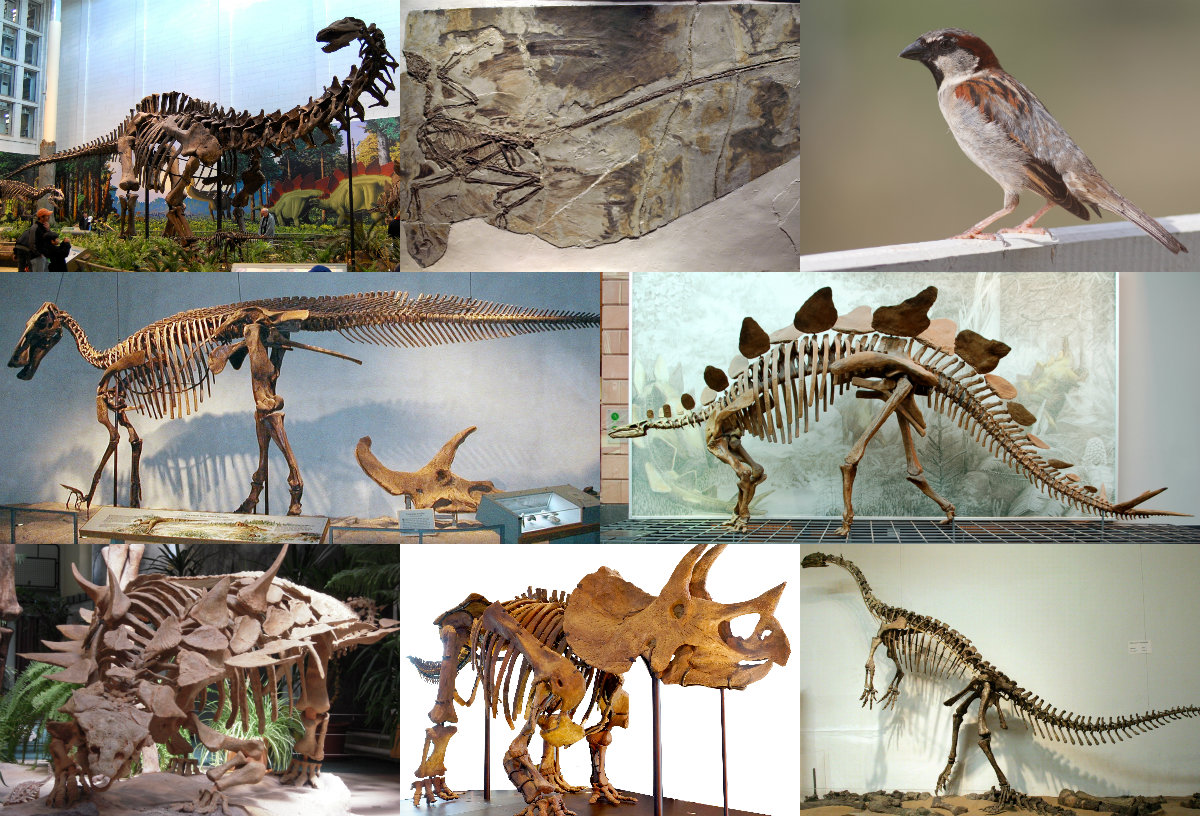
I ended up publishing a series of 24 dinosaur books. Most of them are pictured below, with some of the bones from my collection. They sold all across the country, were translated into Spanish, and won Best Children’s Nonfiction Books that year (1989) from the Society of Midland Authors.
Since that time, I’ve published another 12 dinosaur books. I’ve collected more than 50 dinosaur bones and replicas, and I’ve traveled throughout the Midwest with those bones doing programs on dinosaurs (please see my web site http://www.janetriehecky.com).
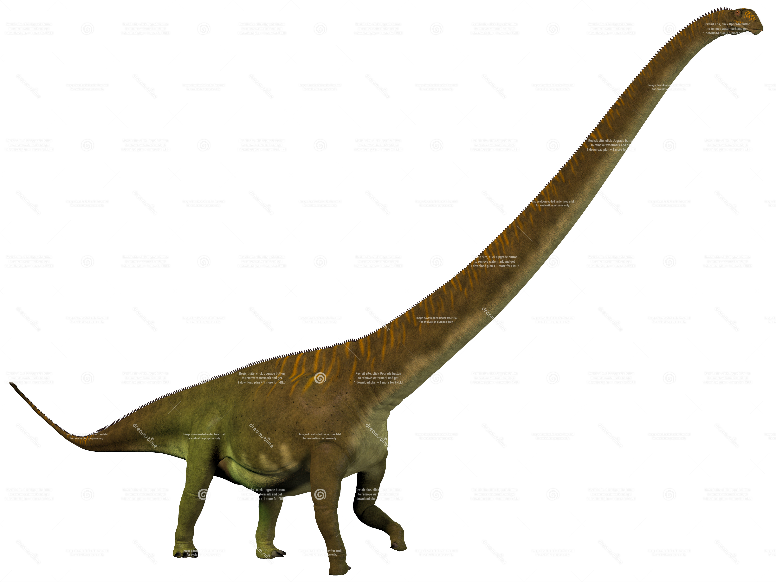
I’ve kept up with the current research and plan most of my vacations Around visiting dinosaur museums around the country. I love how weird and big and awesome dinosaurs are, so I thought I’d start a blog on dinosaurs. Along the way I’ve found out some pretty amazing things about them – like, did you know that half the length of a Mamenchisaurus was its neck? – and I’d like to share what I’ve learned with you.
If you’re interested in finding out more about dinosaurs, you can visit here once a week. Also, I would love to learn how you started to love dinosaurs. Please drop a note with your dinosaur story in the comment field.













 Dinosaur Lady


_23.jpg)