On a summer day in 2006, a fossil hunter named Clayton Phipps made a discovery that ranks among the most spectacular dinosaur finds ever. While exploring the rocky terrain of the Montana hills, he spotted a bit of bone weathering out of the rock. It turned out to be part of the pelvis of a Triceratops. After digging on and off for months, he discovered that it might be a complete skeleton of a 28-foot-long Triceratops.
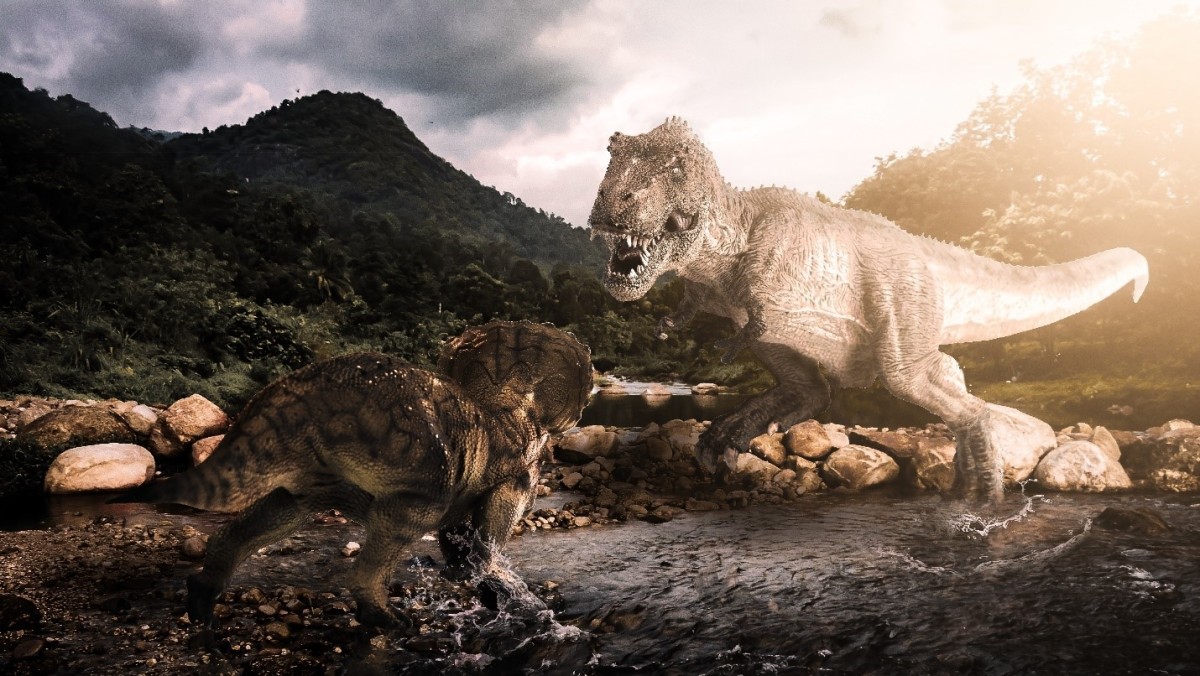
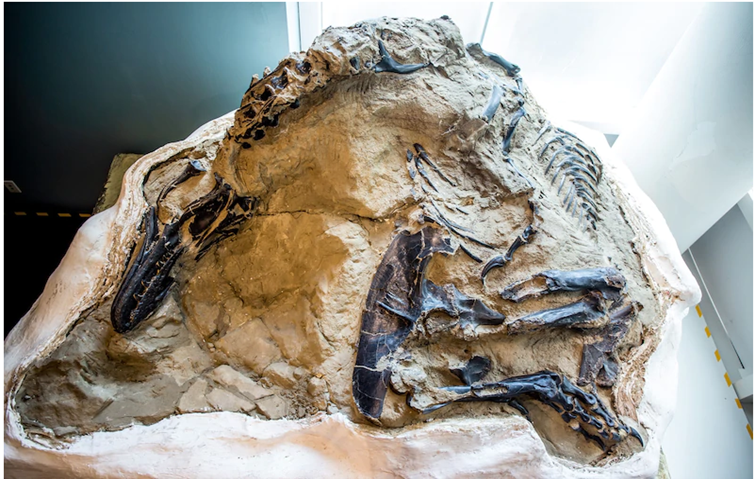
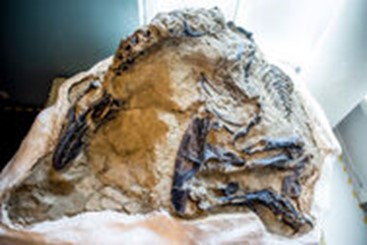
That’s rare, but that’s not all he found. With it, he unearthed the only 100% complete skeleton of a juvenile Tyrannosaurus Rex that has ever been found. It is 22 feet long, with all the bones are articulated – in their natural positions next to each other – which is very rare. And on top of that, they look like they were locked in battle when they died! This is a spectacular discovery! Only one other pair of apparently fighting dinosaurs – a Velociraptor and Protoceratops – has ever been found.
Did the two dinosaurs die fighting each other? Scientists need more time before they can say for sure. Because there was a long court battle over who owned these bones, they are only just now getting to study them. They know that some of the Tyrannosaurus’ teeth are broken, and that some tyrannosaur teeth are in the Triceratops’ bones and body cavity, but they don’t know yet if those teeth belonged to this Tyrannosaurus. If they do, they could have gotten there in a fight, or it could be that the Tyrannosaurus found a dead Triceratops and took a bite. The Tyrannosaurus’ skull is cracked, and one finger is broken. But if the two creatures were killed by a mudslide, the impact of the mud and the debris it carried might have caused those injuries.
However, it is also reasonable to think that those injuries happened in a fight. Scientists have never found skin impressions from a Triceratops frill – until now. There are also skin impressions on the Tyrannosaurus’ feet And they think some of the soft tissue inside the dinosaurs has been preserved, such as the stomachs. It might be possible to find out the last meal of each of these dinosaurs – before they ran into each other!
Scientists are excited about the chance to study these unique dinosaurs. And very soon, the public will get to see them, too. These “Dueling Dinosaurs,” as they have been nicknamed, will be on show for the public at the North Carolina Museum of Natural Sciences in Raleigh, NC, beginning in 2024. I can’t wait to go!
Do you think they died fighting each other? Let me know in the comment section.
Everybody knows where you find mummies – in pyramids in Egypt. But not always. People made the Egyptian mummies, but under just the right conditions, Mother Nature can make them, too. A few, very rare dinosaur mummies have been found. Not just a skeleton but a fossil with skin and soft tissue preserved.
To become a mummy, a dinosaur that died would first need to be protected somehow from predators, so they couldn’t tear it apart. That could happen in a number of ways. The dinosaur could die in a place away from predators or be covered over with water from a flood or a giant mudslide. Some could be covered by the collapse of a sand dune.
Being away from predators isn’t enough. Minerals need to soak into the skin and soft tissue before they have a chance to decay. It helps if the dinosaur is covered with something that slows down the microbes that cause that decay, such as certain kinds of mud. It also helps to have the right kind of skin. Some scientists have suggested that the reason most of the dinosaur mummies that have been found are duckbilled dinosaurs is that there was something in their skin that slowed down decay, giving the skin time to fossilize.
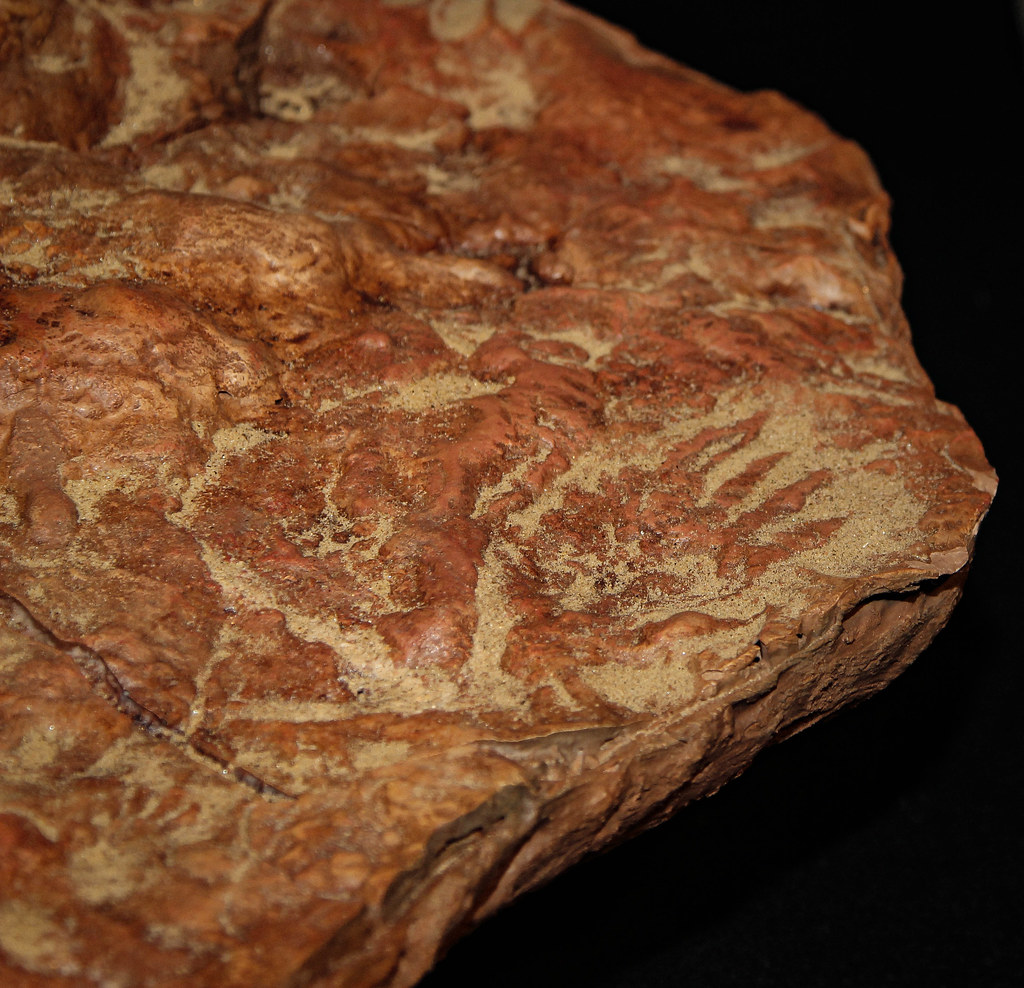
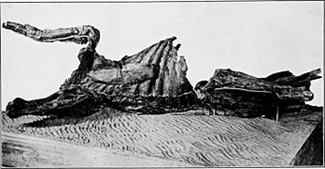
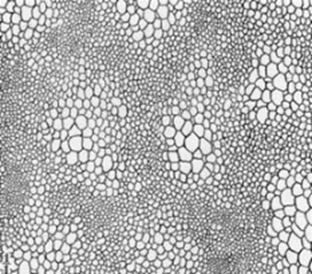
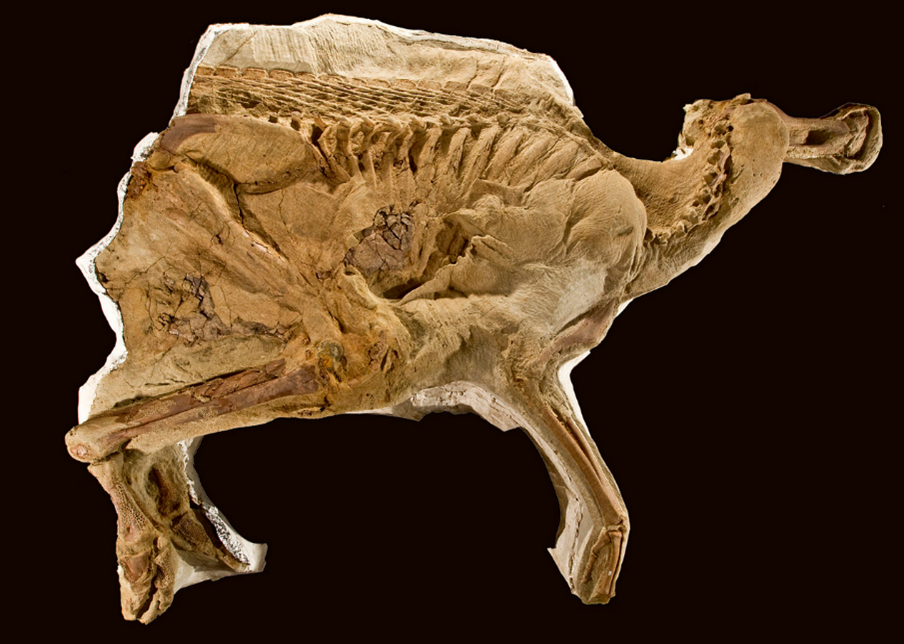
The first dinosaur mummy was found in Wyoming in 1908. It was an Edmontosaurus (ed-MON-to-SAWR-us), a duckbill dinosaur common in the late Cretaceous. Though it’s hard to see in this picture, almost 2/3 of the body is still covered with skin. The skin consists of very small scales, less than two tenths of an inch in diameter. Unlike those of many reptiles, the scales are more like separate bumps than overlapping scales.
The Children’s Museum of Indianapolis, CC BY-SA 3.0, via Wikimedia Commons
Henry Fairfield Osborn, Public domain, via Wikimedia Commons
Different sizes are clustered together. The scales on the upper side of the body are larger than those on the lower side. Soft tissue between the claws on its hands suggests that it had padded feet, and tissue above the spine suggests it had a soft ridge along the back of the neck and spine.
The Children’s Museum of Indianapolis, CC BY-SA 3.0, via Wikimedia Commons
Several other duckbill dinosaur mummies were found during the 1900s, but they didn’t have as much preserved soft tissue or skin. The next dinosaur mummy of any importance was not found until 2000 when scientists in Montana unearthed a Brachylophosaurus (BRACK-uh-LOF-o-SAWR-us), which is another type of duckbilled dinosaur. They named it Leonardo (nearby graffiti from 1916 said that Leonard loved Geneva). This mummy was 90% complete and revealed that the neck had unusually strong muscles and that its skin was scaly, similar to Edmontosaurus. Scientists were able to examine the contents of its stomach. It ate leaves, conifers, ferns, and flowering plants like magnolias. Its stomach also revealed parasites – small bristly worms.
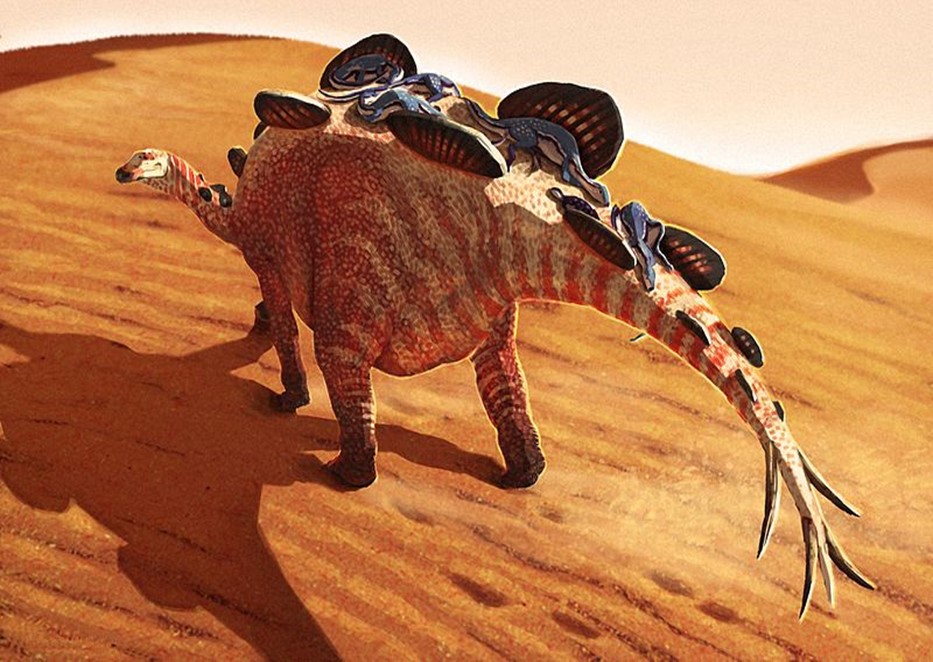
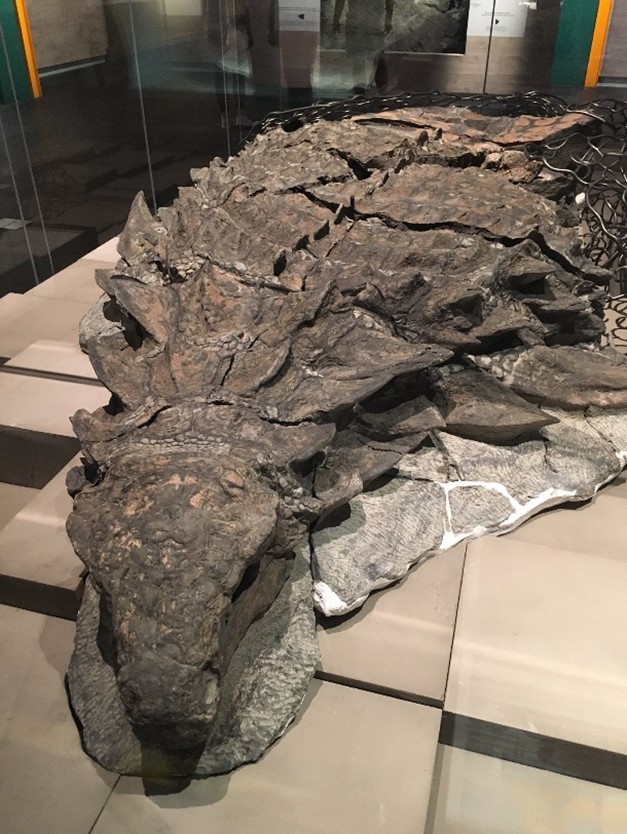
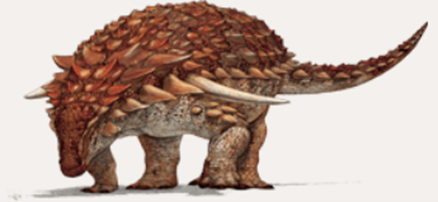
Probably the most spectacular dinosaur mummy of all was discovered in 2011 in Alberta, Canada. It is Borealopelta (BORE-e-AL-o-PEL-ta), not a duckbilled dinosaur but a nodosaur, an armored dinosaur. In life it was 18 feet long and weighed about 3000 pounds. The back legs and tail are missing, but what is there is amazing. The skin was so well preserved that scientists were able to use a mass spectrometer to find out what the color of the dinosaur was.
The back and sides of the dinosaur were a dark reddish brown, while the belly was a lighter reddish brown. We see that pattern of coloring, ark on top and light underneath, in many animals today. It helps those animals hide from predators. Not only was the skin well preserved, but also the armor itself. Usually, the armor falls off armored dinosaurs before they fossilize. Sometimes pieces of armor are found nearby, but often they aren’t. This mummy shows exactly where and how every piece of armor was attached. In addition, scientists have learned that the spikes were covered with keratin, the same stuff that fingernails are made of. This made the armor look bigger: the better to scare away predators – or perhaps to attract a mate.
No doubt additional exciting dinosaur mummies will be found in the future. A potential one, discovered in Montana in 2014, still lies encased in a 35,000-pound block of stone, waiting to be dug out. Each mummy helps fill in gaps in our knowledge of how dinosaurs looked and behaved.
Which do you like better? Egyptian mummies or dinosaur mummies? Let me know in the comment section below.
Greshko, Michael. “The Amazing Dinosaur Found (Accidentally) by Miners in Canada.” National Geographic. June 2017. https://www.nationalgeographic.com/magazine/ article/dinosaur-nodosaur-fossil-discovery
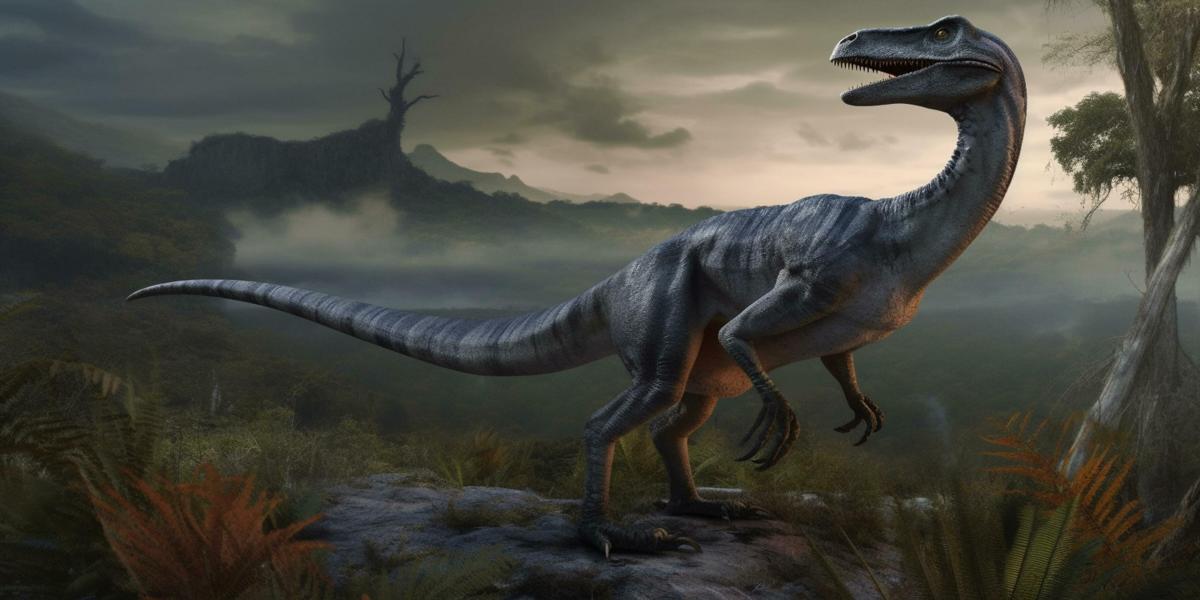
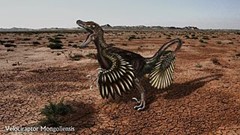
In the first movie of the Jurassic Park series, the second scariest dinosaur was Velociraptor. (Scariest? T-rex, of course.) The movie showed a creature that was about six feet tall, with a huge foot claw that it held upright. Its body was thick, like a tyrannosaur, it was highly intelligent, and it hunted in a pack during the day. Given that most of us like watching movies with scary creatures, a star was born. Overnight Velociraptor became famous.
But like many movies, Jurassic Park got it wrong. In fact, pretty much all of it was wrong. To start with, Velociraptor was little: only about three feet tall (one meter) measured at the hip. From the tip of its nose to the end of its tail, it measured about six feet (2 meters), but almost half of that length was its long, stiff tail. When Velociraptor was fully grown, it weighed only about 33 pounds (15 kg). A Great Dane, which is about the same height, can weigh up to 140 pounds (64 kg.).
Why is the height of a dinosaur measured at its hip?(Click Me)
Dinosaurs that walked on two legs didn’t stand upright. They leaned forward (sometimes a little, sometimes a lot) and used their tail to balance their head. This means that the head wouldn’t always be at the same height. It could go up and down. But the legs of dinosaurs are directly under their bodies, so the measurement of height at the hip would always be the same.
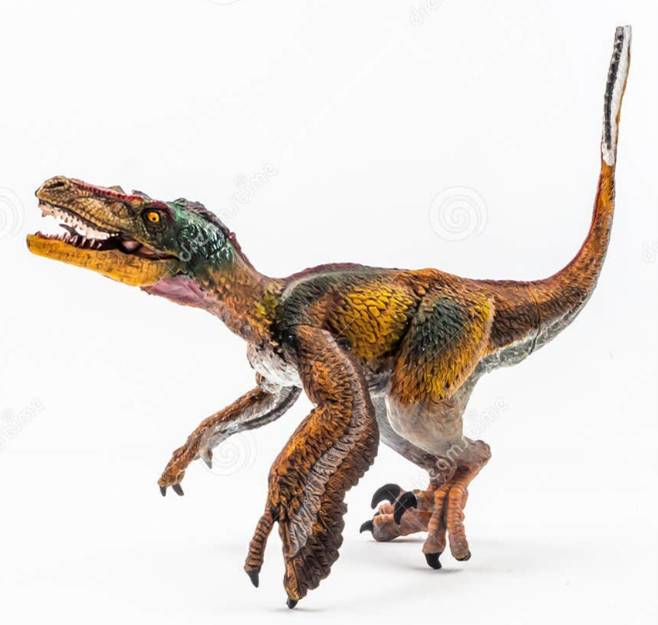
The movie showed Velociraptor covered with scales, but scientists have found marks on the arm and tail bones of this dinosaur that show feathers were attached there. In fact, it’s likely their whole bodies were covered with feathers. However, though their arms may have looked like wings, Velociraptors weren’t capable of flight. Their arms were too short, and their bodies were too long. Instead, they walked on two legs.
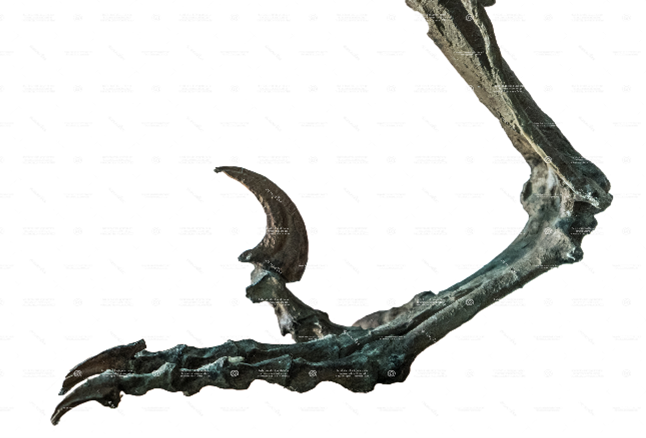
If you’re now picturing a fluffy, cute, little dinosaur, think again. It would not make a good pet. It may have been only about the size of a Great Dane, but it was a fierce hunter. Its upright, sickle (curved in an arc) claw was about 2½ inches (6.5 cm.) long, measured around the outer edge. That’s not very big compared to that claw in the movies, but an eagle’s talons are only two inches long, and think of the damage it can do with those!
The movie did get it right that Velociraptor was a carnivore, a meat eater. It had a mouth full of very sharp, serrated (having a jagged edge , like a steak knife) teeth. Its head was flat with large eyes that enabled it to see very clearly. It also had great senses of smell and hearing. The three claws on each hand were very sharp. Each foot had sharp claws, too, including that famous sickle claw. This claw was held up off the ground, which kept it very sharp. Claws that scrape along the ground become dull.
The movie showed a highly intelligent, coordinated attack by a pack of Velociraptors in the daytime. However, none of that is true. First, Velociraptor was not that smart. Its brain was large compared to its body, but it’s a small body and a small brain. It was about as smart as a bird of prey, such as a hawk. Many modern mammals could have outthought it.
Next, it probably wasn’t a pack hunter. Strangely, it is their teeth that make some scientists think this. Scientists have analyzed the teeth of young Velociraptors and compared them to adult Velociraptors. They’ve found that the chemicals in each set of teeth are different. This is important information because in pack animals the chemical makeup of the teeth is usually the same because old and young share the same food.
Young animals which are not taken care of by their parents or the pack usually have different chemicals in their teeth than adults because they eat different food. They would eat lizards and insects, small creatures that a little dinosaur could catch. As an adult they’d eat bigger things. Young animals that have not been taken care of by their parents also tend not to hang out with others of their kind. And, dinosaurs are more closely related to reptiles and birds which generally do not hunt in packs. So, at least for right now, these facts have caused scientists to lean toward the theory that Velociraptor did not hunt in packs.
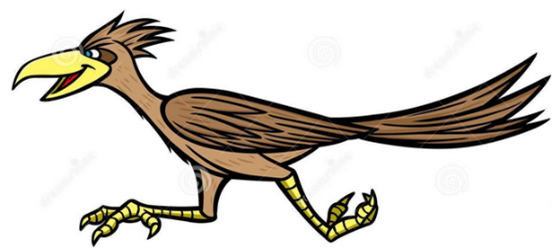
But whichever way it goes, it is certain that Velociraptor’s slim body and long legs made it a fast runner. It could run as fast as a roadrunner, maybe as fast as 25 mph (40 kph). Small prey, with their short legs, didn’t stand a chance of outrunning it. Their only chance of escaping lay in having a big head start because Velociraptor’s leg muscles weren’t strong enough to run really fast over a long distance.
Sometimes Velociraptor is shown in books and movies using its sickle claw to rip open its prey, but that isn’t likely. The claw could break through the skin of a dinosaur, but tests show it wasn’t strong enough or long enough to kill another animal. Most likely that claw was used to hold onto its prey while Velociraptor used its other claws and its teeth to kill. Hawks and various other birds of prey use their talons in this way.
Velociraptors also probably hunted at night, not in the day as in Jurassic Park. Scientists have noted that all birds and many reptiles alive today have a ring of bone around the eye. In those animals that hunt at night, the opening in the ring is large, to let in as much light as possible. Those that hunt in the day have a much smaller opening. Velociraptor has a large opening in its ring of bone. This makes it almost certain that it hunted at night. And that makes sense as the area Velociraptor lived in was mostly desert. It would want to hunt at night when it would be cooler. Its body wouldn’t overheat, and small creatures would be more likely to come out.
All in all, Velociraptor is not much like the creature in the movie that made it famous, but the real Velociraptor was still a deadly predator.
Which do you like better? The real Velociraptor or the one in the movie? Please let me know in the comments below.
Maxwell, W. Desmond, and John H. Ostrom. “Taphonomy and Paleobiological Implications of Tenontosaurus-Deinonychus Associations.” Journal of Vertebrate Paleontology, vol. 15, no. 4, [Society of Vertebrate Paleontology, Taylor & Francis, Ltd.], 1995, pp. 707–12, http://www.jstor.org/stable/4523664.
An old dinosaur joke goes: “What happens if you let a tyrannosaur into your house?”
“Tyrannosaurus wrecks.”
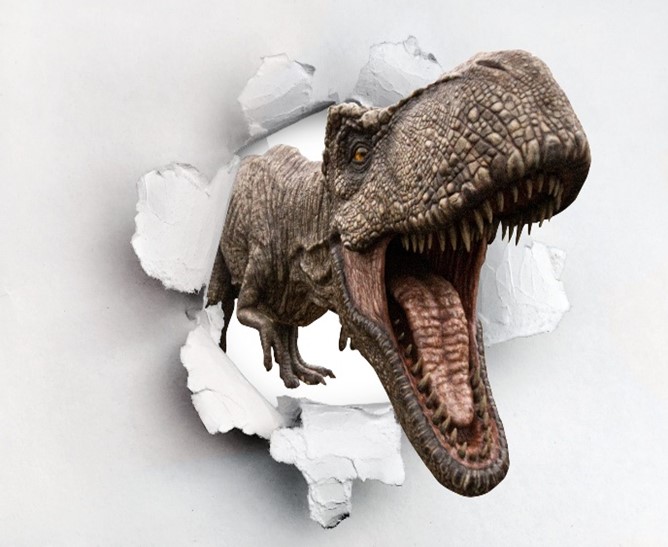
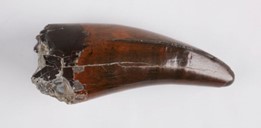
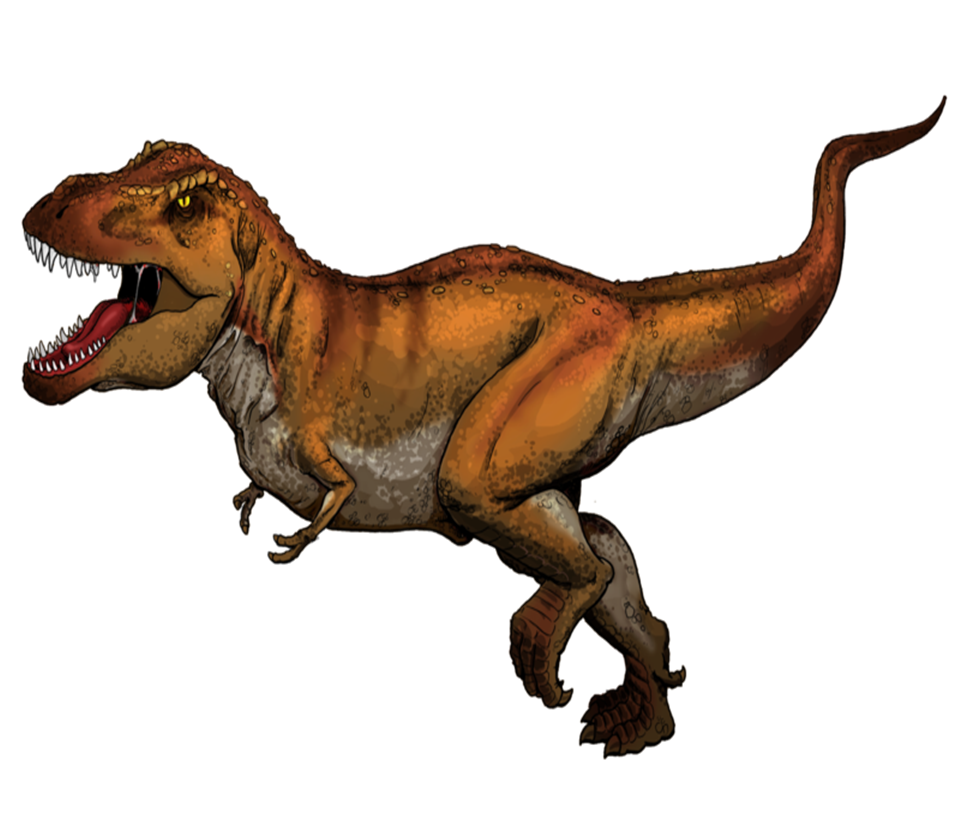
In fact, that is just what would happen. The name Tyrannosaurus rex means “King of the Tyrant Lizards.” The sheer size and power of a tyrannosaur is amazing. An adult T-rex could grow up to 40 feet long. That’s four feet longer than a school bus. And it weighed about 9 tons. That’s 18,000 pounds. Its height was about 13 feet tall at its hip. (Paleontologists measure there because Tyrannosaur didn’t stand straight up.) Its head was huge – five feet long – and it had banana-shaped teeth that could grow as long as 12 inches! The teeth were also serrated, having jagged edges running up and down the front and back of the tooth. This meant it could slice through meat like a steak knife. Its bite was so powerful it could go right through almost any bone. Joseph Castro, a writer for Live Science, compared the strength of its bite to the same impact as a medium-size elephant sitting down.
The Children’s Museum of Indianapolis, CC BY-SA 3.0, via Wikimedia Commons
T-rex lived at the very end of the reign of dinosaurs, about 68-66.5 million years ago, during what’s called the Cretaceous Period. It was first discovered in Montana in 1902, though fossils of it have been found from Canada to Texas. It was, of course, a meat-eater, a carnivore. Footprints of other, similar dinosaurs have been found showing they traveled in packs, so Tyrannosaurus might have done so, too.
For years paleontologists have argued about whether this huge creature was an active predator, hunting and killing live prey, or a scavenger, feasting on animals that were already dead. They were certainly big enough to chase other dinosaurs away from any dead animal, but many people feel Tyrannosaurus wouldn’t have been able to find enough to eat this way.
myfavoritedinosaur.com and LadyofHats, CC BY 3.0, via Wikimedia Commons
Scientists argued for years, but a study published in 2013, provided evidence supporting the idea of T-rex, the hunter. Fossils from a hadrosaur, a duckbilled dinosaur, were dug up in South Dakota, and the crown of a Tyrannosaurus tooth was found embedded in its tail. But the tail showed signs that it had healed after being bit. An already dead animal doesn’t heal. The T-rex must have attacked it, but the duckbilled dinosaur got away.
Another clue that T-rex was a hunter comes from studies that show that the powerful muscles in its legs could have allowed it to run as fast as 25 mph. A scavenger doesn’t need to run that fast, though most likely Tyrannosaurus ambushed its prey, rather than chasing it for long distances. It was just too heavy to run flat out for long. It was a sprinter, not a miler.
Just recently, an incredible fossil find has been uncovered. It was found in 2006, but lay encased in the surrounding rock for years. It shows a juvenile Tyrannosaurus seemingly locked in battle with a young Triceratops. However, scientists aren’t sure yet that they were fighting each other. Some of the Tyrannosaurus’ teeth are broken, and some tyrannosaur teeth are in the Triceratops’ bones and body cavity, but they don’t know yet if those teeth belonged to this Tyrannosaurus. If they do, they could have gotten there in a fight, or it could be that the T-Rex found a dead Triceratops and took a bite. The Tyrannosaurus’ skull is cracked, and one finger is broken. But if the two creatures were killed by a mudslide, the impact of the mud and the debris it carried might have caused those injuries. However, it is also reasonable to think that those injuries could have happened in a fight. Even though Tyrannosaurus likely was a hunter, it probably wouldn’t have turned down a meal that was already killed.
Another area of debate is why Tyrannosaurus had such small arms. They are so short T-rex couldn’t even reach its mouth with them. Some scientists argue that they are short because the dinosaur didn’t need them. With such a powerful bite, it didn’t need to fight with claws. And with so much space in its body needed for powerful neck muscles, there wasn’t much room for arm muscles. Others argue that the arm muscles were strong enough to hold struggling prey, so they were useful for something.
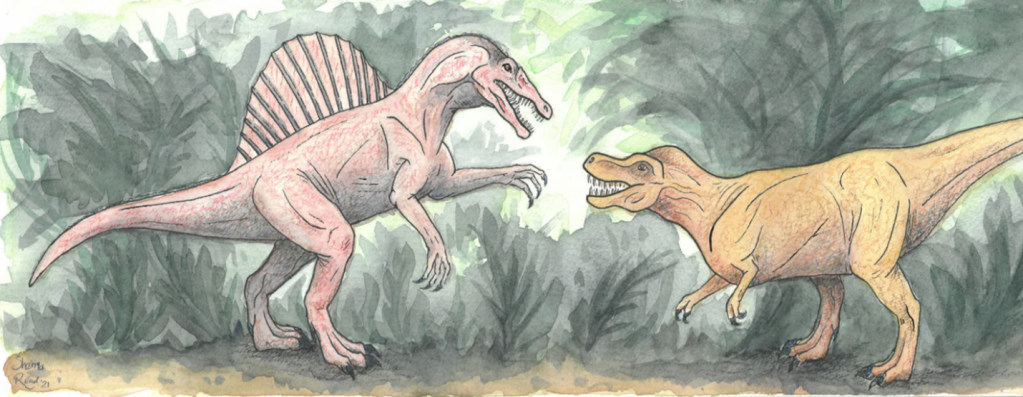
There are many competitors today for the title “King of the Dinosaurs.” Giganotosaurus was shaped much like Tyrannosaurus and was about eight feet longer. Spinosaurus was thinner but may have been more than 50 feet long. But size isn’t everything. Tyrannosaurus had a larger brain, which gave it exceptional sight and smell. And don’t forget that bite force. No other animal, living or extinct, has ever had a more powerful bite. For many, that means T-rex can keep its crown.
When did you start to love dinosaurs? I began when I watched The Flintstones on TV as a kid. It was a cartoon show about a “stone age” family, Fred and Wilma Flintstone. The people on the show used dinosaurs for all kinds of things, such as a little dinosaur as a garbage disposal in the kitchen and a big dinosaur for construction. Their airplanes were Pteranodons. I wanted a pet dinosaur, like the Flintstones had, but I knew it was all make-believe.
I learned about real dinosaurs by going to the Field Museum in Chicago. We went there on field trips throughout elementary school, and my family visited there, too. Staring up at those huge skeletons was just amazing! They were so big! I didn’t even come up to their knees. There weren’t as many of them in the museum then as there are now. And the scientists still had a lot to discover, such as that dinosaurs didn’t drag their tails. But those extinct creatures stirred my imagination. If there was a real Jurassic Park, I would go in a second.
I remember in sixth grade reading The Lost World by Sir Arthur Conan Doyle. It was a story about a group of explorers who find live dinosaurs on a plateau in South America. It inspired me to write the first story I ever wrote. It was about a group of kids who find live dinosaurs on a plateau in South America. Well, okay, it wasn’t very original, but it was still fun.
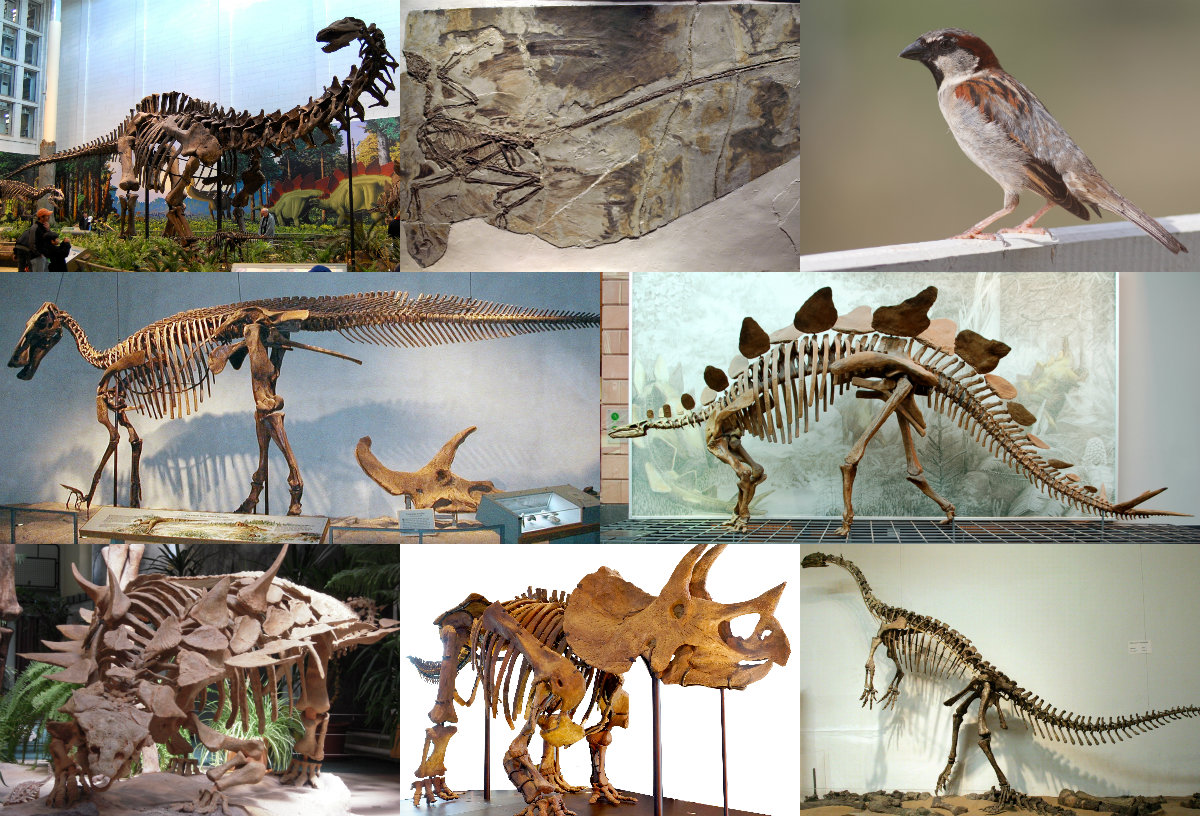
Dinosaurs were popular back then, but they weren’t in the media as much as they are now. I still loved them, but they took a backseat as I grew up, got married, and had a child. Then in the late 1980s, I got an opportunity to write a series of dinosaur books for the publisher I worked for. As I did the research, I was amazed at how far paleontology had come. Scientists thought that dinosaurs were far more exciting than they used to think. Dinosaurs weren’t just big plodding monsters, who sat around in swamps munching plants all day. They were as diverse as the different animals alive today. When I was growing up, scientists knew about only a few hundred dinosaurs. Now they have identified more than 2000 different species. Some lived in herds. Others traveled in packs and worked together to bring down large prey. Still others were loving parents who took care of their babies.
I ended up publishing a series of 24 dinosaur books. Most of them are pictured below, with some of the bones from my collection. They sold all across the country, were translated into Spanish, and won Best Children’s Nonfiction Books that year (1989) from the Society of Midland Authors.
Since that time, I’ve published another 12 dinosaur books. I’ve collected more than 50 dinosaur bones and replicas, and I’ve traveled throughout the Midwest with those bones doing programs on dinosaurs (please see my web site http://www.janetriehecky.com).
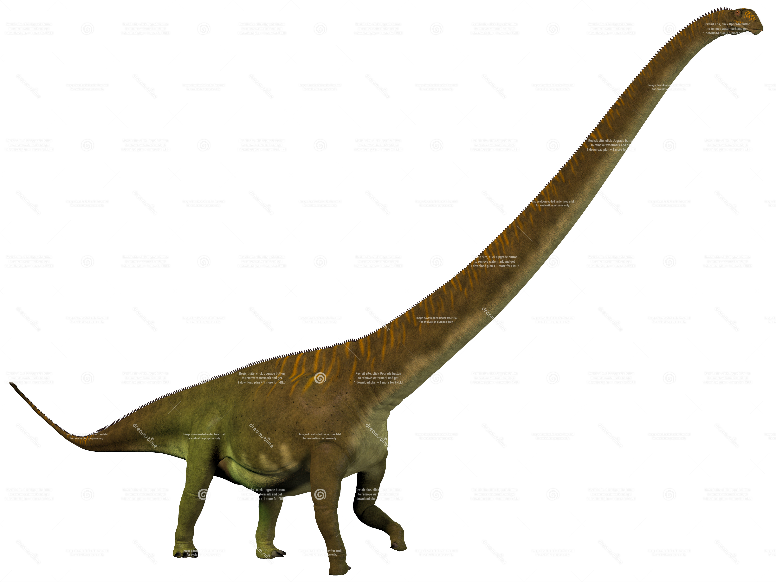
I’ve kept up with the current research and plan most of my vacations Around visiting dinosaur museums around the country. I love how weird and big and awesome dinosaurs are, so I thought I’d start a blog on dinosaurs. Along the way I’ve found out some pretty amazing things about them – like, did you know that half the length of a Mamenchisaurus was its neck? – and I’d like to share what I’ve learned with you.
If you’re interested in finding out more about dinosaurs, you can visit here once a week. Also, I would love to learn how you started to love dinosaurs. Please drop a note with your dinosaur story in the comment field.


 Dinosaur Lady

