I know the ‘Facts Tier List’ is something that has been done to death in pop-culture. But I thought it would be fun to make a short list of the most obscure facts I could find about the king lizard, Tyrannosaurus Rex. If this is something you find interesting, I may make this a series where we cover less recognizable dinos!
1/3 |T-Rex wasn’t Always The Most Popular
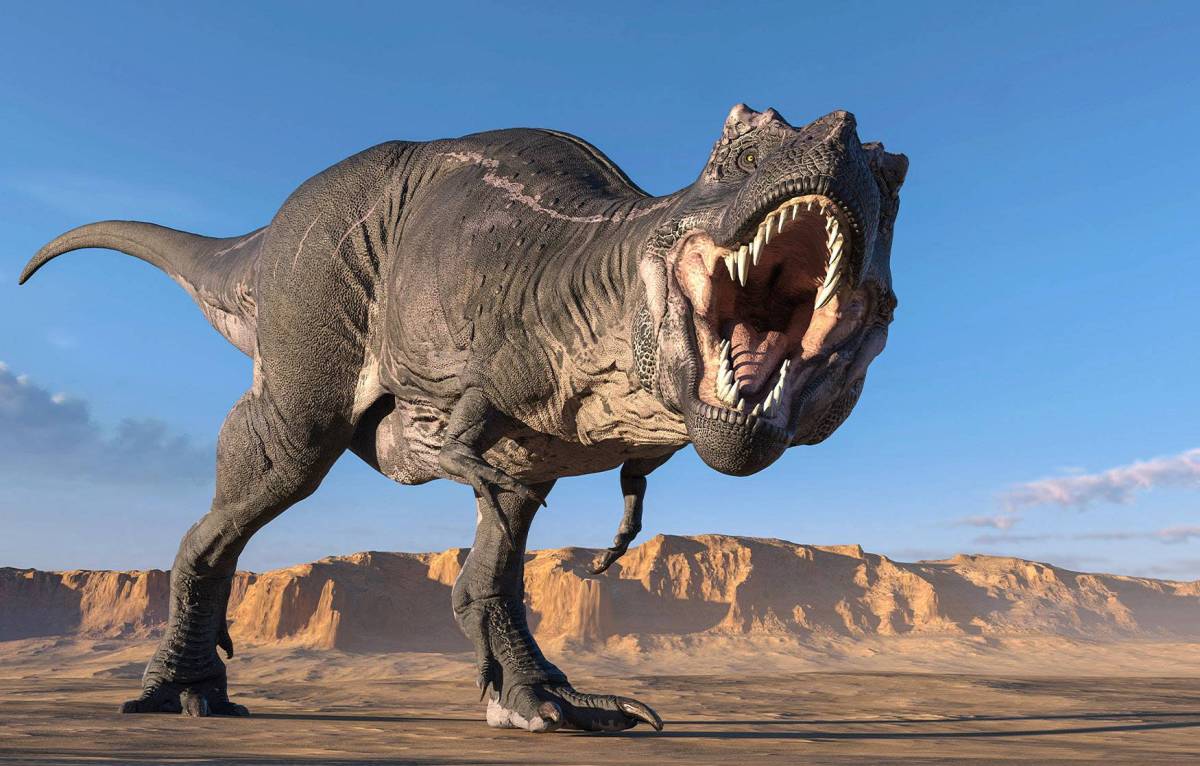
Taking a look at the countless pictures, books, movies, and exhibits on the world of paleontology, it is self-evident that the Tyrannosaurus Rex is one of, if not the most popular dinosaur. Many would assume that this has always been the case, but what if I told you that wasn’t.
My older readers may recognize the name or shape of the Brontosaurus. A sauropod with a complicated history, this dinosaur was the symbol for Sinclair Oil and at one time was considered the face of the dinosaur world. The Brontosaurs will be the topic of a future post, so subscribe so you don’t miss out!
2/3 | Usable Arms
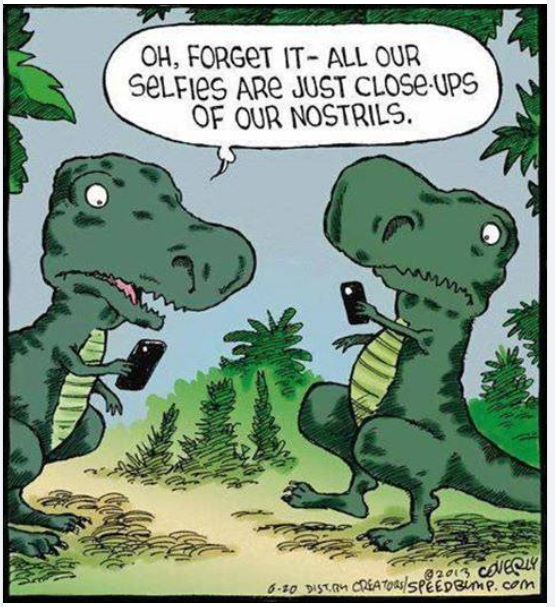
The T-Rex is often made fun of for it’s tiny arms. They were quite small in proportion to the rest of its body, measuring in at only 2-3 feet. The T-Rex’s head alone was 5 feet long. However, just because they were tiny, doesn’t mean they were useless. Their arms were incredibly capable despite the size and were able to support over 400 pounds in weight.
There is still speculation as to what purpose their arms served. Many believe they were used to help T-Rex lift itself off of the floor or for holding on to recently killed prey.
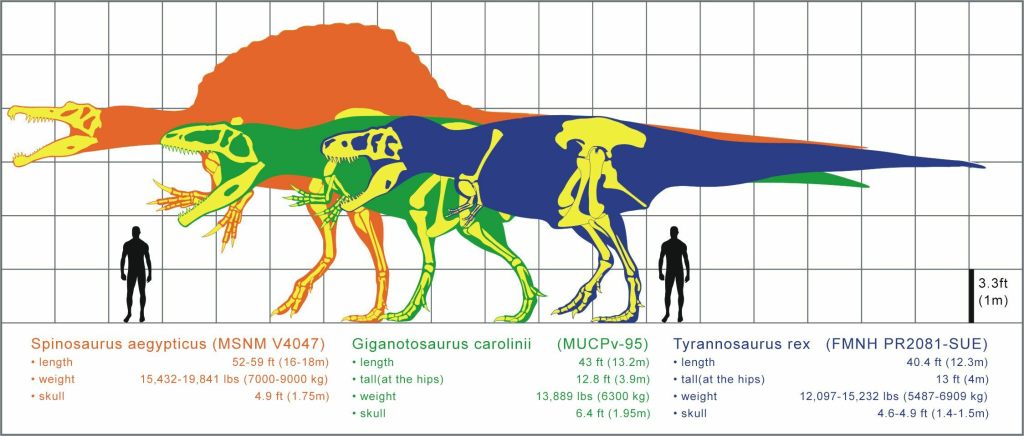
Although the T-Rex has earned the moniker: ‘King of the Dinosaurs’, that doesn’t mean that T-Rex was the largest Carnivore of them all. T-Rex was estimated to be about 40 feet long and weighed between 7 and 9 tons. The Giganotosaurus and the Spinosaurus both outclassed the king lizard, with the former weighing 9 tons and the latter weighing over 10 tons. Giganotosaurus barely beats out T-Rex in length, as it was recorded to be 43 feet long. But the Spinosaurus takes the cake at almost 60 feet long from head to tail! I may take a deeper look into the unique features of these 3 species…
I hope you found these facts interesting; I surely did! If there are any facts you would like to share, feel free to do so in the comments below.
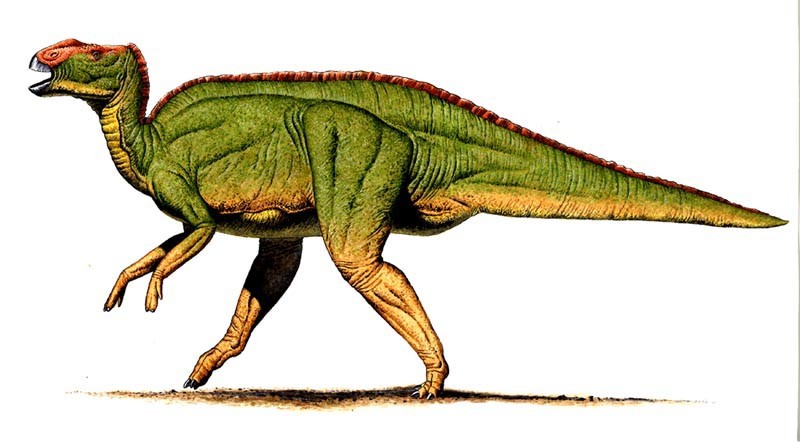
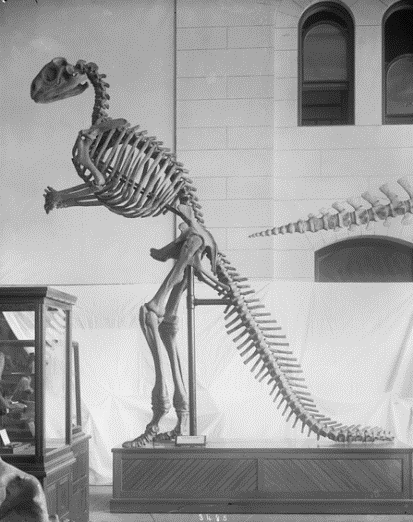
In 1868, the hottest ticket in town was to the Philadelphia Academy of Natural Sciences. Before that year about 30,000 people visited the museum annually. But in 1868, attendance more than doubled to 66,000. The next year it soared to 100,000. What was it that people stood in line for hours to see? The first complete dinosaur skeleton ever displayed to the public: Hadrosaurus. People stared in awe. It was three stories tall! Philadelphia had to build a bigger museum to have room for the crowds.
Hadrosaurus was found in New Jersey in 1858. And at that time, it was the most complete dinosaur skeleton that had ever been found in the whole world.
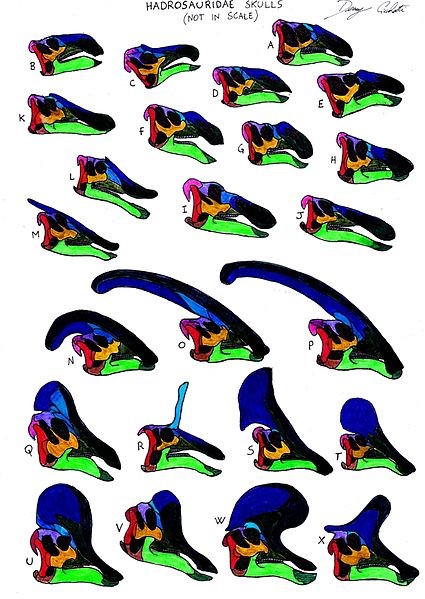
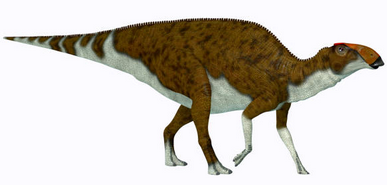
What do we know about it today? It was just an average duckbill dinosaur. It didn’t even have a crazy crest like some duckbill dinosaurs. Its head was flat.
It grew about 23-26 feet long and could have weighed 2-4 tons. Its back legs were much longer than its front legs. It could walk on just its hind legs or on all four legs. The front of its mouth was a beak, covered in keratin, just like your fingernails. This helped it nip off plants, which it ground up with its large teeth. It traveled in herds.
The original pose was upright. But we now think it probably stood like this, with the tail balancing the head:
When it was first displayed almost everyone was thrilled to see it – but that’s almost. A copy of Hadrosaurus was made and was supposed to go on display in 1871 in New York City. But it never did. One of the most powerful men in New York in that day, William Tweed, known as Boss Tweed, ordered members of his gang to destroy the skeleton. No one knows why. They tore it apart and tossed the pieces of it into a nearby lake.
Today Hadrosaurus doesn’t cause any controversy. People know it as just an average dinosaur. But New Jersey is proud that it is its state dinosaur, and people still flock to see it.
Can you draw a duckbill dinosaur head with a crazy crest? Please put one in the comment section or message me on Facebook at Janet Riehecky
To learn more about dinosaurs, please visit here once a week. Please also visit my web site: www.janetriehecky.com
It’s almost impossible to declare that one dinosaur was the biggest of them all. Do you mean longest, heaviest, or tallest? Also, it’s very unlikely that paleontologists have actually found the biggest specimen of a dinosaur type. Millions and millions of dinosaurs once lived on Earth, and we’ve found only a small percent of them. We do know that all of the biggest dinosaurs are plant eaters. They come from the group of dinosaurs called sauropods, the long-necked dinosaurs – and most of the very biggest ones have been found in Argentina.
So, how do paleontologists figure out how long or tall a dinosaur was? They need to look at the spine. Put your fingers on the back of your neck. The little bones you feel there that are part of your spine are called vertebrae. When a dinosaur skeleton is found, usually many of the vertebrae are missing. When there is a gap, paleontologists have to guess how many are missing. One way they do this is by comparing the bones they have to other, similar dinosaurs. If a similar dinosaur had, say, 80 vertebrae in its tail, paleontologists would assume that a closely related dinosaur had 80, too. But that might not be true. And it’s hard to know how big those missing vertebrae would be. Scientists have to make the best estimate they can, but they often don’t agree with one another. However, they have provided some great contenders for biggest dinosaur!
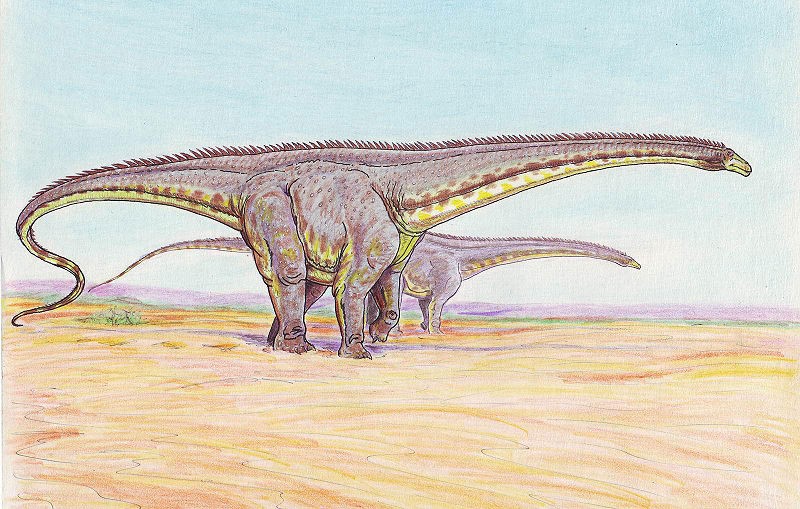
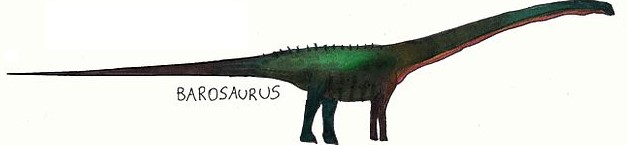
This might be Barosaurus (BARE-uh-sore-us). It was discovered in 1889 in South Dakota. Its name means slow, heavy lizard, and it must have been. Scientists think it was probably 82-89 feet long. That’s long, but that’s not what put it in contention for longest. Scientists have found a huge vertebra that they think belonged to Barosaurus. From the size of it, the creature it came from was likely about 157 feet long! That’s almost as long as three eighteen-wheeler trucks set end to end.
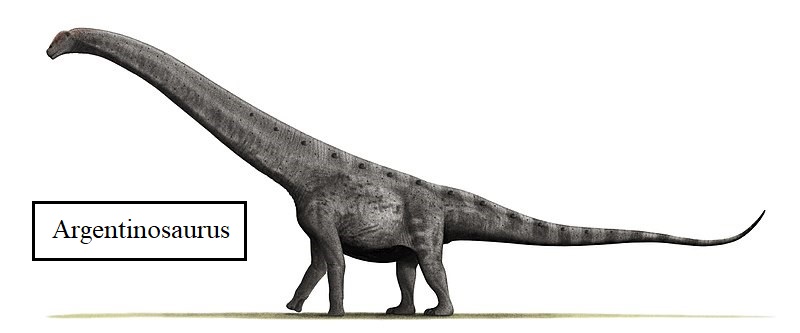
Another contender is Argentinosaurus (are-juhn-tee-nuh-SORE-us). Scientists have only found 13 of its bones: a few ribs, some vertebrae, and a five-foot-long femur (thigh bone). This isn’t much to try to figure out how big this dinosaur was, but the sizes of those bones have led scientists to estimate that Argentinosaurus was between 75 and 100 feet long. If that top limit is right, Argentinosaurus is definitely among the very biggest dinosaurs.
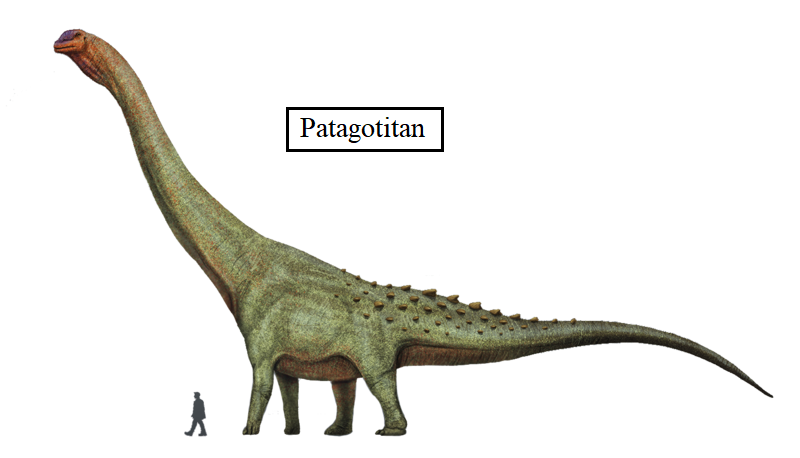
Argentinosaurus is also a contender for the heaviest dinosaur, but because estimates of its weight are based on so few bones, some scientists discount it. However, paleontologists have unearthed more than 200 bones of Patagotitan (PAT-ah-go-TIE-ton). These bones were found in Argentina in 2012 and cause scientists to estimate that it weighed about 76 tons. The largest land animal today is the African elephant. Its top weight is seven tons. That means that Patagotitan weighed nearly as much as 11 elephants. And some scientists think at its biggest it weighed as much as 14 elephants.
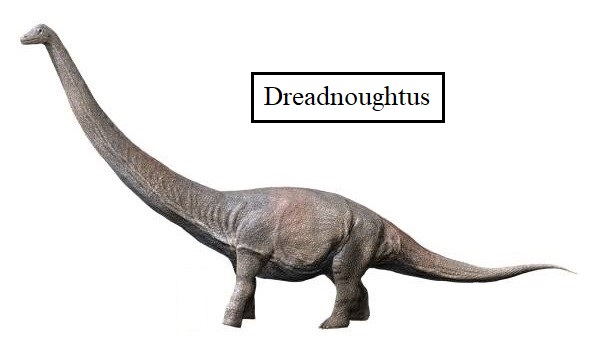
Dreadnoughtus (dred-NOHR-tus) is a definite contender in weight. Its name means fearing nothing. And it’s hard to imagine any creature that it would have to be afraid of. It was discovered in Argentina in 2005. Scientists have recovered almost half of its bones, so they are able to be fairly accurate in their estimates. They place its weight between 54 and 65 tons (though some scientists say that’s too high). It was also about 85 feet long and as tall as a two-story building.
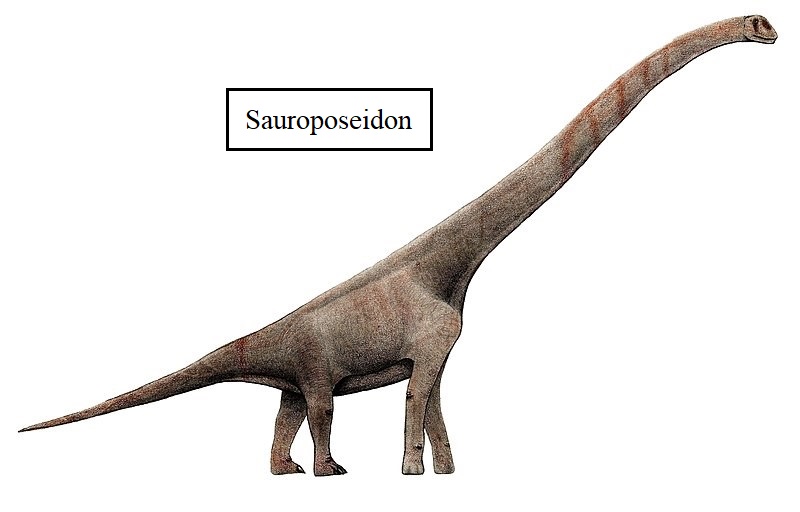
Two stories, however, is not a contender for height. The tallest dinosaurs reached close to the height of a six-story building, though again, it’s tricky to know for sure. Scientists don’t agree on how high up long-necked dinosaurs could lift their heads. Sauroposeidon (Sore-uh-ps-SY-don) is certainly one of the tallest. It was found in Oklahoma in 1994 and named for the Greek god Poseidon. Poseidon could cause earthquakes, and it probably felt like this dinosaur could do that, too – just by walking. It probably stood just over 55 feet tall, which is, as it says above, almost the height of a six-story building.
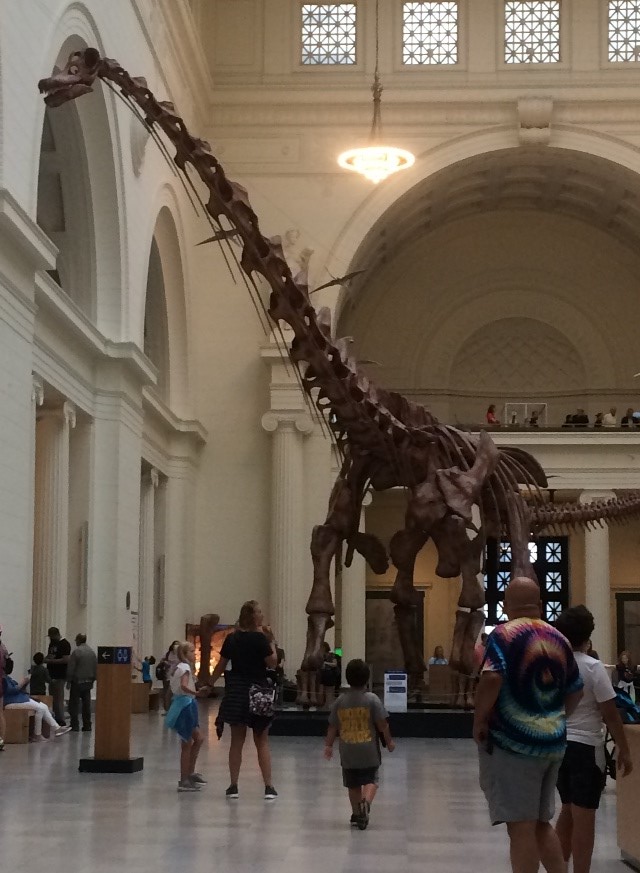
Patagotitan shows up again here. Depending on how it carried its long neck, it might have been as tall as a seven-story building. If it carried its head and neck low to the ground, straight out from its body, it’s a contender for longest dinosaur at 122-130 feet. The picture at the right shows Patagotitan at the Field Museum in Chicago
Scientist do not agree which one was the biggest dinosaur. Other lists would include such dinosaurs as Mamenchisaurus (mah-MUN-chi-SORE-us), a creature whose neck was longer than the rest of its body, or Giraffatitan (ji-RAF-ah-TIE-tan), which had the same general build as a gigantic giraffe. We may never know which dinosaur was the biggest. But we can all agree that they were awesome!
Which dinosaur do you vote for as biggest? Do you know a big dinosaur that isn’t in this list? Please leave your answers in the comment section.
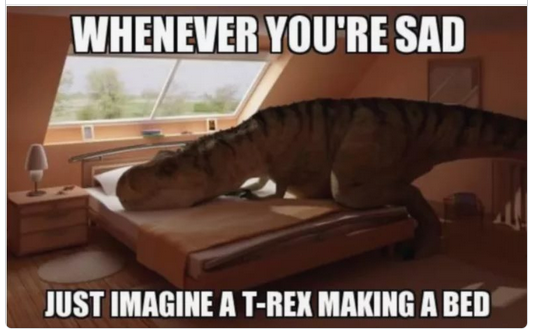
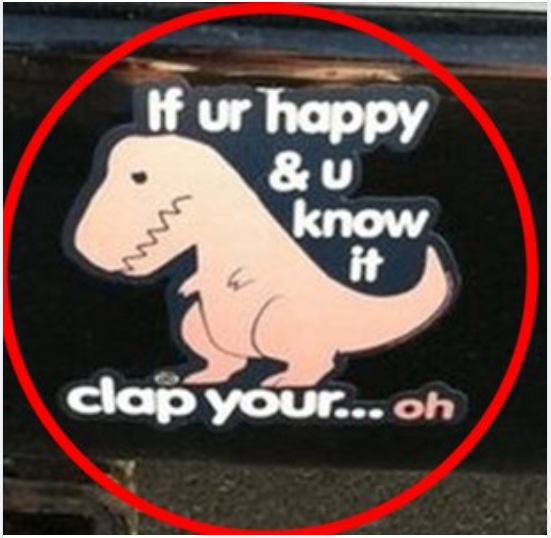
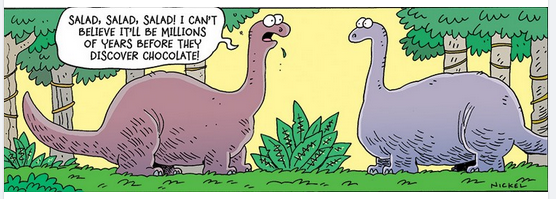
Hope everyone is adjusting to the fall nicely! Here are a few dinosaur jokes that made me chuckle. Feel free to post your own jokes in the comments down below.
Not very long ago paleontologists were sure of at least one thing about dinosaurs: nobody would ever know what color they were – unless somebody invented a time machine. Artists had to make up the colors because there were only bones to work with. And you can’t tell the color of anything’s skin from looking at its bones. Even the discovery of several dinosaur “mummies” didn’t help [See my post on dino mummies here]. Though some of these had preserved dinosaur skin, the skin had taken on the color of the minerals that seeped into it to fossilize it. But modern technology has changed this. There are now a couple of ways to determine what color certain dinosaurs were.
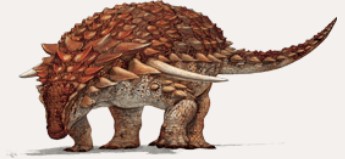
The first is a rare case. In 2011 an armored dinosaur called Borealopelta (BOH-ree-AH-low-PEL-tuh) was discovered. Its skin was so well preserved that scientists were able to use a mass spectrometer to discover its color. How does that work? A mass spectrometer is able to tell the chemical substances something is made of, and when you know the exact chemical substances, and where they are, you know what color it is. In the case of Borealopelta, scientists determined the dinosaur was dark reddish brown on the back and neck and lighter reddish brown on the belly and lower parts.
But finding such well-preserved skin is rare. However, scientists have found another way to determine color. Using an electron microscope they found tiny structures that were smaller than cells. At first these were dismissed as bacteria, but they were, in fact, melanosomes (muh-LAN-uh-sohmz), irregular blobs that contain color pigments. Melanosomes can be found in skin, hair, scales or feathers. The size, shape, thickness, and dispersal of melanosomes found in a fossilized feather can be compared to those found in modern birds to determine a color. Then the trick is finding dinosaur fossils that contain preserved skin, hair, scales, or feathers. So far, feathers have been the main structure to reveal dinosaur color through melanosomes.
In 2009 scientists found a feathered dinosaur, which they named Anchiornis (ANG-kee-OR-niss). It lived during the late Jurassic Period. The fossil included some preserved feathers, which were examined under an electron microscope. Analysis of the melanosomes indicated this was a black-and-white dinosaur with a patch of red on the back of its head.
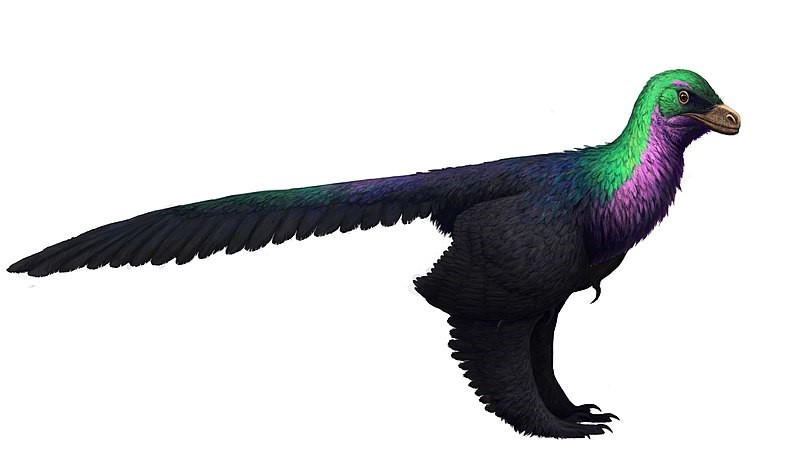
Other dinosaurs have been colorized by this same process. A recent discovery in China, Caihong (KAY-hong), was found with remains of actual feathers. When these were analyzed, they showed that most of the dinosaur was iridescent black, a glossy black that subtly changed its hue when looked at from different angles. The head, chest, and the base of the tail contained melanosomes that produce bright iridescent colors in modern birds. These colors could not be specifically identified, but artists have guessed at what they might be.
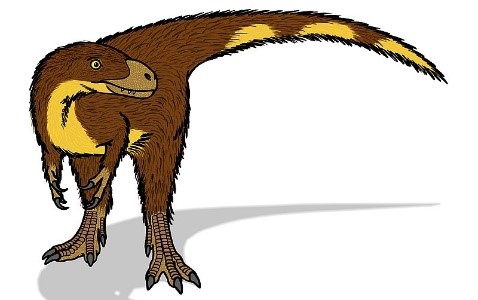
Other dinosaurs that have been colorized include Sinosauropteryx (SIEN-oh-soh-ROP-tuh-riks) – which lived during the early Cretaceous Period and had bright orangish feathers with a lighter belly and a striped tail.
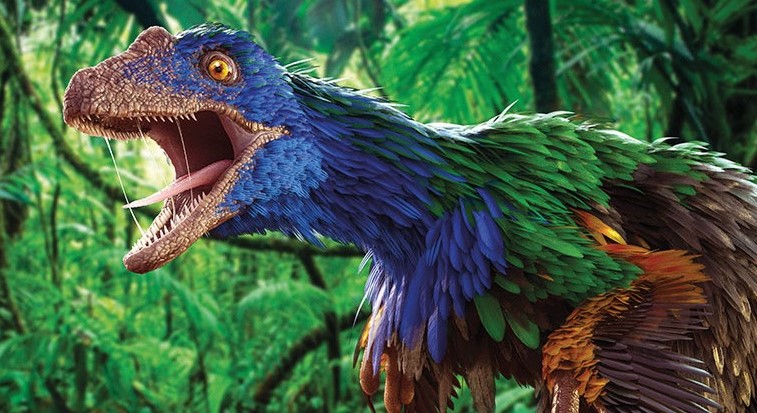
And they include Microraptor – a small meat-eating dinosaur that also lived during the early Cretaceous Period and had feathers that gleamed an iridescent blue/black, like ravens or starlings.
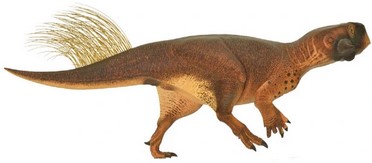
As stated earlier, melanosomes can also be found in scales. Psittacosaurus (SIT-a-ko-SOR-us) is an early Cretaceous dinosaur distantly related to Triceratops. It does not have feathers, but one of the skeletons found had preserved scales that contained melanosomes. They revealed the dinosaur was dark brown on its back and a paler brown on its underside with its hind legs being striped on the inside and spotted on the outside.
Melanosomes are not the answer to the color of every dinosaur. There has to be preserved soft tissue to have melanosomes, and most fossils lack that. Additionally, some colors, such as blues and yellows, are not made by melanosomes. Still, even knowing the colors of a few dinosaurs is something most scientists once thought would never happen.
What color do you think Tyrannosaurus rex was? Put your guesses in the comment section.
Happy Tuesday Friends! Over the last few weeks we have covered a lot of Dino-related info, from the T-Rex to the Pachycephalosaurus. I appreciate the interest you all have shown in the world of dinosaurs!
Many of you have have left thought provoking and intriguing comments and I have enjoyed reading and responding to all of them. Because of this, I thought we should have an experiment this week.
For the next week, feel free to ask me about anything, or respond to other threads or messages. The hope is that we can have fun and share interesting facts about dinosaurs!
If this goes well, maybe we have more group discussions like this in the future 🙂
Thank you all for taking the time to read my little blog. Enjoy the rest of your week and don’t forget to comment below!
Triassic Period: Coelophysis– I have a lifesize figure of one in my living room.
Jurassic Period: Apatosaurus — I have 5′ 7″ femur from one in my living room, a gift from my husband
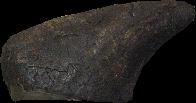
Cretaceous Period: Triceratops — All I have from it is a horn from its brow, but I’ve always like it best.
If you were being hunted by a dinosaur (pick any meat eater) how would you use your knowledge of dinosaurs to evade the predator and possibly even knock it in the noggin?
If you could have a dinosaur as a pet, which one would you choose and why?
Does it bother you when someone accuses another person of being out of date and says, “You are such a dinosaur”? Is that kind of a slam on dinosaurs?
You needn’t reply to all my questions. Pick the one(s) you like.
Thanks for your questions!
To avoid T-rex, the last thing you want to do is stand still. If you’re a good runner, you can out-distance it. It takes very large steps, but it was probably too heavy to run for an extended period of time.
I would like a Triceratops. They’ve always been my favorite.
Telling someone they’re a dinosaur is actually a compliment and not just because they’re awesome. They managed to live on Earth for 120 million years — not bad survival skills. People wouldn’t have managed any better in the face of that asteroid.
As we transition into the fall, I thought it would be fun to reminisce on one of my favorite summer vacations.
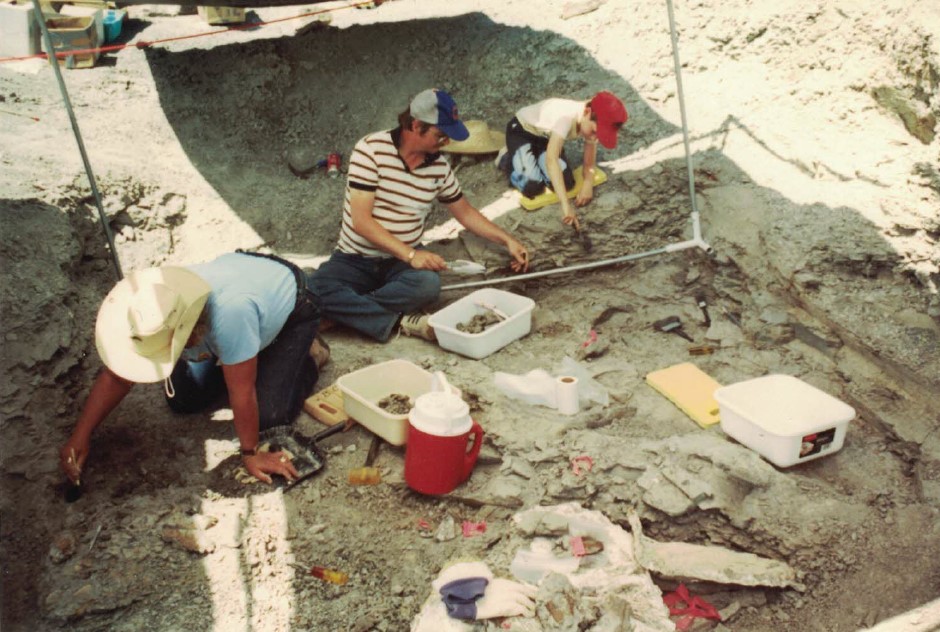
One of the best adventures of my life occurred one summer when my family and I spent a week in western Colorado. During two of those days, we joined a dinosaur dig. It was very hot and dirty. Insects swarmed us, the nearest porta-potty was a half mile away – and I never had more fun in my life!
The paleontologist in charge of the dig, Jim Kirkland, told us where to dig and what to do. The area we dug in was a vast bone bed dating to about 150 million years ago, during the late Jurassic (one of the three time periods during which dinosaurs lived). Many dinosaurs had died, perhaps in a flood, and had their bodies swept into this huge heap. Their bones were all jumbled together. Diggers in that area have found bones from Brachiosaurus, Stegosaurus, Allosaurus, Apatosaurus, and other Jurassic dinosaurs. We would not get to keep any bones we found. They would stay with the paleontologists for study, as they should.
The rock was crumbly, like flaky pastry, and easily removed with just our hands. We searched through it and then discarded the rock into plastic bins. It’s not always easy to tell what’s rock and what’s bone, but at this site the rock was a light brown and the bones much darker brown, almost black. We moved a lot of rock before we saw anything. (Caption: That’s my husband, John, in striped shirt, my son, Patrick, in red cap, and Jim Kirkland in cowboy hat.)
That thrill, though, when you see a bone that’s been buried for 150 million years is not like anything else. It was definitely worth the hours of digging. I felt awed and elated and also a little humble. I’m a tiny speck in this universe. You know, we also spent two days white water rafting while we were in Colorado, but digging up dinosaur bones was more exhilarating!
During those two days digging I only found three bones, but one of them in particular interested Dr. Kirkland (in red shirt at left; me in blue). It looked like a piece of armor from an armored dinosaur, but at that point no one had ever found an armored dinosaur in Jurassic rock. Further excavation after I left produced more of that dinosaur, and it turned out to be just what Dr. Kirkland suspected: an armored dinosaur, the first ever found from the Jurassic Period. He named it Mymoorapelta and wrote to me about it. He also put out a press release, and I got my picture on the front page of the local newspaper!
Dr. Kirkland is now the state paleontologist of Utah.
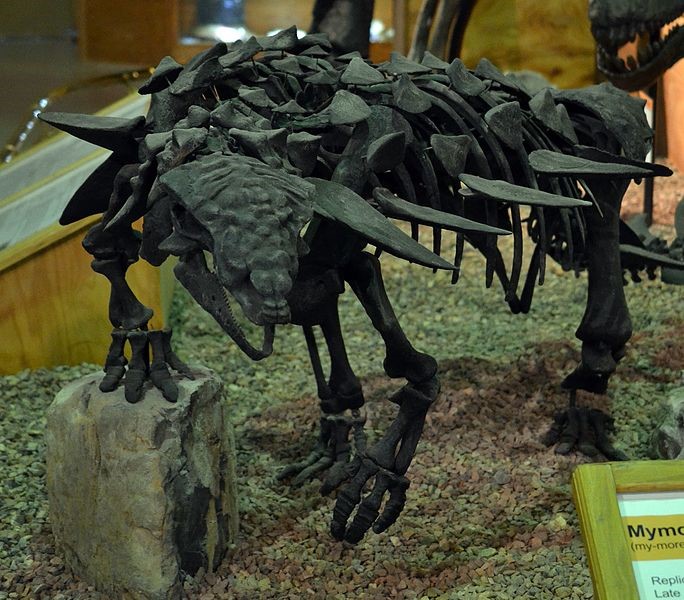
Mymoorapelta is a nodosaur, which means, among other things, that it doesn’t have a club at the end of its tail. It was one of the earliest armored dinosaurs ever to have lived, and, at 9.8 feet long, one of the smallest. It ate mostly plants that grew low to the ground, such as ferns, cycads, and conifers. Its teeth were small and leaf-shaped. Scientists can’t say for sure, but it is likely that it lived in herds.
I will leave you with this question: If you found a new dinosaur, what would you name it? Please let me know in the comment section.
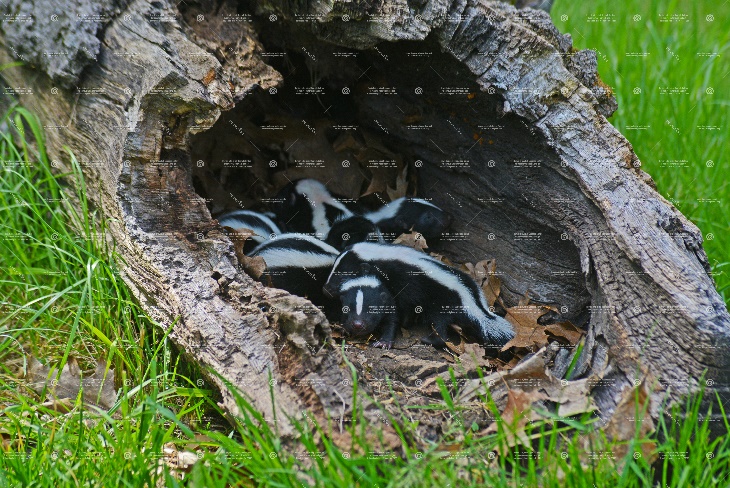
I don’t know who makes up the names for groups of animals: a herd of cows, a pack of wolves, or a litter of kittens. Some of the group names are funny: a business of ferrets, a kettle of hawks, a bloat of hippopotami, a shiver of sharks, a stench of skunks, and an ambush of tigers. But whoever makes up those names certainly got it right for Tyrannosaurus. A group of them is called a terror of tyrannosaurs. Several species of dinosaur fall into the category of tyrannosaur, such as Albertosaurus, Gorgosaurus, and Daspletosaurus. The most famous, of course, is Tyrannosaurus rex. All of them are among the largest meat-eating creatures that ever lived.
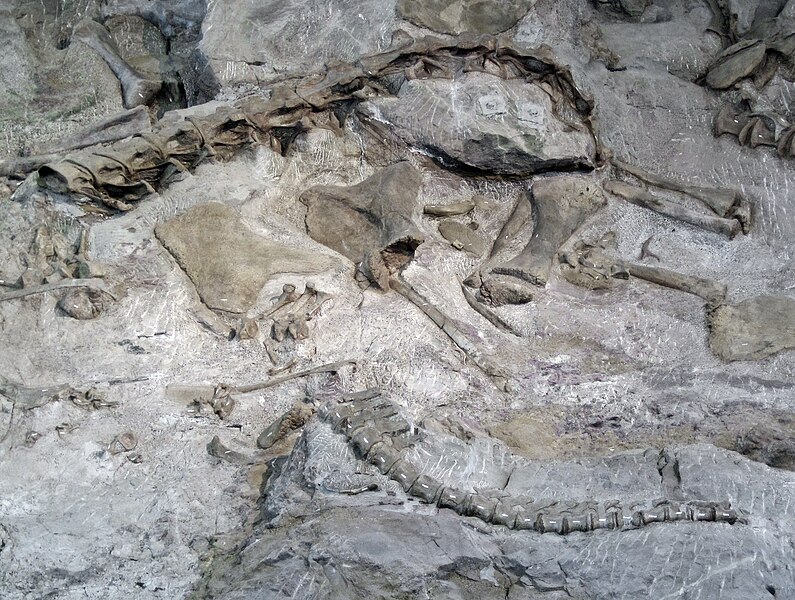
Scientists don’t know whether or not Tyrannosaurus lived or travelled in groups. There are only two clues that could help with this. Sometimes paleontologists find bonebeds that contain many dinosaurs of the same kind that all died at the same time. That might happen if a flash flood killed a large herd of animals. For example, in Alberta, Canada, thousands of bones of the dinosaur Centrosaurus were found in a bonebed measuring about 1 ½ square miles. This is strong evidence that centrosaurs travelled in large groups. Dinosaur bonebeds for Protoceratops, Avimimus, Pinacosaurus, Edmontosaurus, and others have been found. But no bonebeds of Tyrannosaurus or any other tyrannosaur have ever been discovered.
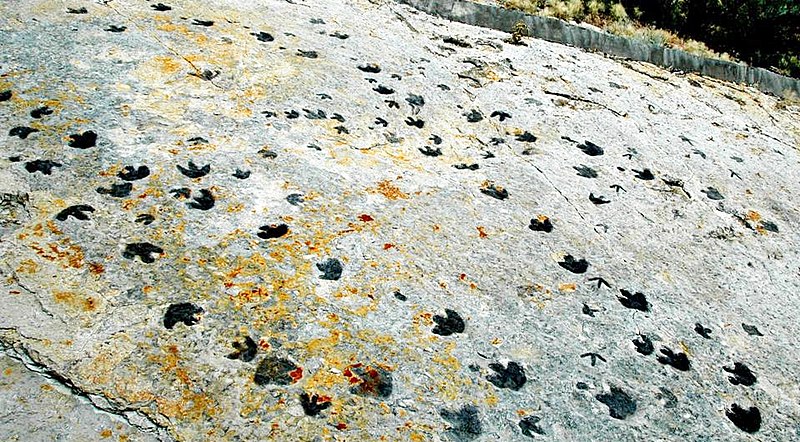
The other evidence of animals living or travelling in groups is footprints. Often just one, single footprint is found. Other times a trackway is found, showing the progress of a single dinosaur.
Sometimes there are many footprints, showing the travels of a whole herd. Prior to 2011, only single footprints of tyrannosaurs had been found. Though it’s hard to say for sure which made a footprint, scientists can make educated guesses. The one most confidently attributed to Tyrannosaurus rex was found in Montana in 2007. The Montana footprint was 2 ½ feet long with slender toes, and it was found in the right age of rock for Tyrannosaurus. Also, its toes were correctly positioned for T-rex, so paleontologists are fairly certain they have correctly identified it. But that print doesn’t tell us much about how Tyrannosaurus lived and moved.
Some scientists thought that because they had never found a tyrannosaur bonebed or more than one footprint of a tyrannosaur that Tyrannosaurus was a solitary creature, perhaps only associating with others of its kind for mating. Many of today’s predatory birds, such as eagles and hawks, are largely solitary. That way they don’t have to compete for food. But in 2011 a trackway showing three tyrannosaurs walking together made scientists reconsider the idea of tyrannosaurs as loners.
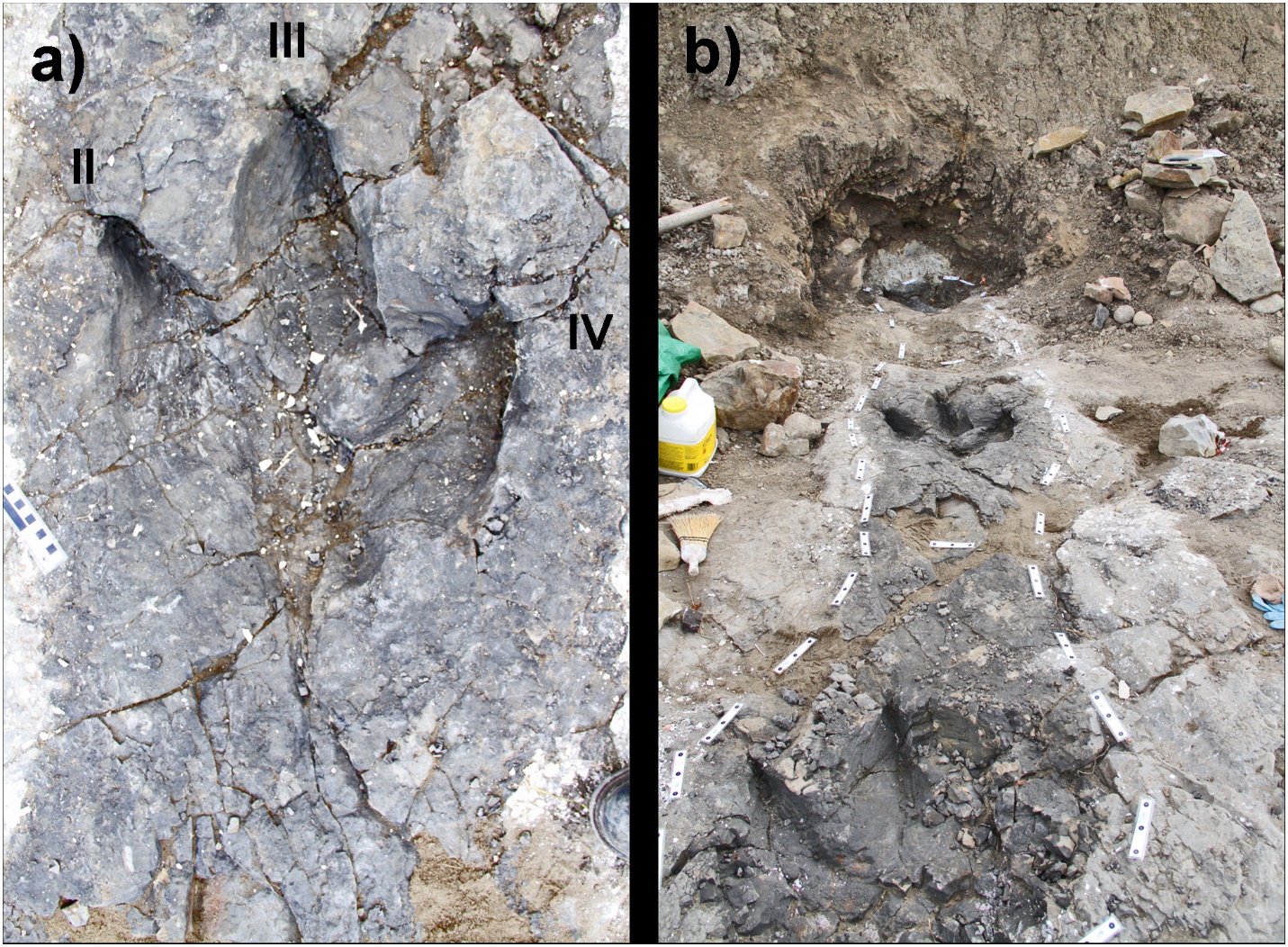
In the forests of northeastern British Columbia, paleontologists uncovered a series of tracks showing three large dinosaurs walking side by side. A total of seven footprints were found: three from one dinosaur and two from each of the other two, but all the footprints were made at the same time, and they are clearly walking together. The prints are so well preserved that scientists can even see scales on the dinosaurs’ feet. The size of the tracks and the size and positioning of the toes clearly make these tyrannosaur tracks. However, it’s not possible to know which species of tyrannosaur they are from.
McCrea RT, Buckley LG, Farlow JO, Lockley MG, Currie PJ, Matthews NA, et al. (2014) A ‘Terror of Tyrannosaurs’: The First Trackways of Tyrannosaurids and Evidence of Gregariousness and Pathology in Tyrannosauridae. PLoS ONE 9(7): e103613. https://doi.org/10.1371/journal.pone.0103613
The size of the footprints does indicate that the creatures were of a similar age, different scientists estimating perhaps 25, 26, and 29 years old. The size also indicates their approximate height: 7.5 to 9.4 feet tall, measured at the hip. Dinosaur height is usually measured at the hip because most of them didn’t hold their heads at a consistent height. By knowing the height of the animal and measuring how far apart the footprints are, scientists can determine how fast the dinosaurs were going. When scientists did the math for these footprints, they concluded that these three dinosaurs were going 3.9 to 5.2 m.p.h. However, in 2021 researchers from the Netherlands made a computer reconstruction of a Tyrannosaurus walking, and they concluded that its top speed was only about 3 m.p.h. More evidence is needed to figure out how fast a tyrannosaur could walk.
Still the trackways give a tantalizing look at the life of a tyrannosaur, no longer a loner, but a friendly guy who liked to hang out with his terror of friends.
Make up a name for a group of you and your friends. Please put it in the comments below!
Burns, M. E., T. A. Tumanova and Philip J. Currie. “Postcrania of Juvenile Pinacosaurus grangeri (Ornithischia: Ankylosauria) from the Upper Cretaceous Alagteeg Formation, Alag Teeg, Mongolia: Implications for Ontogenetic Allometry in Ankylosaurs.” Journal of Paleontology. 2015. Vol. 89, pp. 168-182. https://pubs.geoscienceworld.org/jpaleontol/ article-abstract/89/1/168/139797/Postcrania-of-juvenile-Pinacosaurus-grangeri.
Evans, D. C., D. A. Eberth, and M. J. Ryan. “Hadrosaurid (Edmontosaurus) Bonebeds from the Horseshoe Canyon Formation (Horsethief Member) at Drumheller, Alberta, Canada: Geology, Preliminary Taphonomy, and Significance.” Canadian Journal of Earth Science. 2015. Vol. 52, pp. 642–654. https://cdnsciencepub.com/doi/pdf/10.1139/cjes-2014-0184?download=true.
McCrea R.T., L.G. Buckley, J.O. Farlow, M.G. Lockley, P.J. Currie, et al. “A ‘Terror of Tyrannosaurs’: The First Trackways of Tyrannosaurids and Evidence of Gregariousness and Pathology in Tyrannosauridae.” 30 July 2014. PLoS ONE Vol. 9, p. 7: e103613. doi:10.1371/ journal.pone.01036
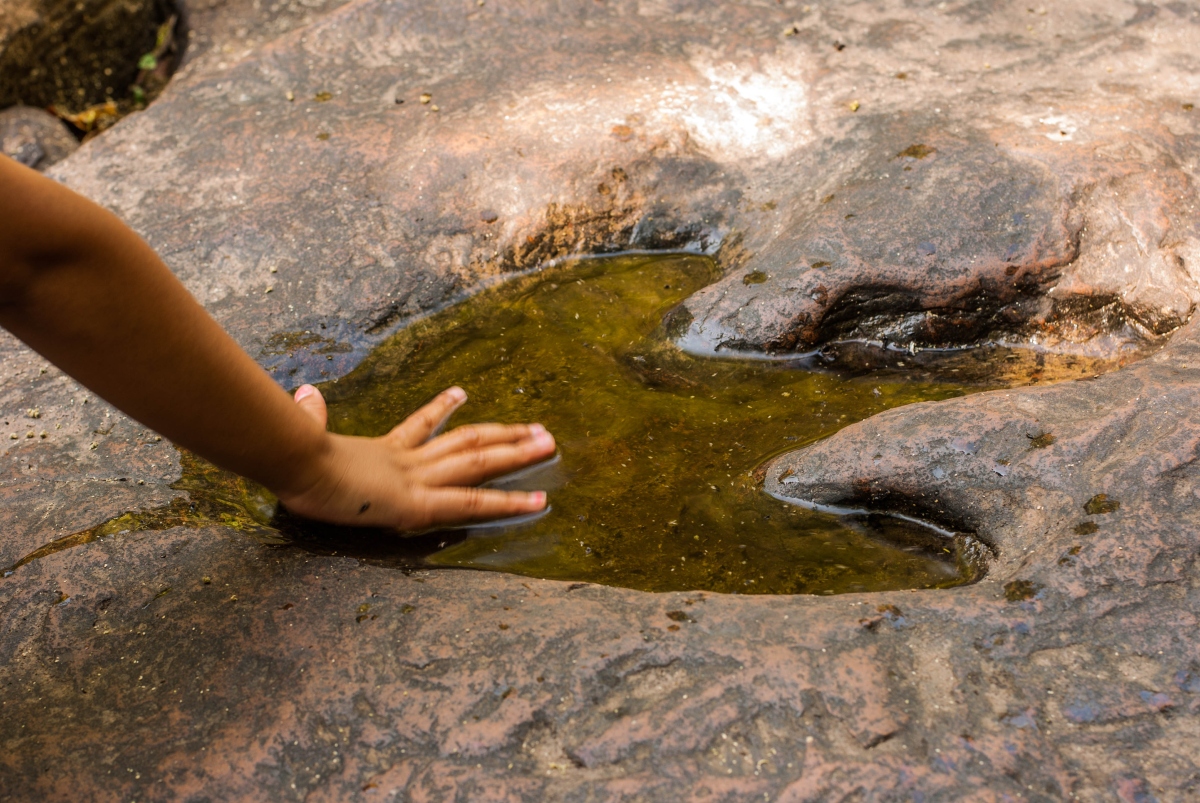
Title Image: Stock photo shows a dinosaur footprint in the ground. Footprints in Texas have been revealed as drought persists. NEENAWAT/GETTY
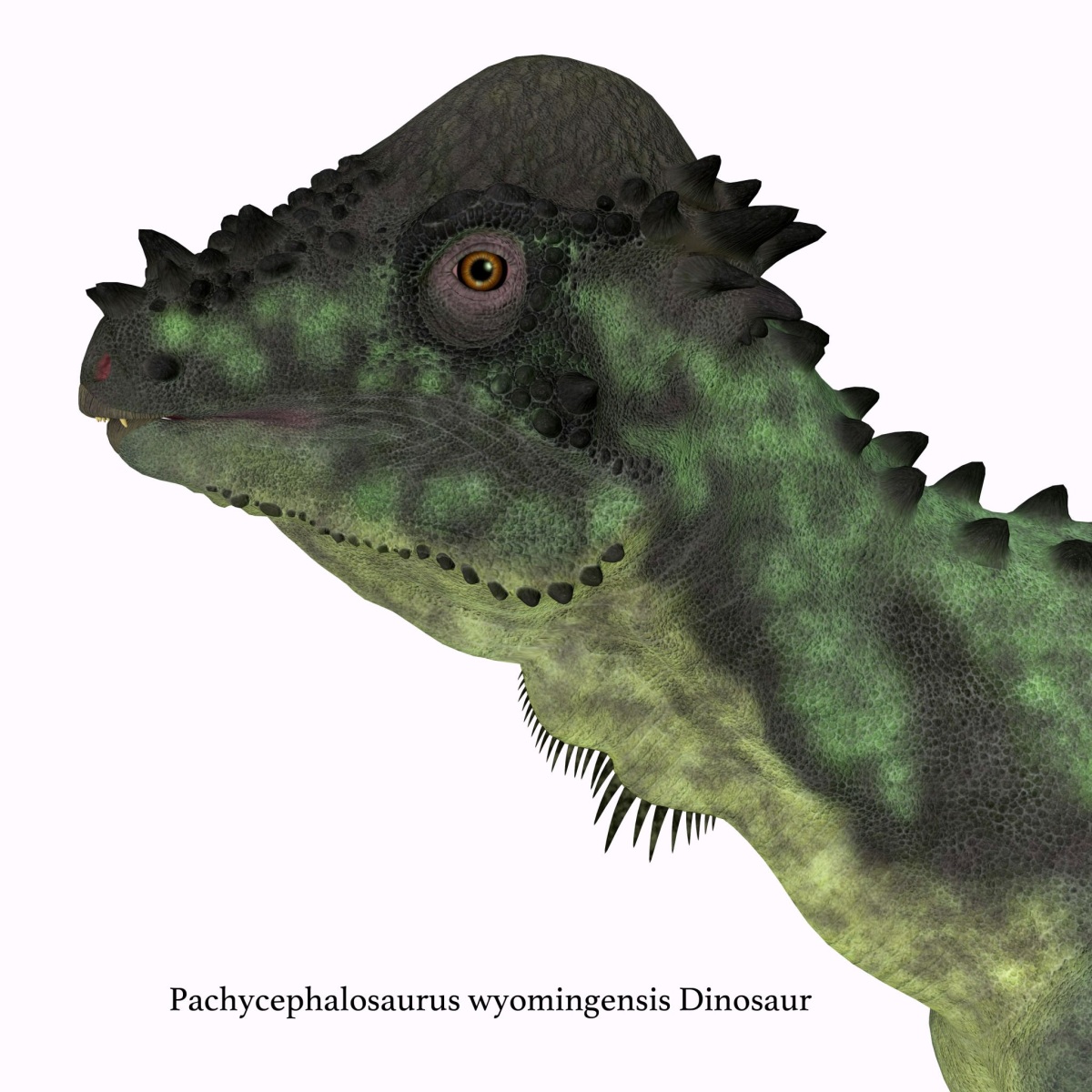
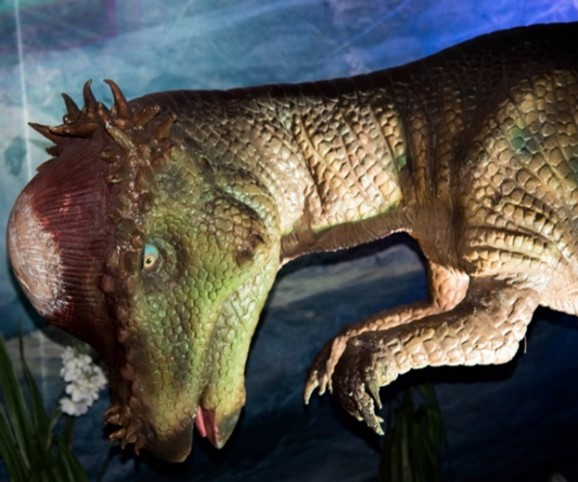
One of the reasons I like dinosaurs so much is that some of them are just plain weird. And, for me, one of the weirdest is Pachycephalosaurus
(pa-KEE-seh·fuh·luh-SORE-us).
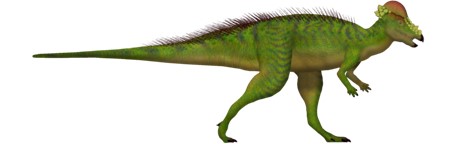
Pachycephalosaurus lived in the late Cretaceous Period, 72 – 66 million years ago, in what is now the western United States and Canada. This was the same time and place that Tyrannosaurus and Triceratops lived. Pachycephalosaurus probably walked on two legs with its tail stretched out behind it and its head leaning forward to balance it. It was about 15 feet long, and weighed almost 1000 pounds. None of that makes it unusual. But when people take a closer look at this dinosaur, it definitely stands out.
Pachycephalosaurus means “thick-headed lizard.” It is a bizarre creature for several reasons. First, the name is weird, even for a dinosaur, because it has so many syllables. If you ever want to impress someone, just rattle off that name without any pauses.
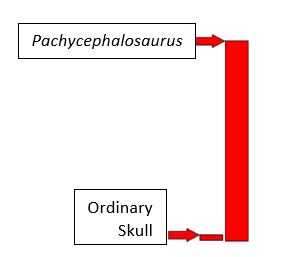
Second, it had nine to ten inches of solid bone in a dome on top of its skull, twenty times thicker than the skulls of most other dinosaurs. That’s a huge difference!
Scientists don’t know for sure why this dinosaur had such a thick skull, but some of them think Pachycephalosaurus liked to butt its head into things, especially other dinosaurs. Head-butting is used by modern animals, such as bighorn sheep or mountain goats, to establish dominance.
The winner controls a territory and impresses the females. The thick skull of Pachycephalosaurus might have protected its brain when it collided with another dinosaur. Scars on the domes of some skulls also support this idea.
Photo via <a href=” ttps://www.goodfreephotos .com/”>Good Free Photos</a>
But some scientists doubt head-butting was possible, saying the shape of its neck makes it unlikely its spine could withstand a head-on collision. And, the top of its head is rounded, so not much surface would collide with the other dinosaur. These scientists think that maybe Pachycephalosaurus used glancing blows to the side while fighting others to see who would control a territory. It also might be that Pachycephalosaurus having a big head just helped males to attract females. One thing scientists do agree on is that its thick skull wouldn’t have been much good as defense if it were attacked by Tyrannosaurus because the rest of its body had no defenses.
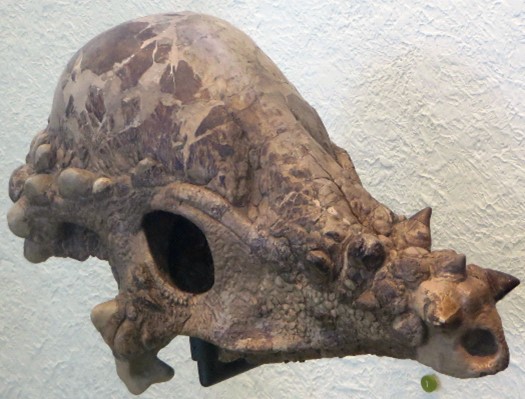
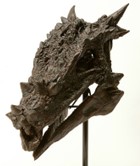
However, it wasn’t just the thickness of the skull that made this dinosaur weird. Across the back of the dome and on its snout, it had large circular bumps (see skull above). Bumps aren’t all that weird, but scientists think most of the bumps started out as spikes, flattening as the dinosaur grew older. They have found skulls of smaller dome-headed dinosaurs that were thought to be different species of dinosaurs, such as one called Dracorex hogwartsia, which means “the Dragon King of Hogwarts” (named for Harry Potter’s school). They are now thought to be juvenile pachycephalosaurs. It seems odd that spikes would flatten into bumps as the dinosaur grew up, as spikes seem more useful than bumps, but, as I said, this is a weird dinosaur.
Another strange thing was its teeth. In the back of its mouth, it had wide, leaf-shaped teeth, similar to those found in many plant-eating dinosaurs. According to paleontologist, Philip Currie, “We have always been somewhat mystified by what these animals were eating, but I think the teeth at the back of the jaws clearly show it’s an herbivore.” But in 2018, paleontologists reported finding a more complete jaw, and they couldn’t believe what it showed. In the front of its mouth, it had sharp, triangular teeth, that were more like a carnivore.
Paleontologist, Steve Brusatte, said, “It had the combination of a beak with these very sharp, steak knife-like serrated teeth … They must have been eating some kind of meat. Why else would you have steak knives at the front of your mouth?” This combination is very unusual. Scientists have suggested that this means it might be an omnivore, eating both plants and meat. The meat would have been small animals, such as lizards, frogs, or even small mammals; the plants would have been ferns, leaves, and conifer needles.
All in all, Pachycephalosaurus certainly qualifies as a strange and weird dinosaur. It’s one of my favorites, and I hope it is now one of yours.







 Dinosaur Lady
.jpg)


.png)

_2.jpg)


Leave a comment